And surely I am with you always, to the very end of the age.”
- Matthew 28:20b
“Hence, nearly all vices are rooted in the future. Gratitude looks to the past and love to the present; fear, avarice, lust, and ambition look ahead.”
- C. S. Lewis, The Screwtape Letters
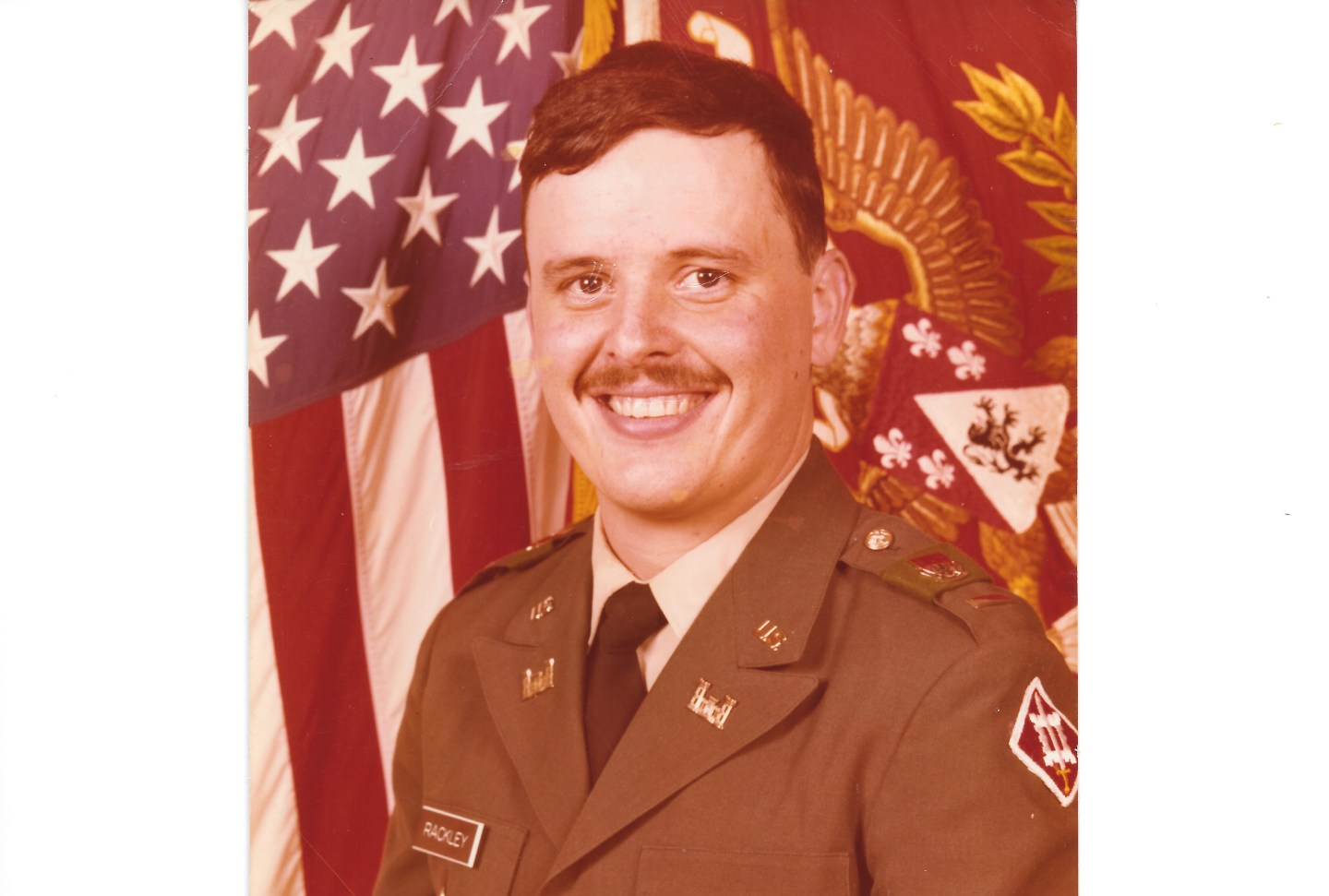
I have been looking to the past a lot recently. With my wife passed on, I can deal with the grief by looking with gratitude to the past, but this story is about two others. While remembering those who did not return from the wars, I remember two who I proudly served under, who did return. One would reach the rank of Major General, rare for an Engineering Office. He passed away last year. The other reached the rank of Colonel, and he passed away two years ago. I salute each of you. You were the best of the best.
I had just completed a two-week battalion exercise where I tested the personnel administration center in wartime readiness. They were supposed to manage everything that was contaminated (radioactive, chemical, etc.), graves registration, the Prisoner of War (POW) camp, and the normal administrative activities like resupply of personnel when reinforcements were made available. I found them lazy, unwilling to “play” war games, but reluctantly competent. Then again, there was no competency test (ARTEP – Army Training and Evaluation Program) for that combination of tasks in an engineering battalion at the time, until I wrote it.
With this moderate success and not having bathed for two weeks, the battalion commander called me into his office just as we were unloading our vehicles and putting our dirty things in our cars. We probably both had flies hovering around us, but after a crisp salute, he asked me to sit down. The LTC (Lt. Colonel) and I had first met in a song and dance troupe before he became my commander. If we were not in uniform, we’d be friends, but here I was a 1LT(P) (selected for promotion, but not yet time to do so), and the battalion had no positions for a newly promoted captain. I was wondering what this meeting was about. Everyone else had already gone home and they had the next day off, a “training” holiday.
The LTC said, “My boss, the brigade commander is also the community commander. That includes such things as the Director of Engineering and Housing. He had a civilian leave, the Facilities Engineer. He gave his two weeks, but it takes longer than that to hire or transfer a suitable replacement. The Colonel has spent the past two weeks looking for a military officer who is qualified. He wants someone with an engineering degree from a university other than the military academy. Someone who has an advanced degree, if possible, but he really was not holding out hope for that. He wanted a non-West Point graduate because that person would have a greater concentration of engineering courses. He even thought he might find someone, if by wild chance, whose engineering education far exceeded the needs for the position. After canvasing five engineering battalions, he only found one officer that met the minimum requirements. In looking deeper, that officer also met all the Colonel’s want list. And I am looking at that officer right now. But don’t start dancing around. You have an interview in a few hours with the DEH. … He’s a major and will be an LTC in no time. I think you’ll like him, but only if you get past the interview. I think you and I need a bath, but you better get one in short order. And if you get the job, you won’t be getting your training holiday tomorrow. Sorry about that. And knowing you as I do, I am sorry to see you go so soon.” He then extended his hand, and he gave me a firm handshake. I then gave a crisp salute, and I hurried from the room.
I think this was the time when my wife refused to let me in the apartment until I stripped in the hallway. We compromised by me taking off my boots in the hallway and my socks. I then jumped from the entrance into the bathroom. She made me shower with my clothes on. Then I showered with my clothes off. And then she briefly welcomed me home before I shaved, got dressed, and drove to the DEH office, having to ask where it was.
The DEH was not yet a Major(P), but he would be within a few months and an LTC several months later. He explained that a military officer could not direct the activities of civilians. They could only advise, but since I was filling in as the Facilities Engineer for a mere four months, I would seem to be directing activities of a 200 employee German workforce. The German workforce was unionized and nearly on the verge of a strike. They had no place to eat German food that was close enough to go there, eat, and return in thirty minutes, their assigned lunch break. There was the Cantina, but it had flunked all the required safety codes and hygiene inspections. It was an old building in need of tearing down. If I were to survive, that problem had to be fixed. He instructed me that I had to wear my uniform the entire time I was at work so that no one got the idea that I was a civilian directing activities.
He then said, “You can sit in a nice cushy office for four months and have a virtual vacation, or you can make the assignment work for you. If no one complains about you, I will know what your choice was. But rest assured, Lieutenant, if you do your job, you will please a couple of people and anger many more. If people complain about you, I will know you are doing your job. That’s where my job comes into play. I will back your decision. I may not like it. I may tell you a different approach might be better the next time, but as Truman said, the buck stops at your desk. And if I know the brigade commander as I think I know him, he will back you also.”
The next day, I showed up to my office. The Facilities Engineer was the only private office in the building, although a couple of the engineering directors who reported to me had half walls for a little privacy. I asked my secretary, “Why are there three desks in your office?” She said that one was for my interpreter and who was also my sergeant. The other was for an Army officer if the community commander needs to assign someone as an advisor. I said, “With me filling the role of the guy in the private office, I suppose the Colonel will not send another officer in this direction. I will use this spare desk and leave the private office empty.” Her eyebrows raised and she asked what would happen if I needed to “chew someone’s backside in private?” I then said that if she saw the door closed and heard a lot of yelling, she would know the reason.” This wonderful lady, who had been a Czech and a displaced person after World War II before marrying a German and moving to Karlsruhe, smiled and said, “I think I like you already.”
After I walked around and met the engineering directors under my “command” and all the sergeants in my command, I then went to the design team at the brigade headquarters. They had engineering drawings for a complete redesign of the cantina, but no funds and no available personnel to do the work. I took the drawings back to my office.
I then called a pseudo-Lt. Colonel. The Army had taken a group of displaced people after World War II and they established a German Workforce. They lived in a barracks on the far side of Karlsruhe, West Germany. They wore fatigue uniforms, but with a few added things to designate that they were not military, one being the absence of the U.S. Army stripe over the pocket. But over the thirty plus years since the war, these guys, at least those that were left and the new ones that were hired, had become expert craftsmen. They did the welding, ceramic bathroom tile, and other finish work where the engineering battalions did not have a lot of experience. I had worked with them on my first construction project when they laid the ceramic bathroom tile in a 64 dog kennel, each dog with a palace of their own within one huge building. I finished the construction of the veterinary hospital next door. The problem was that we had to pay these guys, and we had no materials to build the building with anyway.
I said to the pseudo-LTC, “Sir, I have temporarily taken over the Facilities Engineering office which includes the maintenance of your facilities. We have a little problem that you may be aware of. Some of your personnel have left your workforce to join mine, and they have no facility, at least one that passes any health and safety inspections, and they do not wish to exchange their Deutsche Mark into U. S. Dollars just to eat a disgusting hamburger and fries. I am sure that you are grateful for the opportunity of having a nice facility of your own, and you might owe my colonel a few favors.”
The pseudo-LTC, with mirth in his voice said, “And what is this favor you ask, young Lieutenant? And what is in it for my organization?”
“Sir, you will have good will toward your fellow man and fellow countrymen. Like our engineering battalions, I am sure you have new personnel who need the training. But as for money. I can offer none, and I have no building supplies laid aside. There is one room of the cantina that has lumber and supplies stored in it. That can be yours to use as you wish, but my construction laydown yard sergeant assures me that he has a variety of supplies that will meet most of your needs and we can, ummm, find the other things you need.”
The pseudo-LTC was now laughing. “I like the way you operate, Lieutenant. Do you have drawings, at least?” I assured him that they were on my desk. “And can you make sure that the building is torn down? And when do you wish us to start?”
I assured him that a bulldozer was ready and available, and I reminded him that my 200 employees and the other German employees in the area were already suffering. The sooner the work was completed, the better.
The pseudo-LTC could hardly talk due to the laughter, but he said, “I will have someone go to your office tomorrow morning, and we will start the next day.”
I put the phone back on the hook. My sergeant was having problems getting his jaw off the floor. My secretary said, “I will put out a bulletin for the union to tell all workers that the temporary inconvenience of no cantina is being resolved.” She smiled and winked at me.
Within 48 hours of taking over, a bulldozer had just leveled the only place the Germans could go for lunch, but six weeks later, the construction was finished.
And the next day, after construction was completed, a work order that I had requested nearly two years before was approved, sort of. The DEH also directs housing, which means the furniture that goes into each married housing apartment. My furniture was falling apart when I moved in, and the answer was always that when they had the furniture, we would get new furniture. My wife got a knock on the door and the German civilian said he was there to replace all our government issued furniture. I still wonder what captain or major was awaiting the furniture that went to our apartment. I never asked. They say you should never look a gift horse in the mouth. And these people did not directly work for me, for my boss, but not me.
There was no more talk of the union going on strike for the next year plus a couple of months. Hmm. A four-month assignment that lasted a year and a half.
The Colonel nicknamed me “The Whiz Kid.” And like the DEH, he might not agree with every one of my decisions, but he had my back.
And the cantina design provided a huge conference room for the union to have their union meetings, but they were happy using the community commander’s conference room. After six months of the conference room sitting empty, union representatives showed up at my desk and they said that a shared office with a secretary and a sergeant was not good enough for a person of my status, having just put on the captain’s bars a few days before. They handed me the keys to the conference room.
Now I had another problem, explaining to the Colonel, who was my boss’ boss, that I had an office four times the size of his. It came in handy when I became a tax consultant, one of those added duties in my “spare time,” and I had “clients” that had to wait.
These two bosses, a major who became an LTC during the time I worked for him, and a Colonel who would become a brigadier general soon after he rotated back to the USA, were the best two bosses I ever had. They trusted me, and they backed my decisions.
God says He will be with us to the end of the age. He may not agree with every decision we make, and He may allow us to suffer the consequences of bad decisions. But He will never forsake His own.
Soli Deo Gloria. Only to God be the Glory.
 Thoughts from Mark "Hat" Rackley
It’s a good thing too because where would we be without Him?
LikeLiked by 1 person
Nowhere, I would think.
LikeLiked by 1 person