Now those who had been scattered by the persecution that broke out when Stephen was killed traveled as far as Phoenicia, Cyprus and Antioch, spreading the word only among Jews. Some of them, however, men from Cyprus and Cyrene, went to Antioch and began to speak to Greeks also, telling them the good news about the Lord Jesus. The Lord’s hand was with them, and a great number of people believed and turned to the Lord.
News of this reached the church in Jerusalem, and they sent Barnabas to Antioch. When he arrived and saw what the grace of God had done, he was glad and encouraged them all to remain true to the Lord with all their hearts. He was a good man, full of the Holy Spirit and faith, and a great number of people were brought to the Lord.
Then Barnabas went to Tarsus to look for Saul, and when he found him, he brought him to Antioch. So for a whole year Barnabas and Saul met with the church and taught great numbers of people. The disciples were called Christians first at Antioch.
During this time some prophets came down from Jerusalem to Antioch. One of them, named Agabus, stood up and through the Spirit predicted that a severe famine would spread over the entire Roman world. (This happened during the reign of Claudius.) The disciples, as each one was able, decided to provide help for the brothers and sisters living in Judea. This they did, sending their gift to the elders by Barnabas and Saul.
- Acts 11:19-30
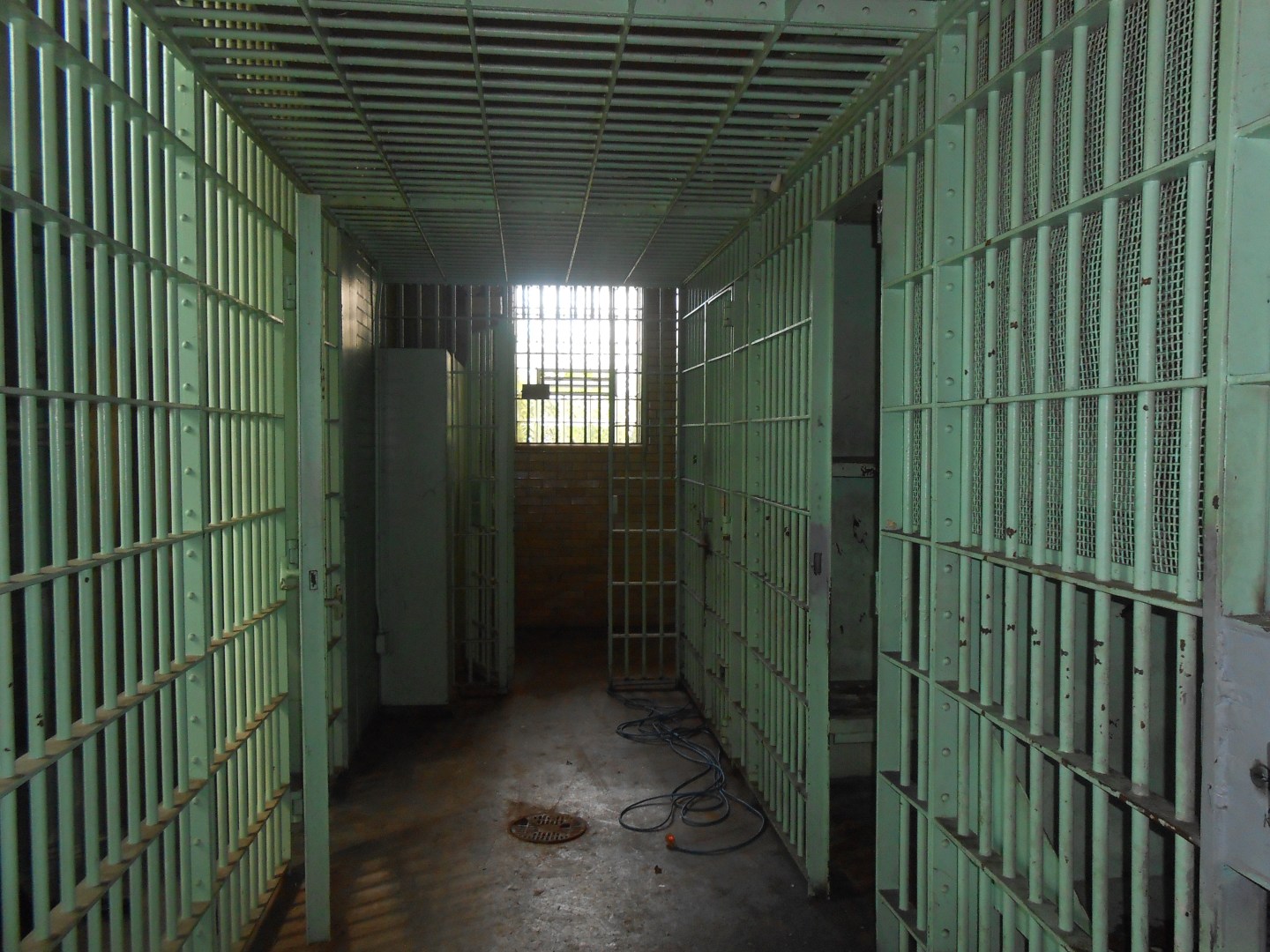
It was about this time that King Herod arrested some who belonged to the church, intending to persecute them. He had James, the brother of John, put to death with the sword. When he saw that this met with approval among the Jews, he proceeded to seize Peter also. This happened during the Festival of Unleavened Bread. After arresting him, he put him in prison, handing him over to be guarded by four squads of four soldiers each. Herod intended to bring him out for public trial after the Passover.
So Peter was kept in prison, but the church was earnestly praying to God for him.
The night before Herod was to bring him to trial, Peter was sleeping between two soldiers, bound with two chains, and sentries stood guard at the entrance. Suddenly an angel of the Lord appeared and a light shone in the cell. He struck Peter on the side and woke him up. “Quick, get up!” he said, and the chains fell off Peter’s wrists.
Then the angel said to him, “Put on your clothes and sandals.” And Peter did so. “Wrap your cloak around you and follow me,” the angel told him. Peter followed him out of the prison, but he had no idea that what the angel was doing was really happening; he thought he was seeing a vision. They passed the first and second guards and came to the iron gate leading to the city. It opened for them by itself, and they went through it. When they had walked the length of one street, suddenly the angel left him.
Then Peter came to himself and said, “Now I know without a doubt that the Lord has sent his angel and rescued me from Herod’s clutches and from everything the Jewish people were hoping would happen.”
When this had dawned on him, he went to the house of Mary the mother of John, also called Mark, where many people had gathered and were praying. Peter knocked at the outer entrance, and a servant named Rhoda came to answer the door. When she recognized Peter’s voice, she was so overjoyed she ran back without opening it and exclaimed, “Peter is at the door!”
“You’re out of your mind,” they told her. When she kept insisting that it was so, they said, “It must be his angel.”
But Peter kept on knocking, and when they opened the door and saw him, they were astonished. Peter motioned with his hand for them to be quiet and described how the Lord had brought him out of prison. “Tell James and the other brothers and sisters about this,” he said, and then he left for another place.
In the morning, there was no small commotion among the soldiers as to what had become of Peter. After Herod had a thorough search made for him and did not find him, he cross-examined the guards and ordered that they be executed.
Then Herod went from Judea to Caesarea and stayed there. He had been quarreling with the people of Tyre and Sidon; they now joined together and sought an audience with him. After securing the support of Blastus, a trusted personal servant of the king, they asked for peace, because they depended on the king’s country for their food supply.
On the appointed day Herod, wearing his royal robes, sat on his throne and delivered a public address to the people. They shouted, “This is the voice of a god, not of a man.” Immediately, because Herod did not give praise to God, an angel of the Lord struck him down, and he was eaten by worms and died.
But the word of God continued to spread and flourish.
When Barnabas and Saul had finished their mission, they returned from Jerusalem, taking with them John, also called Mark.
- Acts 12:1-25
Noted Biblical Scholars, Teachers, and Preachers Comments
Acts 11:23 ‘God’s grace at work’: “When Barnabas arrived in Antioch he saw the grace of God and was glad (v. 23). What he saw was not just a large and motley crowd of unlikely looking people crowding into someone’s house, praising God and being taught about Jesus and the Scriptures. What he saw was God’s grace at work. It took humility and faith to see that, and Barnabas had both, thanks to the work of the Holy Spirit in him.”
- N. T. Wright, Acts (from the For Everyone Bible Study Series)
Acts 11:25 ‘Tarsus’: “to seek Saul. This was no easy task. Several years had elapsed since Saul fled Jerusalem (9:30). Apparently, he had been disinherited and forced to leave his home due to his new allegiance to Christianity (Phil. 3:8).”
- John MacArthur, John MacArthur Commentary (quoted Scripture without bold/italics)
Acts 11:30 ‘elders’: “This is the first mention of the men who were pastor-overseers of the churches (15:4, 6, 22, 23; 16:4; 21:18); i.e., a plurality of godly men responsible to lead the church (see notes on 1 Tim. 3:1-7; Titus 1:5-9). They soon began to occupy the leading role in the churches, transitioning from the apostles and prophets, who were foundational (cf. Eph. 2:20; 4:11).”
- John MacArthur, John MacArthur Commentary (quoted Scripture without bold/italics)
Acts 12:1-6 ‘Herod Agrippa’s persecution’: “After initial opposition from the chief priests and then persecution initiated by a zealous young Pharisee, the followers of Jesus now at last come in for royal attention. Herod Agrippa I was thought of by the Jewish population as ‘their man,’ trusted more or less by the Romans but also popular with his people. It was also strongly in Herod’s interests both to show his Roman overlords that he would not tolerate dangerous movements developing under his nose and to show his own people that he was standing up, as they would have seen it, for their ancestral traditions. Herod either saw, or wanted people to think he saw, the Christian movement as a political threat. He took action at Passover time, which was thought of as the time when God delivered his people from slavery.”
- N. T. Wright, Acts (from the For Everyone Bible Study Series)
Acts 12:1 ‘Herod the king’: “Herod Agrippa I reigned from A.D. 37-44 and was the grandson of Herod the Great. He ran up numerous debts in Rome and fled to Palestine. Imprisoned by Emperor Tiberius after some careless comments, he eventually was released following Tiberius’s death, and was made ruler of northern Palestine, to which Judea and Samaria were added in A.D. 41. As a hedge against his shaky relationship with Rome, he curried favor with the Jews by persecuting Christians.”
- John MacArthur, John MacArthur Commentary (quoted Scripture without bold/italics
Acts 12:2 ‘James’: “The first of the apostles to be martyred (see note on Matt. 10:2). with the sword. The manner of his execution indicates James was accused of leading people to follow false gods (cf. Deut. 13:12-15).”
- John MacArthur, John MacArthur Commentary (quoted Scripture without bold/italics)
Acts 12:7-17 ‘Peter’s release’: “Luke allows us to see the early church for a moment not as a bunch of great heroes and heroines of the faith, but as the same kind of muddled, half-believing, faith-one-minute-and doubt-the-next sort of people as most Christians we all know. Skeptical thinkers dismiss the story of Peter’s release from prison as a pious legend, but nobody constructing a pious legend out of thin air would make up this ridiculous story about Rhoda (so excited she forgets to open the door) and the praying-but-hopeless church (who thinks Rhoda is mad when she says their prayers are answered). It has the ring of truth: ordinary truth, down-to-earth truth, at the very moment that it is telling us something truly extraordinary and heaven-on-earthly.”
- N. T. Wright, Acts (from the For Everyone Bible Study Series)
Acts 12:12 ‘importance of prayer’: “Notice the importance that the early church attributed to prayer and to prayer meetings. Meetings for prayer had become a standing institution in the church. It appears, however, that while prayer meetings were a regular institution, prayer was sometimes made special, tor we read, ‘The church was praying fervently to God for him’ (v. 5), that is, for Peter. It adds greatly to the interest and not a little to the fervency of prayer when there is some great object to pray for. The believers would have prayed if Peter had been out of prison, but, seeing that he was in prison and likely to be put to death, the prayer meeting was especially to pray tor Peter, that the Lord would deliver his servant or give him grace to die triumphantly. And this special subject gave enthusiasm to the assembly-—they prayed fervently. It also is clear that these friends fully believed there was power in prayer, for they did not meet together to arrange a plan for getting Peter out of prison. It looked as if they could do nothing, but they felt they could do everything by prayer. They thought little of the fact that sixteen soldiers had Peter in their charge. These believing men and women still prayed to get Peter out. They believed in God, that he would do wonders. They believed in prayer, that it had an influence with God and that the Lord listened to the believing petitions of his servants. They did not keep up prayer as a pious exercise that would have no result with God. They knew God assuredly hears and answers his people’s prayers. Finally, this prayer was industriously continued. As soon as Herod had put Peter in prison, the church began to pray. Herod had his sentries of the night to keep watch; the church had its soldiers too.”
- Charles H. Spurgeon, from sermon notes
Acts 12:12 ‘Mary’: “Mark is called the cousin of Barnabas in Colossians 4:10, so she was his aunt. John … Mark. Cousin of Barnabas (Col. 4:10), acquaintance of Peter in his youth (1 Pet. 5:13), he accompanied Barnabas and Paul to Antioch (v. 25) and later to Cyprus (1324, 5). He deserted them at Perga (13:13), and Paul refused to take him on his second missionary journey because of that desertion (15:36—41). He accompanied Barnabas to Cyprus (15:39). He disappeared until he was seen with Paul at Rome as an accepted companion and coworker (Col. 4:10; Philem. 24). During Paul’s second imprisonment at Rome, Paul sought John Mark’s presence as useful to him (2 Tim. 4:11). He wrote the second Gospel that bears his name, being enriched in his task by the aid of Peter (1 Pet. 5:13).”
- John MacArthur, John MacArthur Commentary (quoted Scripture without bold/italics)
Acts 12:17 ‘James’: “The Lord’s brother, now head of the Jerusalem church… he departed. Except for a brief appearance in chapter 15, Peter fades from the scene as the rest of Acts revolves around Paul and his ministry.”
- John MacArthur, John MacArthur Commentary (quoted Scripture without bold/italics)
Acts 12:18-25 ‘God is sovereign, even during persecution’: “Things appear to go badly for the church, this way or that. There may be real reverses, tragedies and disasters. And yet the God who has revealed himself in and through Jesus remains sovereign, and his purpose is going forward whatever the authorities from without or various controversies from within may do to try to stop it. The chief priests in Jerusalem have been left spluttering angrily into their beards; Saul of Tarsus, the most prominent and violent of the Pharisaic persecutors, has been converted; and now Herod Agrippa, having had an unsuccessful attempt at killing off the church’s main leadership, is himself suddenly cut down with a swift and fatal disease.”
- N. T. Wright, Acts (from the For Everyone Bible Study Series)
Acts 12:18 ‘free from jail or free from sin?’: “Peter was in prison. It was a most unlikely thing that he should come forth from Herod’s jail, but it is a far more unlikely thing that sinners should be set free from the dungeons of sin! For the iron gate that opened into the city to turn on its hinges of its own accord was amazing, but for a sinful heart to loathe its sin is stranger by far! Who can escape from the grasp of sin? No person is more terribly shut up than is the sinner in the prison of original depravity. It is not merely around us, but in us, encompassing our path whether we lie down or rise up. Stronger than granite walls and bars of iron are the forces of evil. Evil has penetrated our souls. It has become part of us. Where can we fly from its presence, or how can we escape from its power? Vain are the wings of the morning; they cannot enable us to fly from our own selves.”
- Charles H. Spurgeon, from sermon notes
Acts 12:23 ‘did not give glory to God’: “The crime for which Herod was executed by God (A.D. 44), who will eventually condemn and execute all who are guilty of this crime (Rom. 1:18-23). eaten by worms. According to Iosephus, Herod endured terrible pain for five days before he died.”
- John MacArthur, John MacArthur Commentary (quoted Scripture without bold/italics)
Acts 12 ‘added notes of the Herods’: “The Herod in this chapter was a grandson of Herod the Great and half-brother of Herod Antipas, the brooding and malevolent figure of the Gospels during Jesus’ years of public ministry. The full name of the king in Acts 12 is Herod Julius Agrippa, and he is sometimes referred to as Agrippa l in distinction to his son, Herod Agrippa II, whom we shall meet in Acts 25-26. Herod Agrippa l died in A.D. 44 as we know from various sources.
“The Herods had no royal blood, and were not even fully Jewish, though they gave token approval to the Jewish faith. They were primarily opportunistic military commanders and politicians whom the Romans made into kings to further their own Middle Eastern agendas. The Romans had installed Herod the Great and then his sons after him as puppet monarchs to do their dirty Work for them. Most Jews resented both parts of this arrangement and longed for a chance to revolt.”
- N. T. Wright, Acts (from the For Everyone Bible Study Series)
My Thoughts
We suffer on occasion, and we wonder what God is up-to. We might wonder if He is really sovereign, but God caused the Christians in Jerusalem to spread out due to the killing of Stephen. It took scrambling languages in Babel. It took wandering the wilderness to take the Promised Land. It takes persecution of the people of the Way to get them to accomplish what God commanded of them. This may be one reason the church grows stronger in areas of persecution. Their faith is a life or death experience. When we do not have resistance, we get complacent.
But even then, the witnessing is to other Jews. But the people of Cyprus and the area around Antioch (Syria) is hungry for the Gospel. The believers in Syria are the first to be called “Christians.” Barnabas goes to Antioch to lead the church. Barnabas thinks of Saul and goes to Tarsus to have Saul help in leading the church. They are there as the church leaders for over a year.
A prophet of that region, Agabus, prophesies that there will be a famine in the entire area. The Antioch church organizes aid for those in Jerusalem and has Saul and Barnabas deliver the aid during the famine.
In the meantime, Herod ramps up his persecution of the people of the Way. He has James, John’s brother killed by the sword, a symbol of teaching regarding a false god. Herod arrested Peter and has a kangaroo court set up. The Scripture speaks of Herod being backed by public opinion, but it may be like the polls of today. It all depends on who you ask. Obviously, the religious leaders who had Jesus killed and led to the riot that killed Stephen are more determined than ever to rid themselves of Christianity. If they yelled louder than anyone else, that is all Herod heard, and Herod seemed to be egotistical enough to want to be liked by the church leaders.
The rescue of Peter by the angel is worthy of a sitcom television show. Since “Rhoda” was a sitcom many years ago, it fits. Peter thinks he is having a vision, but the angel is causing iron gates to open on their own and guards to not see what is happening. Note that there is no record that the guards guarding Jesus’ tomb were killed, but this record shows that the guards were killed in this instance. Also note a little later in Acts that the jailor is ready to kill himself when he thinks the prisoners have escaped in Philippi. Guards being unable to maintain the prisoners in the prison were killed in those days.
The angel disappears after walking with Peter for about a block. At this point, Peter comes to his senses. It is believed that the house of Mary, John Mark’s mother, is where Jesus gave the Last Supper and was a meeting place for the Apostles. It was natural that Peter would go there to announce his rescue, but he would not wish to stay there. It might be the first place that Herod’s men would look. Peter being there would endanger all those in the house. And if Peter goes somewhere else, he can more easily preach the Gospel. Peter had already resigned himself to die after the trial was held. Jesus had suggested the method, but there must have been a reason the angel rescued him. Thus, he went somewhere else. Not in hiding, but to spread the Gospel.
Also note that the James at the end of the chapter is the half brother of Jesus. James, brother of John, was martyred. Most experts say that the brothers of Jesus, specifically James and Jude, believed after Jesus’ resurrection. James was the leader of the church in Jerusalem, and he wrote the book of James.
When Herod negotiated with Tyre and Sidon, the people praised him, saying he was a god. He accepted the praise. An angel afflicted him with a disease involving worms and he died.
As Rev. MacArthur says above, the arrogant acceptance of praise while ignoring the role God played is the undoing of people who do not believe. In believing, we put God first and our own interests are negligible because we trust God to take care of us.
Acts 12 marks the end of the narrative of the life of Peter and the focus is on how God worked through the Apostle to the Gentiles, Paul. There is only one brief mention of Peter after this point.
Some Serendipitous Reflections
Acts 11:19-30 The Church at Antioch: 1. With whom do you associate that no minister or priest would normally contact? How can you share the gospel with those people?
“2. Would these people be comfortable in your church as it now is? Why or why not? How should you address this issue?
“3. What would you consider as evidence that the grace of God is at work in your life? In your church?
Acts 12: 1. Who truly has power here: Herod or the Lord of the church? What does this tell you about how Christians ought to deal with opposition and persecution? What worldly forces seem all-powerful to you? How does this chapter put them in perspective for you?
“2. How are you like the people at the prayer meeting in this story? What are some of your prayers that would surprise you if God answered affirmatively?
“3. Although Peter was miraculously rescued from prison, he went into hiding to avoid Herod. In leaving Jerusalem, do you think Peter acted: (a) With a lack of faith? (b) With common sense? (c) Within God’s plan? Explain.
“4. Likewise, where do you see an overlap between God’s power and human common sense in the ways things work out for your deliverance?”
- Lyman Coleman, et al, The NIV Serendipity Bible for Study Groups
There is one set of questions for the end of Acts 11 and another set of questions for Acts 12.
Substitute whatever group for any reference to a small group or ask who could come to your aid.
If you like these Thursday morning Bible studies, but you think you missed a few, you can use this LINK. I have set up a page off the home page for links to these Thursday morning posts. I will continue to modify the page as I add more.
Soli Deo Gloria. Only to God be the Glory.
 Thoughts from Mark "Hat" Rackley
Leave a comment