Paul looked straight at the Sanhedrin and said, “My brothers, I have fulfilled my duty to God in all good conscience to this day.” At this the high priest Ananias ordered those standing near Paul to strike him on the mouth. Then Paul said to him, “God will strike you, you whitewashed wall! You sit there to judge me according to the law, yet you yourself violate the law by commanding that I be struck!”
Those who were standing near Paul said, “How dare you insult God’s high priest!”
Paul replied, “Brothers, I did not realize that he was the high priest; for it is written: ‘Do not speak evil about the ruler of your people.’”
Then Paul, knowing that some of them were Sadducees and the others Pharisees, called out in the Sanhedrin, “My brothers, I am a Pharisee, descended from Pharisees. I stand on trial because of the hope of the resurrection of the dead.” When he said this, a dispute broke out between the Pharisees and the Sadducees, and the assembly was divided. (The Sadducees say that there is no resurrection, and that there are neither angels nor spirits, but the Pharisees believe all these things.)
There was a great uproar, and some of the teachers of the law who were Pharisees stood up and argued vigorously. “We find nothing wrong with this man,” they said. “What if a spirit or an angel has spoken to him?” The dispute became so violent that the commander was afraid Paul would be torn to pieces by them. He ordered the troops to go down and take him away from them by force and bring him into the barracks.
The following night the Lord stood near Paul and said, “Take courage! As you have testified about me in Jerusalem, so you must also testify in Rome.”
The next morning some Jews formed a conspiracy and bound themselves with an oath not to eat or drink until they had killed Paul. More than forty men were involved in this plot. They went to the chief priests and the elders and said, “We have taken a solemn oath not to eat anything until we have killed Paul. Now then, you and the Sanhedrin petition the commander to bring him before you on the pretext of wanting more accurate information about his case. We are ready to kill him before he gets here.”
But when the son of Paul’s sister heard of this plot, he went into the barracks and told Paul.
Then Paul called one of the centurions and said, “Take this young man to the commander; he has something to tell him.” So he took him to the commander.
The centurion said, “Paul, the prisoner, sent for me and asked me to bring this young man to you because he has something to tell you.”
The commander took the young man by the hand, drew him aside and asked, “What is it you want to tell me?”
He said: “Some Jews have agreed to ask you to bring Paul before the Sanhedrin tomorrow on the pretext of wanting more accurate information about him. Don’t give in to them, because more than forty of them are waiting in ambush for him. They have taken an oath not to eat or drink until they have killed him. They are ready now, waiting for your consent to their request.”
The commander dismissed the young man with this warning: “Don’t tell anyone that you have reported this to me.”
Then he called two of his centurions and ordered them, “Get ready a detachment of two hundred soldiers, seventy horsemen and two hundred spearmen to go to Caesarea at nine tonight. Provide horses for Paul so that he may be taken safely to Governor Felix.”
He wrote a letter as follows:
Claudius Lysias,
To His Excellency, Governor Felix:
Greetings.
This man was seized by the Jews and they were about to kill him, but I came with my troops and rescued him, for I had learned that he is a Roman citizen. I wanted to know why they were accusing him, so I brought him to their Sanhedrin. I found that the accusation had to do with questions about their law, but there was no charge against him that deserved death or imprisonment. When I was informed of a plot to be carried out against the man, I sent him to you at once. I also ordered his accusers to present to you their case against him.
So the soldiers, carrying out their orders, took Paul with them during the night and brought him as far as Antipatris. The next day they let the cavalry go on with him, while they returned to the barracks. When the cavalry arrived in Caesarea, they delivered the letter to the governor and handed Paul over to him. The governor read the letter and asked what province he was from. Learning that he was from Cilicia, he said, “I will hear your case when your accusers get here.” Then he ordered that Paul be kept under guard in Herod’s palace.
- Acts 23:1-35
Noted Biblical Scholars, Teachers, and Preachers Comments
Acts 23 ‘Overview’: “For Paul, under arrest in Jerusalem, the moment of crisis becomes the moment of vision. As in Corinth (Acts 18:9-10), so now in Jerusalem, the Lord will stand by Paul. These moments of realization, of clarity of inner sight, have been all-important for Paul, just as they have been for countless Christians ever since. We Christians often sell ourselves short by quietly forgetting these moments or not talking about them for fear other people won’t understand or will think we’re making it all up.”
- N. T. Wright, Acts (from the For Everyone Bible Study Series)
Acts 23:2 ‘high priest Ananias’: “Not the Annas of the Gospels (see … Luke 3:2), this man was one of Israel’s cruelest and most corrupt high priests (see … 4:6). His pro-Roman policies alienated him from the Jewish people, who murdered him at the outset of the revolt against Rome (A.D. 66). commanded . . . to strike him. An illegal act in keeping with Ananias’ brutal character. The verb translated ‘strike’ is used of the mob’s beating of Paul (21:32) and the Roman soldiers’ beating of Jesus (Matt. 27:30). It was no mere slap on the face, but a vicious blow.”
- John MacArthur, John MacArthur Commentary (quoted Scripture without bold/italics)
Acts 23:3 ‘whitewashed wall’: “Cf. Ezekiel 13: 10-16; Matthew 23:27. contrary to the law. Outraged by the high priest’s flagrant violation of Jewish law, Paul flared up in anger. When Jesus was similarly struck in violation of the law, He reacted by calmly asking the reason for the blow (John 18:23). Paul’s reaction was wrong, as he would shortly admit (v. 5). Although an evil man, Ananias still held a God-ordained office, and was to be granted the respect that position demanded.”
- John MacArthur, John MacArthur Commentary (quoted Scripture without bold/italics)
Acts 23:4 ‘revile’: “Those standing near Paul were appalled by his harsh rebuke of the high priest. ‘Revile’ is the same word used in John 9:28 to describe the Jewish leaders’ insulting remarks to the blind man whom Jesus had healed. Peter used it to speak of the abuse Iesus endured (1 Pet. 2:23).”
- John MacArthur, John MacArthur Commentary (quoted Scripture without bold/italics
Acts 23:5 ‘I do not know’: “Some believe this to be another manifestation of Paul’s eye problems (cf. Gal. 4:15); or that Paul was so angry that he forgot to whom he was speaking; or that he was being sarcastic, since Ananias was not acting like a high priest should. The simplest explanation is to take Paul’s words at face value. He had been gone from Jerusalem for many years and would not likely have recognized Ananias by sight. That this was an informal gathering of the Sanhedrin (see … 22:30) would have meant the high priest would not have been wearing his official garments. it is written. Quoted from Exodus 22:28.”
- John MacArthur, John MacArthur Commentary (quoted Scripture without bold/italics)
Acts 23:6 ‘a change of plan’: “Ananias’ haughty attitude and illegal act convinced Paul he would not receive a fair hearing before the Sanhedrin. Accordingly, he decided on a bold step. As a Pharisee, and possibly a former member of the Sanhedrin (see … 26:10), Paul was well aware of the tensions between the Sanhedrin’s two factions. He appealed to the Pharisees for support, reminding them that he himself was a Pharisee, and appealing to the major theological difference between them and the Sadducees (see … v. 7). Paul thus created a split between the Sanhedrin’s factions.”
- John MacArthur, John MacArthur Commentary (quoted Scripture without bold/italics)
Acts 23:8 ‘Sadducees … Pharisees’: “The Sadducees accepted only the Pentateuch as divinely inspired Scripture. Since they claimed (wrongly, cf. Matt. 22:23—33) that the Pentateuch did not teach that there would be a Resurrection, they rejected it. The Pharisees, however, believed in the resurrection and afterlife. Their beliefs were thus closer to Christianity than those of the Sadducees. Significantly, the Scripture records the conversion of Pharisees (15:5; John 3:1), but not of Sadducees.”
- John MacArthur, John MacArthur Commentary (quoted Scripture without bold/italics)
Acts 23:11-22 ‘Paul is going to Rome’: “When the Lord stands beside Paul the following night (23:11), it is a key turning point in Luke’s story. Paul is not, after all, going to die in Jerusalem. His sense of vocation, to go to Rome, was genuine. He isn’t promised a comfortable ride. But he will get there, and he must do there what he has done here: to bear witness. And the word for witness, as we have seen before, is the word from which we get martyr.
“Just as Paul was receiving a word from the Lord telling him that he would make it safely to Rome, a boy happened to be at the right place at the right time, pricked up his ears and knew what to do (23:12-22). This is illustrative, perhaps, of William Temple’s famous saying, ‘When l pray, coincidences happen; when I stop praying the coincidences stop happening.’”
- N. T. Wright, Acts (from the For Everyone Bible Study Series)
Acts 23:11 ‘uniquely called’: “‘You were chosen to tell about the wonderful acts of God’ (1 Peter 2:9). Let’s spend a lifetime making our heavenly Father proud.
“Use your uniqueness to do so. You exited the womb called. Don’t see yourself as a product of your parents’ DNA, but rather as a brand-new idea from heaven.
“Make a big deal out of God. Become who you are for him! Has he not transferred you from a dull, death-destined life to a rich, heaven-bound adventure? Remember, ‘You were chosen to tell about the wonderful acts of God’ (1 Peter 2:9). And do so every day of your life.
“With God, every day matters, every person counts.
“And that includes you. “
- Max Lucado, Cure for the Common Life
Acts 23:16 ‘Paul’s sister’s son’: “The only clear reference in Scripture to Paul’s family (for other possible references, see Rom. 16:7, 11, 21). Why he was in Jerusalem, away from the family home in Tarsus is not known. Nor is it evident why he would want to warn his uncle, since Paul’s family possibly disinherited him when he became a Christian (Phil. 3:8). entered the barracks and told Paul. Since Paul was not under arrest, but merely in protective custody, he was able to receive visitors.”
- John MacArthur, John MacArthur Commentary (quoted Scripture without bold/italics)
Acts 23:23 ‘soldiers … horsemen … spearmen’: “The ‘soldiers’ were legionnaires, the elite soldiers of the Roman army; the ‘horsemen’ were from the garrison’s cavalry detachment; and the ‘spearmen,’ or javelin throwers, were soldiers less heavily armed than the legionnaires. Lysias sent almost half of his 1,000-man garrison, showing how seriously he viewed the plot against Paul. Third hour of the night. 9:00 P.M.”
- John MacArthur, John MacArthur Commentary (quoted Scripture without bold/italics)
Acts 23:27 ‘having learned that he was a Roman’: “Actually, Lysias did not find this out until after he arrested Paul (22:25, 26). Lysias sought to portray himself in the best possible light before the governor. For that reason, he also neglected to mention his order to have Paul scourged (22:24), and his mistaken assumption that he was the notorious Egyptian assassin (21:38).”
- John MacArthur, John MacArthur Commentary (quoted Scripture without bold/italics)
Acts 23:31 ‘Antipatris’: “A Roman military post about forty miles from Jerusalem. Travelers from Jerusalem to Caesarea often rested there. To get there from Jerusalem in one night (v. 32) would have been an exhausting forced march for the foot soldiers.”
- John MacArthur, John MacArthur Commentary (quoted Scripture without bold/italics)
My Thoughts
Paul spoke before the Sanhedrin saying he had a good conscience, but Ananias ordered him to be struck. This was against the church law, so Paul rebuked him. But then he stated that he did not know he was the high priest. Obviously he was not acting like a high priest.
Knowing that this was pretty much a kangaroo court, Paul pitted the Pharisees against the Sadducees. Since the Sadducees did not believe in the resurrection of the dead, Paul used that fact to fracture the Sanhedrin. Some of the Pharisees even suggested Paul had been told to say what he had said to the crowd in Jerusalem through a spirit. But pitting these two groups against each other started an uproar. The Roman commander had his men bring Paul back to the barracks.
The Lord reassures Paul that his testimony given in Jerusalem will be given in Rome.
About forty men vowed to not eat or drink until Paul was dead. They suggested that the religious leaders and the high priest request Paul’s presence again over some technicality. They would ambush the group escorting Paul the next morning.
Paul is visited by his sister’s son, his nephew. The nephew reports to Paul and then the commander about the plot to ambush and kill Paul. The commander takes half his forces, roughly. They do a forced march by night to Antipatris. The cavalry then took Paul the rest of the way.
I have a different idea about the nephew and the soldiers that were marching than what Rev. MacArthur mentioned.
It is possible that Paul’s family was antagonistic toward Paul, but in the time Paul spent in Tarsus, they may have softened. Regardless, family is family. Why was the nephew there? The same reason Paul was, for Pentecost and if my uncle was arrested, I might stick around to see what happened. And if I was a Pharisee like my uncle had been, I might be close enough to hear about the plot.
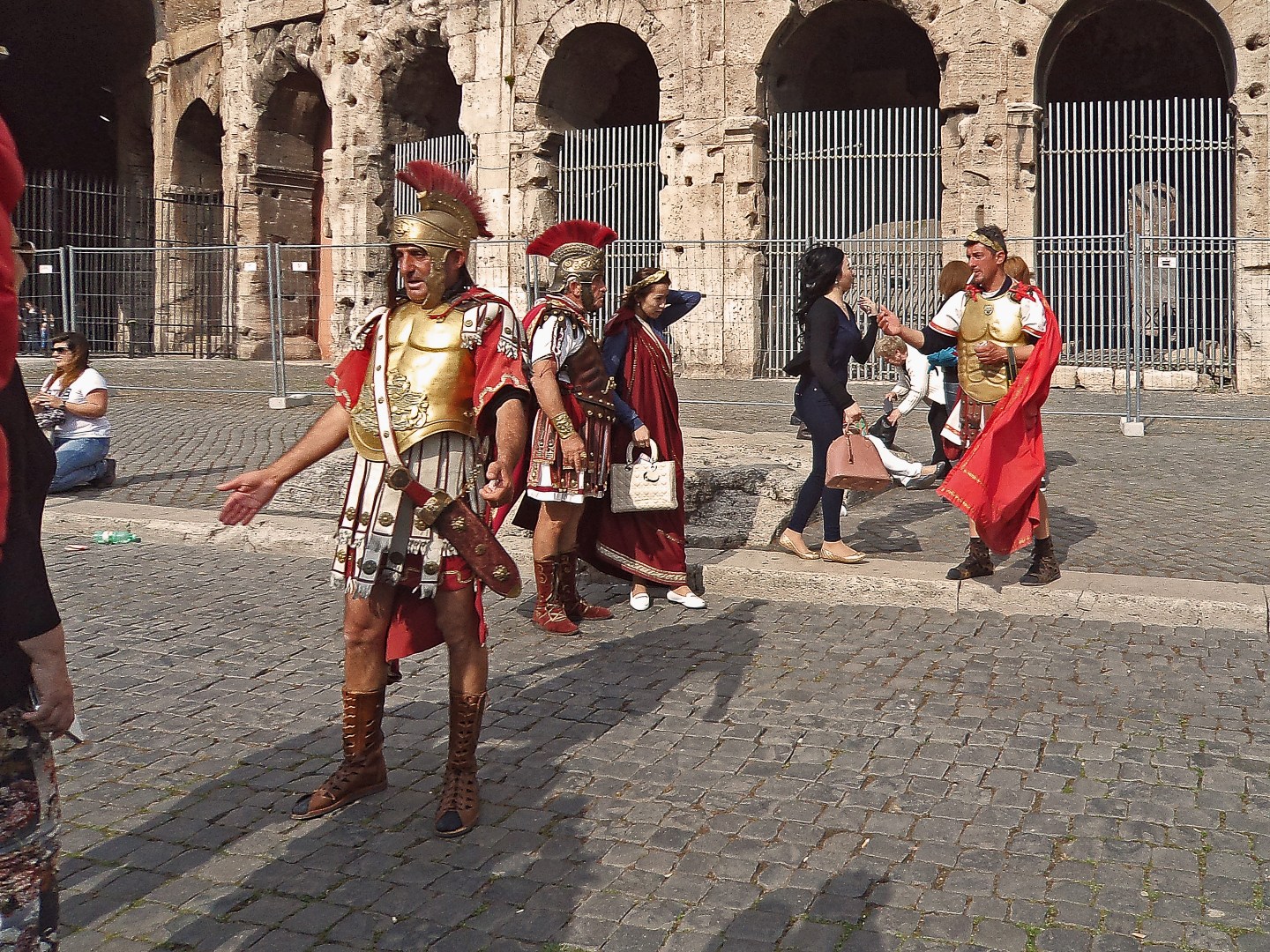
As for the soldiers, they were used to very long forced marches. This may not have been among the top ten for these soldiers. And in Legionnaire tactics, the soldiers line up in a line of ten across. They hold their shields in one hand and their sword in the other. Then ten spearmen stand behind them at a slight off set so that their spearheads stuck across the tops of the shields. Some shields had a notch, so that the spears could be pointed straight ahead with no gaps between shields. As they marched forward, the enemy had to dodge around the spears being held, not thrown. In maneuvering to avoid the spears, the cavalry could strike quickly and then retreat behind the ever-marching legion. So, do not think javelin throwing, and think of the soldiers and spearmen working together to form an impenetrable wall. Note: There were equal numbers of soldiers and spearmen, but much less cavalry.
But when Paul was sent to Caesarea to Governor Felix, a letter is sent with him by the commander, Claudius Lysias. The commander did not admit his shortcomings, obviously, but Paul was to be held for his own protection. It seemed only a local matter, but with Paul being a Roman citizen, his case should be heard.
Some Serendipitous Reflections
Acts 22:30-23:11 Before the Sanhedrin 1. When facing death, what duty do you want to have fulfilled before God? How can you pursue that course this week?
“2. How has the Lord encouraged you during hard times?
“3. What could be your ‘Rome’—the next crucial step in your spiritual journey? Why do you think so?
Acts 23:12-22 The Plot to Kill Paul 1. What examples of irrational hatred have you seen or felt? What could be a way to break through that? When is it better just to get away from them?
“2. What risks did Paul’s nephew take in this story? How might you be called upon this week to risk yourself by standing up for someone that others dislike?
Acts 23:23-35 Paul Transferred to Caesarea 1. How do Paul’s experiences with Roman authority here shed light on his comments in Romans 13:1-7? How does this contrast with Peter’s experience with the Jewish authorities in Acts 13:19-20?
“2. What do these two incidents show you about the Christians relationship with civil authority? Where do you need to show your support of government authority? Where should you be challenging it?”
- Lyman Coleman, et al, The NIV Serendipity Bible for Study Groups
There are three sets of questions as shown above for Acts 23.
Substitute whatever group for any reference to a small group or ask who could come to your aid.
If you like these Thursday morning Bible studies, but you think you missed a few, you can use this LINK. I have set up a page off the home page for links to these Thursday morning posts. I will continue to modify the page as I add more.
Soli Deo Gloria. Only to God be the Glory.
 Thoughts from Mark "Hat" Rackley
it looks very good and safe thanks
LikeLiked by 1 person