Manasseh was twelve years old when he became king, and he reigned in Jerusalem fifty-five years. He did evil in the eyes of the Lord, following the detestable practices of the nations the Lord had driven out before the Israelites. He rebuilt the high places his father Hezekiah had demolished; he also erected altars to the Baals and made Asherah poles. He bowed down to all the starry hosts and worshiped them. He built altars in the temple of the Lord, of which the Lord had said, “My Name will remain in Jerusalem forever.” In both courts of the temple of the Lord, he built altars to all the starry hosts. He sacrificed his children in the fire in the Valley of Ben Hinnom, practiced divination and witchcraft, sought omens, and consulted mediums and spiritists. He did much evil in the eyes of the Lord, arousing his anger.
He took the image he had made and put it in God’s temple, of which God had said to David and to his son Solomon, “In this temple and in Jerusalem, which I have chosen out of all the tribes of Israel, I will put my Name forever. I will not again make the feet of the Israelites leave the land I assigned to your ancestors, if only they will be careful to do everything I commanded them concerning all the laws, decrees and regulations given through Moses.” But Manasseh led Judah and the people of Jerusalem astray, so that they did more evil than the nations the Lord had destroyed before the Israelites.
The Lord spoke to Manasseh and his people, but they paid no attention. So the Lord brought against them the army commanders of the king of Assyria, who took Manasseh prisoner, put a hook in his nose, bound him with bronze shackles and took him to Babylon. In his distress he sought the favor of the Lord his God and humbled himself greatly before the God of his ancestors. And when he prayed to him, the Lord was moved by his entreaty and listened to his plea; so he brought him back to Jerusalem and to his kingdom. Then Manasseh knew that the Lord is God.
Afterward he rebuilt the outer wall of the City of David, west of the Gihon spring in the valley, as far as the entrance of the Fish Gate and encircling the hill of Ophel; he also made it much higher. He stationed military commanders in all the fortified cities in Judah.
He got rid of the foreign gods and removed the image from the temple of the Lord, as well as all the altars he had built on the temple hill and in Jerusalem; and he threw them out of the city. Then he restored the altar of the Lord and sacrificed fellowship offerings and thank offerings on it, and told Judah to serve the Lord, the God of Israel. The people, however, continued to sacrifice at the high places, but only to the Lord their God.
The other events of Manasseh’s reign, including his prayer to his God and the words the seers spoke to him in the name of the Lord, the God of Israel, are written in the annals of the kings of Israel. His prayer and how God was moved by his entreaty, as well as all his sins and unfaithfulness, and the sites where he built high places and set up Asherah poles and idols before he humbled himself—all these are written in the records of the seers. Manasseh rested with his ancestors and was buried in his palace. And Amon his son succeeded him as king.
Amon was twenty-two years old when he became king, and he reigned in Jerusalem two years. He did evil in the eyes of the Lord, as his father Manasseh had done. Amon worshiped and offered sacrifices to all the idols Manasseh had made. But unlike his father Manasseh, he did not humble himself before the Lord; Amon increased his guilt.
Amon’s officials conspired against him and assassinated him in his palace. Then the people of the land killed all who had plotted against King Amon, and they made Josiah his son king in his place.
- 2 Chronicles 33:1-27
For a link to 2 Chronicles 34, click HERE.
Josiah celebrated the Passover to the Lord in Jerusalem, and the Passover lamb was slaughtered on the fourteenth day of the first month. He appointed the priests to their duties and encouraged them in the service of the Lord’s temple. He said to the Levites, who instructed all Israel and who had been consecrated to the Lord: “Put the sacred ark in the temple that Solomon son of David king of Israel built. It is not to be carried about on your shoulders. Now serve the Lord your God and his people Israel. Prepare yourselves by families in your divisions, according to the instructions written by David king of Israel and by his son Solomon.
“Stand in the holy place with a group of Levites for each subdivision of the families of your fellow Israelites, the lay people. Slaughter the Passover lambs, consecrate yourselves and prepare the lambs for your fellow Israelites, doing what the Lord commanded through Moses.”
Josiah provided for all the lay people who were there a total of thirty thousand lambs and goats for the Passover offerings, and also three thousand cattle—all from the king’s own possessions.
His officials also contributed voluntarily to the people and the priests and Levites. Hilkiah, Zechariah and Jehiel, the officials in charge of God’s temple, gave the priests twenty-six hundred Passover offerings and three hundred cattle. Also Konaniah along with Shemaiah and Nethanel, his brothers, and Hashabiah, Jeiel and Jozabad, the leaders of the Levites, provided five thousand Passover offerings and five hundred head of cattle for the Levites.
The service was arranged and the priests stood in their places with the Levites in their divisions as the king had ordered. The Passover lambs were slaughtered, and the priests splashed against the altar the blood handed to them, while the Levites skinned the animals. They set aside the burnt offerings to give them to the subdivisions of the families of the people to offer to the Lord, as it is written in the Book of Moses. They did the same with the cattle. They roasted the Passover animals over the fire as prescribed, and boiled the holy offerings in pots, caldrons and pans and served them quickly to all the people. After this, they made preparations for themselves and for the priests, because the priests, the descendants of Aaron, were sacrificing the burnt offerings and the fat portions until nightfall. So the Levites made preparations for themselves and for the Aaronic priests.
The musicians, the descendants of Asaph, were in the places prescribed by David, Asaph, Heman and Jeduthun the king’s seer. The gatekeepers at each gate did not need to leave their posts, because their fellow Levites made the preparations for them.
So at that time the entire service of the Lord was carried out for the celebration of the Passover and the offering of burnt offerings on the altar of the Lord, as King Josiah had ordered. The Israelites who were present celebrated the Passover at that time and observed the Festival of Unleavened Bread for seven days. The Passover had not been observed like this in Israel since the days of the prophet Samuel; and none of the kings of Israel had ever celebrated such a Passover as did Josiah, with the priests, the Levites and all Judah and Israel who were there with the people of Jerusalem. This Passover was celebrated in the eighteenth year of Josiah’s reign.
After all this, when Josiah had set the temple in order, Necho king of Egypt went up to fight at Carchemish on the Euphrates, and Josiah marched out to meet him in battle. But Necho sent messengers to him, saying, “What quarrel is there, king of Judah, between you and me? It is not you I am attacking at this time, but the house with which I am at war. God has told me to hurry; so stop opposing God, who is with me, or he will destroy you.”
Josiah, however, would not turn away from him, but disguised himself to engage him in battle. He would not listen to what Necho had said at God’s command but went to fight him on the plain of Megiddo.
Archers shot King Josiah, and he told his officers, “Take me away; I am badly wounded.” So they took him out of his chariot, put him in his other chariot and brought him to Jerusalem, where he died. He was buried in the tombs of his ancestors, and all Judah and Jerusalem mourned for him.
Jeremiah composed laments for Josiah, and to this day all the male and female singers commemorate Josiah in the laments. These became a tradition in Israel and are written in the Laments.
The other events of Josiah’s reign and his acts of devotion in accordance with what is written in the Law of the Lord—all the events, from beginning to end, are written in the book of the kings of Israel and Judah.
- 2 Chronicles 35:1-27
For a link to 2 Chronicles 36, click HERE.
Noted Biblical Scholars, Teachers, and Preachers Comments
2 Chronicles 33:6 ‘Hinnom’: “This valley to the south and east of the temple was where the worship of Molech involved burning children to death (Ps. 106:37). This was forbidden in Leviticus 18:21; 20:2-5; Deuteronomy 18:10. Such horrible practices appeared in Israel from the time of Ahaz (cf. 28:3).”
- John MacArthur, John MacArthur Commentary (quoted Scripture without bold/italics)
2 Chronicles 33:11 ‘king of Assyria’: “This was most likely Ashurbanipal (c. 669-633 B.C.). Between 652 and 648 B.C., Babylon rebelled against Assyria. The city of Babylon was defeated temporarily, but Assyria may have felt Manasseh supported Babylon’s rebellion, so he was taken to trial in Babylon.”
- John MacArthur, John MacArthur Commentary (quoted Scripture without bold/italics)
2 Chronicles 33:12-13 ‘The vilest … – Redeemed’: “Manasseh was the son of a good father who nevertheless undid all his father’s actions and served false gods. He even desecrated the Lord’s courts, dedicated his children to the devil, and persecuted the people of God (2 Kg 21:16). He that ridicules and persecutes the people of God does, as it were, put his finger into God’s eye, and it will not be long before Jehovah himself will deal with him. I scarcely know what more of evil he could have done, yet he was pardoned; and if we look straight up there, amid the glorious band that sings before the throne of God of free grace and dying love, we will see Manasseh in the front rank. And we will hear his voice among the sweetest and the loudest of them all, singing, ‘Who is a pardoning God like Thee? Or who has grace so rich and free?’ How many souls have been converted by reading the story of John Bunyan as he has written it in his Grace Abounding to the Chief of Sinners? l can well remember the time when I carefully treasured up every instance of God’s mercy to sinners, as a person might store up pearls, for it seemed to me then that if l could find a soul like myself—equally sinful and equally convicted of sin, who, nevertheless, found mercy—then I also might find mercy. When the door of Noah’s ark was open, it was wide enough to let in the elephant and, consequently, there was plenty of room for the mouse, and where the camel could enter, the sheep could go. If we should feel that we have not sinned after the terrible fashion of Manasseh, yet, if there is room in God’s love for such as he, there is room enough for me.”
- Charles H. Spurgeon, from sermon notes
2 Chronicles 33:12-13 ‘Manasseh knew’: “This king was very wicked and idolatrous, a murderer of his children, and a desecrater of the temple. God graciously forgave this ‘chief of sinners’ (cf. 1 Tim. 1:15) when he repented. He did what he could to reverse the effect of his life (vv. 15-17). Although the people worshiped God and not idols, they were doing it in the wrong place and wrong way. God had commanded them to offer sacrifices only in certain places (Deut. 12:13, 14) to keep them from corrupting the prescribed forms and to protect them from pagan religious influence. Disobedience to God’s requirements in this matter surely contributed to the decline under the next king, Amon (vv. 21-25), whose corruption his successor, Josiah, had to eliminate (34:3—7).”
- John MacArthur, John MacArthur Commentary (quoted Scripture without bold/italics)
2 Chronicles 34:14 ‘hearing the Word of God’: ” In Josiah, the last good king of Judah, we find the fifth principle of restoration — return to the hearing of the Word of God. By the time Josiah came to the throne, the temple had fallen into complete disuse once again. Josiah directed the people to clean it up again…”
- Ray C. Stedman, Adventuring Through the Bible
2 Chronicles 34:14 ‘the book’: “Hilkiah had found the book, and it was a more important find than if he had discovered a mine of diamonds, or perpetual motion, or a new world. Oh, that book, that wonderful book! Was there ever anything like it under heaven? Well may it be a power when we come to think of what it is—the book of the law of the living God. How reverently did he lift it from its hiding place, remove its dust and commence to read its title and contents. Since it was ‘written by the hand of Moses,’ it was probably an autographed copy. Of that we cannot be sure, but whatever hand may have written the letters, what a book the law of the Lord is! As it has God for its author, so it commends itself to us as inestimably precious because it has God’s mind for its matter. The Old Testament is a divine light that has led multitudes of saints to the Lord’s right hand, and its luster is not dimmed by the New Testament but increased thereby. Not one tittle of it has failed or will fail; it lives and abides forever. Taking an enlarged view of the law of the Lord today and holding in our hands two Testaments, both the Old and the New, what a marvelous book the Bible is. Earth does not contain an equal wonder. Whoever reads this wondrous book aright may well value it because of the blessings it will bring. It will tell him how to be rid of all his sin and free himself from the slavery of Satan. It will teach him how to bear his present burdens and quit all needless cares. It will be a guide to him through the maze of life and a pillow for the bed of death. It will give him joy and peace through believing when the thickest troubles gather around him, and it will make him ready for the future world or glory. Whatever we need for time or for eternity, this book will either give it to us or point us to him who has it ready to give to us if we will bend our knees before him. It is a golden mine of the truth of God and infinitely more; it is a treasury of blessings and delights, and even then I have not fully described it. It has for us, sheep of the Lord, all that our good Shepherd sees that we need. Here are the green pastures wherein he makes us to feed and to lie down; and here flow the still waters, whereof if one drinks, he will never thirst but will find joy and rejoice in God forever.”
- Charles H. Spurgeon, from sermon notes
2 Chronicles 34:8 ‘repair the house of the Lord’: “During the 55-year reign of Manasseh (33: 1) and the two-year reign of Amon (33:21), the work of Hezekiah on the temple restoration was undone, which called for another extensive enterprise to ‘repair and restore’ it (vv. 9-13).”
- John MacArthur, John MacArthur Commentary (quoted Scripture without bold/italics)
2 Chronicles 34:27 ‘the Law as it relates to Josiah’: “It seemed a strange thing that so good a man, personally clear from blame, engaged in one of the holiest of works with a sincere heart devoting himself to the cause of his God, should meet with so sad and depressing a discovery just in the midst of his prosperous labors. Was there not another time the law could have been sent to him with its condemning power? Were there no other offenders far more grossly erring than he, who might have been humbled? Why need this king—with his large, royal, tender heart, all consecrated to God—to be set to weeping and to be made to go softly in the bitterness of his soul just in the moment of enthusiastic and successful labor? I take it that the reason was this—God had much love toward Josiah, and, having honored him to rebuild the temple, he knew the natural tendency of the human heart to pride. Therefore, with a holy jealousy for one whom he loved so well, he sent him this discovery of the book of the law to keep him humble at the time when otherwise he might have been exposed to peril by the lifting up of his heart.”
- Charles H. Spurgeon, from sermon notes
2 Chronicles 34: 29-31 ‘People forget’: ”The people had actually forgotten that there was a copy of the law of Moses in the temple. Worship had been so neglected in the land that God’s Word had been totally forgotten. When the priests went through the temple to clean it, they discovered the scroll of the law and brought it to the king and read it to him. Hearing the words of the law, King Josiah tore his clothes. He commanded his advisors to inquire of the Lord what he should do…
“Whenever the temple of our lives falls into disrepair and disarray, it’s time to rediscover God’s Word and return to the hearing of the Bible. When we hear God’s Word to us with a fresh understanding, and renew our covenant relationship with Him, promising to follow Him and keep His commands. We are restored to a sense of peace, security, and a right relationship.”
- Ray C. Stedman, Adventuring Through the Bible
2 Chronicles 34:33 ‘All his days’: “This noble king had a life-long influence by the power of his godly life and firm devotion to God and His Word. The strength of his character held the nation together serving the Lord. It started because, as a young man, he ‘began to seek God’ (cf. v. 3).”
- John MacArthur, John MacArthur Commentary (quoted Scripture without bold/italics)
2 Chronicles 35:3 ‘the holy ark’: “The ark of the covenant which was to remain in the Most Holy Place had been removed, probably by Manasseh, who set a carved image in its place (cf. 33:7). The law for the carrying of the ark during the tabernacle days, when it was portable, called for poles to be placed through rings on the sides, and Levites (Kohathites) to carry it by the poles without touching it (cf. Ex. 25:14, 15). Uzza(h) died for touching the ark while he was improperly transporting the ark on a cart (1 Chr. 13:6—10). Now that the temple was built and the ark had a permanent place, it no longer needed to be transported in the old way.”
- John MacArthur, John MacArthur Commentary (quoted Scripture without bold/italics)
2 Chronicles 35:18 ‘no Passover’: “Hezekiah’s Passover (cf. ch. 30) differed. It was not celebrated strictly according to Mosaic Law in that: (1) it was celebrated in the second month (30:2); (2) not all the people were purified (30:18); and (3) not all of the people came (30:10).”
- John MacArthur, John MacArthur Commentary (quoted Scripture without bold/italics)
2 Chronicles 35:21 ‘God commanded me’: “He is referring to the true God; whether he had a true revelation or not is unknown. Josiah had no way to know either, and it is apparent he did not believe that Necho spoke the word of God. There is no reason to assume his death was punishment for refusing to believe. He probably thought Necho was lying and, once victorious with Assyria over Babylon, they would together be back to assault Israel.”
- John MacArthur, John MacArthur Commentary (quoted Scripture without bold/italics)
2 Chronicles 36:5-9 ‘Judgment and Captivity’: ”God’s patience had come to an end. (36:5) …
“The Babylonians attacked Jerusalem, deposed King Jehoiakim, and led him away in shackles. Nebuchadnezzar, king of Babylon. established Jehoiakim’s son Jehoiachin as Judah’s next puppet king. So Jehoiachin did the bidding of Nebuchadnezzar from the throne of David. He, too, ‘did evil in the eyes of the LORD’ (36:9), even though he reigned for just three months and ten days.”
- Ray C. Stedman, Adventuring Through the Bible
2 Chronicles 36:21 ‘Sabbaths’: “This suggests that the every-seventh-year Sabbath which God required for the land (Lev. 25:1—7) had not been kept for 490 years dating back to the days of Eli, c. 1107-1067 B.C. (cf. 1 Sam. 1-4). Leviticus 26:27-46 warns of God’s judgment in general if this law was violated. Jeremiah 25:1—11 applied this judgment to Judah from 605 B.C. at the time of the first Babylonian deportation until 536 B.C. when the first Jews returned to Jerusalem and started to rebuild the temple (cf. Ezra 3:8).”
- John MacArthur, John MacArthur Commentary (quoted Scripture without bold/italics)
My Thoughts
First, we have Manasseh, king of Judah. Other kings did this or that when rebelling against God. Manasseh’s evil filled a paragraph. He replaced all that Hezekiah had torn down. He built altars for the Baals, Asherah poles, built altars in the temple grounds themselves to false gods. He worshipped the starry hosts. He sacrificed his own children in the fires of the valley of Ben Hinnom. He practiced divination, witchcraft, sought omens, mediums, and spiritists. And he built a graven image that he placed in the temple. He was more evil than the nations which God destroyed to establish the people in the Promised Land.
But then, the king of Assyria captured him, put a hook in his nose and carried him to Babylon. Manasseh repented. God allowed him to return, and he basically tore down everything detestable that he had built. He instructed the people to worship only the true God, but they did so from their local high places.
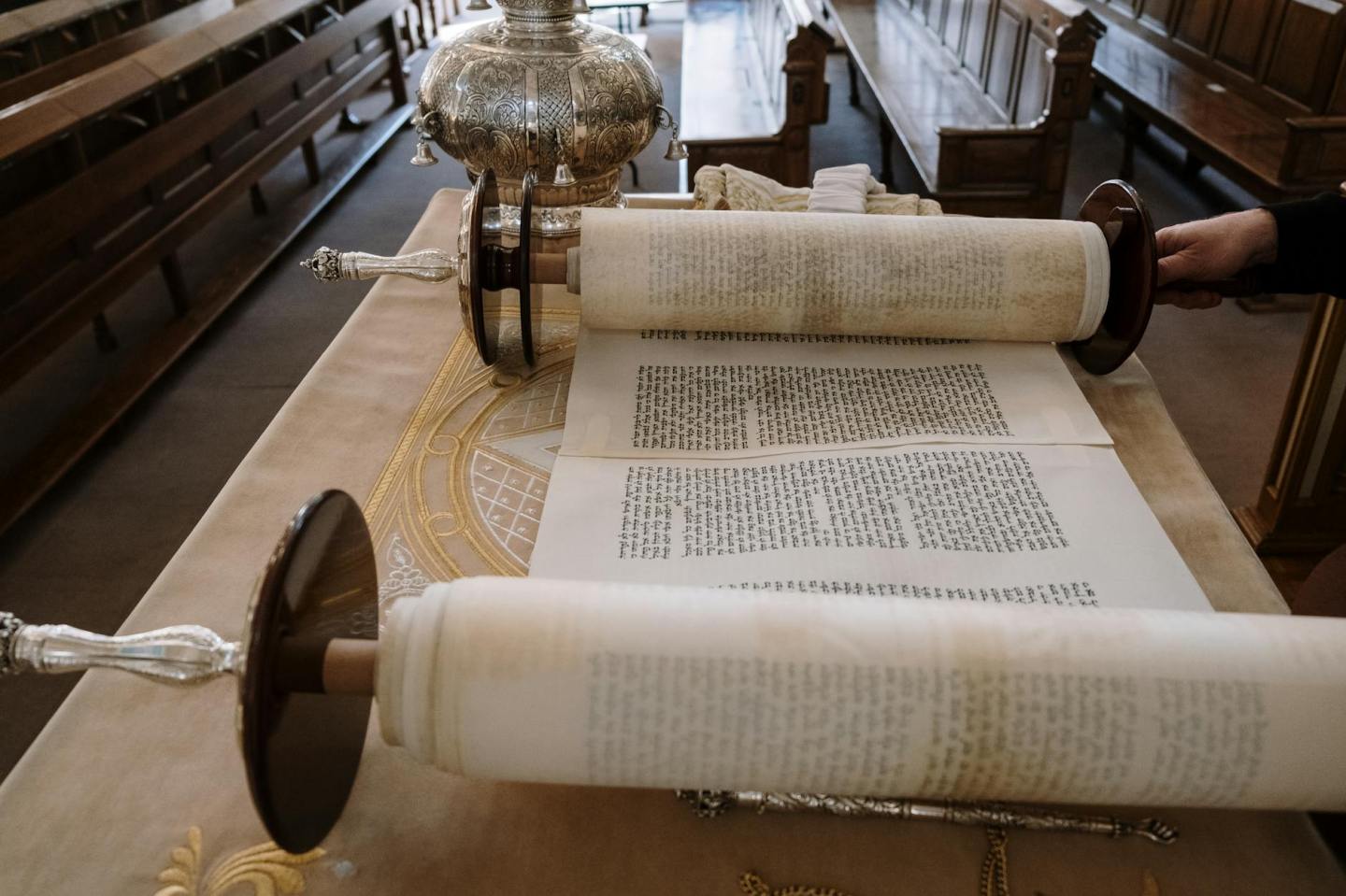
When he died, Amon, his son, became king and went back to evil practices that had gotten his father, Manasseh, in so much trouble. Amon was assassinated by his own officials, and they placed his son, Josiah, only eight years old, as king. Josiah did what was right in the eyes of God for his entire reign. He did not act immediately, but he tore down the high places and altars. As his reforms continued, in his eighteenth year of his reign, he commissioned people to repair the temple that had been disregarded and disrespected during the reigns of Manasseh and Amon. In the cleaning up, they found the book of the Law given to Moses. Hilkiah, the priest, gave the book to Shaphan, who read from it before the king. Josiah tore his robes and wept for they had not worshipped properly according to God’s commands.
He asked for a prophet who could say what God would do to them as a result of their disobedience. A female prophet, Huldah, said that God would destroy the city and Judah. They had forsaken God. God’s anger was to be poured out, but since Josiah humbled himself, tore his robes, and wept. This destruction would be done after his death.
Josiah lived in peace, but then Necho, king of Egypt sent an army. Josiah mustered an army against him. Necho said that God had sent him on a mission to destroy another foe. He had no fight with Josiah, but Josiah disguised himself. He did not trust Necho. Josiah was mortally wounded and he died soon after.
Jeremiah wrote the laments (probably Lamentations) to lament the death of Josiah, the last good king before the exile.
With Egypt winning the battle, they put Jehoahaz as king, as a puppet of Egypt, but he did evil and rebelled against Egypt. He was sent into exile in Egypt. His brother, Jehoakin, became king, again doing evil, and Nebuchadnezzar of Babylon took him into exile. His son Jehochin reigned only three months before Nebuchadnezzar took him in exile. Zedekiah, a third son of Josiah, became king. His heart was hard, he was evil. Nebuchadnezzar came to take all the articles from the palaces and temples, burning everything.
Now with no king and a few poor people left in Judah, the land sat idle for seventy years, the seventy Sabbath Years that had been ignored.
And Cyrus, king of Persia, made a decree to let the remnant return and start rebuilding the temple.
The second half of 2 Chronicles 36 reminds me of the nations of this world today. They are arrogant. They have hard hearts. They do not listen to the true prophets of God. And God’s anger will boil over and it may be soon.
But while God promised a remnant of people from Judah to return, Jesus will return to gather His people to Him. A very similar promise is made to us that He made and fulfilled with Judah. We can count on the promises of God.
Each of these last four chapters were roughly the same length. Second Chronicles 33 tells of Manasseh’s sin and his repentance, plus a paragraph on his evil son Amon.
The next two chapters are dedicated to good king Josiah. Then in the last chapter, it mentions the reign of four evil kings in barely more than half the chapter. Was their evil worth that much of a mention? And the book then focuses on the people – the people that God still loves, the people who would become the remnant and return to Judah. And King Cyrus of Persia is mentioned also. Will God totally change a future leader of Iran to facilitate another return? The book of Revelation does not allow for that. In fact, the evil army will cross the Euphrates, which becomes dry to attack Jerusalem, to Megiddo, the final battlefield.
Some Serendipitous Reflections
2 Chronicles 33: 1. Would you have shown Manasseh such mercy? Is there anything God won’t forgive if you are truly repentant?
“2. When did God first become real in your life? In what concrete ways did your life begin to change? “3. Reflect on a time you were in distress and called on the Lord. How did he come to your rescue?
2 Chronicles 34:1-13 Josiah’s Reforms 1. What clean-up programs have been top priority with you: Body clean-up? Psychological? Spiritual? What people and other resources helped a lot?
“2. What do you think of teenagers in positions of authority? How could you help them seek the Lord?
2 Chronicles 34:14-33 The Book of the Law Found 1. What comes easier to you: (a) Obeying rigorously the laws of God? Or, (b) Enjoying and taking pleasure in God? Which type of response to God would you like to experience more?
“2. How important are the words of the good Book in your daily life? How often do you read it? Do you often make concrete decisions or change behavior based simply on what you read?
“3. Who serves the role of Huldah for you? Why is this helpful? How could this service make more of an impact on you?
2 Chronicles 35:1-19 Josiah Celebrates the Passover 1. Are rituals as important in your life as they were to the ancient Israelites? How attached are rituals to your faith and spiritual growth? What’s the good and bad of rituals?
“2. Priests were central in the Passover. Who is a priest to you?
2 Chronicles 35:20-36:1 The Death of Josiah 1. Your death can come unexpectedly just as Josiah‘s did. Are you prepared to die?
2 Chronicles 36:2-23 The remaining kings of Judah and the Fall of Jerusalem 1. The faithfulness of the Lord lasts through generations. Does this chapter depress you or give you hope for the future of Israel? For your own life? For your small group? How so?
“2. In the cycle of good and bad kings and their effect on people, two major compulsions are evident in 2 Chronicles: (a) The compulsion of tyrannized people to assert their freedom; and (b) the compulsion of free people to self-destruct. How is this cycle and these two compulsions evident in your world?
“3. In your own life cycle and struggles with freedom, which do you feel more compelled to do right now?”
- Lyman Coleman, et al, The NIV Serendipity Bible for Study Groups
There is one set of questions for 2 Chronicles 33. Second Chronicles 34 has two sets of questions each as noted. Second Chronicles 35-36 have three sets of questions as noted.
Substitute whatever group for any reference to a small group or ask who could come to your aid.
If you like these Thursday morning Bible studies, but you think you missed a few, you can use this LINK. I have set up a page off the home page for links to these Thursday morning posts. I will continue to modify the page as I add more.
Soli Deo Gloria. Only to God be the Glory.
 Thoughts from Mark "Hat" Rackley
Leave a comment