For a link to Ezra 4, click HERE.
Now the men and their wives raised a great outcry against their fellow Jews. Some were saying, “We and our sons and daughters are numerous; in order for us to eat and stay alive, we must get grain.”
Others were saying, “We are mortgaging our fields, our vineyards and our homes to get grain during the famine.”
Still others were saying, “We have had to borrow money to pay the king’s tax on our fields and vineyards. Although we are of the same flesh and blood as our fellow Jews and though our children are as good as theirs, yet we have to subject our sons and daughters to slavery. Some of our daughters have already been enslaved, but we are powerless, because our fields and our vineyards belong to others.”
When I heard their outcry and these charges, I was very angry. I pondered them in my mind and then accused the nobles and officials. I told them, “You are charging your own people interest!” So I called together a large meeting to deal with them and said: “As far as possible, we have bought back our fellow Jews who were sold to the Gentiles. Now you are selling your own people, only for them to be sold back to us!” They kept quiet, because they could find nothing to say.
So I continued, “What you are doing is not right. Shouldn’t you walk in the fear of our God to avoid the reproach of our Gentile enemies? I and my brothers and my men are also lending the people money and grain. But let us stop charging interest! Give back to them immediately their fields, vineyards, olive groves and houses, and also the interest you are charging them—one percent of the money, grain, new wine and olive oil.”
“We will give it back,” they said. “And we will not demand anything more from them. We will do as you say.”
Then I summoned the priests and made the nobles and officials take an oath to do what they had promised. I also shook out the folds of my robe and said, “In this way may God shake out of their house and possessions anyone who does not keep this promise. So may such a person be shaken out and emptied!”
At this the whole assembly said, “Amen,” and praised the Lord. And the people did as they had promised.
Moreover, from the twentieth year of King Artaxerxes, when I was appointed to be their governor in the land of Judah, until his thirty-second year—twelve years—neither I nor my brothers ate the food allotted to the governor. But the earlier governors—those preceding me—placed a heavy burden on the people and took forty shekels of silver from them in addition to food and wine. Their assistants also lorded it over the people. But out of reverence for God I did not act like that. Instead, I devoted myself to the work on this wall. All my men were assembled there for the work; we did not acquire any land.
Furthermore, a hundred and fifty Jews and officials ate at my table, as well as those who came to us from the surrounding nations. Each day one ox, six choice sheep and some poultry were prepared for me, and every ten days an abundant supply of wine of all kinds. In spite of all this, I never demanded the food allotted to the governor, because the demands were heavy on these people.
Remember me with favor, my God, for all I have done for these people.
- Nehemiah 5:1-19
When word came to Sanballat, Tobiah, Geshem the Arab and the rest of our enemies that I had rebuilt the wall and not a gap was left in it—though up to that time I had not set the doors in the gates—Sanballat and Geshem sent me this message: “Come, let us meet together in one of the villages on the plain of Ono.”
But they were scheming to harm me; so I sent messengers to them with this reply: “I am carrying on a great project and cannot go down. Why should the work stop while I leave it and go down to you?” Four times they sent me the same message, and each time I gave them the same answer.
Then, the fifth time, Sanballat sent his aide to me with the same message, and in his hand was an unsealed letter in which was written:
“It is reported among the nations—and Geshem says it is true—that you and the Jews are plotting to revolt, and therefore you are building the wall. Moreover, according to these reports you are about to become their king and have even appointed prophets to make this proclamation about you in Jerusalem: ‘There is a king in Judah!’ Now this report will get back to the king; so come, let us meet together.”
I sent him this reply: “Nothing like what you are saying is happening; you are just making it up out of your head.”
They were all trying to frighten us, thinking, “Their hands will get too weak for the work, and it will not be completed.”
But I prayed, “Now strengthen my hands.”
One day I went to the house of Shemaiah son of Delaiah, the son of Mehetabel, who was shut in at his home. He said, “Let us meet in the house of God, inside the temple, and let us close the temple doors, because men are coming to kill you—by night they are coming to kill you.”
But I said, “Should a man like me run away? Or should someone like me go into the temple to save his life? I will not go!” I realized that God had not sent him, but that he had prophesied against me because Tobiah and Sanballat had hired him. He had been hired to intimidate me so that I would commit a sin by doing this, and then they would give me a bad name to discredit me.
Remember Tobiah and Sanballat, my God, because of what they have done; remember also the prophet Noadiah and how she and the rest of the prophets have been trying to intimidate me. So the wall was completed on the twenty-fifth of Elul, in fifty-two days.
When all our enemies heard about this, all the surrounding nations were afraid and lost their self-confidence, because they realized that this work had been done with the help of our God.
Also, in those days the nobles of Judah were sending many letters to Tobiah, and replies from Tobiah kept coming to them. For many in Judah were under oath to him, since he was son-in-law to Shekaniah son of Arah, and his son Jehohanan had married the daughter of Meshullam son of Berekiah. Moreover, they kept reporting to me his good deeds and then telling him what I said. And Tobiah sent letters to intimidate me.
- Nehemiah 6:1-19
For a link to Ezra 7, click HERE.
Noted Biblical Scholars, Teachers, and Preachers Comments
Nehemiah 4:2 ‘the army of Samaria’: “While it is a possibility that his intentions were to provoke the military force to action, since that would have brought the Persian overlord down on Samaria swiftly, harassment and mockery (v. 3) became the primary strategy to prevent the reconstruction of the walls.”
- John MacArthur, John MacArthur Commentary (quoted Scripture without bold/italics)
Nehemiah 4:10 ‘before you build, remove the debris’: “Jerusalem, I do not doubt, was one vast heap made up of the debris of its houses, of the tower and armory of David, of the palace of the king, and of the temple itself. And though the temple had been rebuilt and modern houses covered the site of the older Jerusalem, yet, when they came to the wall of the city, with the view of thoroughly restoring it, they found it a complete ruin—and such a ruin that the mass that covered it up was difficult to dig through. They could not build the wall because there was so much rubble. This may be viewed as a type of the work that God’s people have to carry on in the name of Jesus and in the power of his Holy Spirit in the world. We have to build the walls of the church for God, but we cannot build it, for there is so much rubble in our way. This is true not only of the building of the church, but it is equally true of the temple of God, which is to be built in each of our hearts. We often feel discouraged. Jude 20 speaks of ‘build[ing] yourselves up in your most holy faith, praying in the Holy Spirit,’ but we are still apt to feel that we cannot build this wall because there is so much rubble. What a fall the fall was! What a total ruin did it make of our moral nature! Do we not discover—I do, almost every day—some fresh heap of rubble we hardly knew was there? Points where we thought ourselves strong turn out to be our weaknesses. There was an infirmity from which we half indulged the thought that we were clear, and therefore we were rather severe with others for having such an infirmity and sin. But at last it broke out in us. Much more of such rubble remains in us—the nibble of pride, of unbelief, of evil lusting, of anger, of despondency; of self-exaltation. There it is, and the building of divine grace does not advance as we would wish because of the corruption that still abides in us. None but Jesus, none but Jesus! There rests our souls‘ only hope—his precious blood and righteousness. Every other hope we heartily abhor. When one is brought to rest alone in Jesus, there is laid for him in Zion a sure foundation stone, and to that he is cemented by sovereign grace. Let us thank God that the building up of his temple in us is his own work. He began it; he dug out and made clear to us our own emptiness; he cast out our self-righteousness, and he laid Christ where our self had once been. The Lord did that, and he has done everything else that has been done in us that has been worth doing.”
- Charles H. Spurgeon, from sermon notes
Nehemiah 4:13-15 ‘positioned men’: “Nehemiah and the others had received word that Sanballat had mustered the army of Samaria (4:2). In fact, God made sure the strategy was known by letting the nearby Jews know, so they would report it to Judah’s leaders. Though vigilant, armed, and ready, Nehemiah and those he led consistently gave God the glory for their victories and construction successes.”
- John MacArthur, John MacArthur Commentary (quoted Scripture without bold/italics)
Nehemiah 4:18-20 ‘trumpet’: “Among other functions, trumpets were used to sound an alarm in the event of danger or to summon soldiers to battle. Nehemiah kept a trumpeter at his side always, so that the alarm could be sounded immediately. His plan also included continual diligence (vv. 22, 23).”
- John MacArthur, John MacArthur Commentary (quoted Scripture without bold/italics)
Nehemiah 5:7 ‘gathering a large assembly to right a wrong’: “Many of the Jews returning with Nehemiah to Jerusalem were in poverty-stricken circumstances; and, contrary to the Jewish law, the richer Jews lent them money, charging interest. They took from their poorer brethren their lands or put a heavy mortgage on them. And in some cases they took the people themselves to be slaves for debts they had unavoidably incurred. Every Jew was a landholder, and his land, if mortgaged for a time, must return free to him in the fiftieth year. And though a Jew might for a while become a servant to his Jewish brother, he must be set free at the end of the seventh year. He could only be bound for a short period of servitude. Nehemiah called to him, therefore, the nobles, officials, and even priests oi Jerusalem and showed them how wrong they were to hold their poorer brethren in bondage. When he found that his own words were scarcely powerful enough with them, he gathered together the people and let them all have a voice, for in many voices there is power. Some persons are deaf to the voice of justice until it is repeated loudly by thousands of others. The silent voice of principle and right they will not hear, and the gentle rebuke of some faithful friend they will despise; but when righteousness enlists public opinion on its side, when many are seen to be its advocates, then these persons will show that they have relics of conscience left, and they yield to right demands because they see them not only to be just but also popular. This is the main point with those of the feebler sort, and we turn the tide, if, like Nehemiah, we call ‘a large assembly against them.’ ”
- Charles H. Spurgeon, from sermon notes
Nehemiah 5:8 ‘we have redeemed’: “Nehemiah denounced with just severity the evil conduct of selling a brother by means of usury. He contrasted it with his own action of redeeming with his own money some of the Jewish exiles, who through debt had lost their freedom in Babylon.”
- John MacArthur, John MacArthur Commentary (quoted Scripture without bold/italics)
Nehemiah 5:12 ‘an oath’: “The consciences of the guilty were struck by Nehemiah’s words, so that their fear, shame, and contrition caused them to pledge the release of their loans and restore property and interest, including setting slaves free. This cancellation of debt had a profoundly unifying effect on both sides of the indebtedness. The proceedings were formally consummated with the people binding themselves by a solemn oath from the priests (acting as administrators) that they would be faithful to the pledge.”
- John MacArthur, John MacArthur Commentary (quoted Scripture without bold/italics)
Nehemiah 5:16 ‘we did not buy any land’: “Even though the time to purchase property from those forced to sell couldn’t have been better, Nehemiah maintained a consistent personal policy not to take advantage of another’s distress. He worked on the wall rather than spending his time building personal wealth.”
- John MacArthur, John MacArthur Commentary (quoted Scripture without bold/italics
Nehemiah 6:2 ‘sent to me’: “This suggests either a letter or an oral message delivered by messenger to Nehemiah. Satisfied that they could not prevent Nehemiah’s project from succeeding by open military engagement (see note on 4:13—15), they decided to overcome him by deception. plain of Ono. Located south of Joppa on the western extremity of Judah along the seacoast.”
- John MacArthur, John MacArthur Commentary (quoted Scripture without bold/italics)
Nehemiah 6:3 ‘doing a great work’: “After all other means had failed to hinder the reconstruction, the conspirators tried to arrange for a conference with Nehemiah. The man of God saw in this an evil purpose to do him mischief and divert him from his monumental work. His reply to the would-be mischief-makers is classic, and might well be adopted for the all-time stock reply to all such overtures: ‘I am doing a great work, so that I cannot come down: why should the work cease, whilst I leave it, and come down to you?’
“The great task to which God had called Nehemiah was so important that every other consideration must be waived. Would that we might have such an overpowering sense of being about our Father’s business and be so impressed with the grandeur of our task that we would reject every suggestion of the evil one that would bid us take up some lesser pursuit. Let us rout him with the words that date back to 445 B.C., and which cannot be improved upon: ‘I am doing a great work, so that I cannot come down.’
“Satan’s distracting words often come from the most unexpected quarters. Martha would call Mary away from sitting at the feet of the Master. Sometimes, if we are not careful, our best friend may distract us. Or it might be some very legitimate activity. This day’s bustle and hurly-burly would too often and too soon call us away from Jesus’ feet. These distractions must be immediately dismissed, or we shall know only the ‘barrenness of busyness.’ ”
- A. W. Tozer, We Travel an Appointed Way
Nehemiah 6:7 ‘appointed prophets to proclaim’: “If there were such prophets, Sanballat actually hired them to feed incorrect information, thus generating the false rumor (cf. 6:10-14). By dispatching such prophets to make public proclamations that Nehemiah had made himself king, the Persian imperial rule would have appeared to be supplanted.”
- John MacArthur, John MacArthur Commentary (quoted Scripture without bold/italics)
Nehemiah 6:15-16 ‘from construction to instruction’: ”Chapters 4 through 6 show us the opposition that confronted Nehemiah and his people as they began to rebuild the city walls. The opposition came primarily from a trio of schemers: Sanballat, Tobiah, and Geshem the Arab.
“This persecution can be summarized in three words: contempt, conspiracy, and cunning. The enemies heap contempt and mockery on God’s activity. When that fails, they hatch a conspiracy, trying to involve the Israelites in a plot that would overthrow this work. When that fails, they try to draw Nehemiah away from his work by a very cunning scheme. But soon you come to this triumphant statement in 6:15-16.
“That is an amazing testimony. The work of construction is done. Now begins the work of instruction.”
- Ray C. Stedman, Adventuring Through the Bible
Nehemiah 6:17-19 ‘the nobles of Judah sent many letters to Tobiah’: “Nehemiah added a footnote that in the days of building the wall, the nobles of Judah who refused to work (3:5) were in alliance and correspondence with Tobiah because, although his ancestors were Ammonites (2:19), he had married into a respectable Jewish family. Shemaiah was from the family of Arah (Ezra 2:5); his son Jehohanan was the son-in-law of Meshullam who shared in the work of building (3:4, 30). According to 13:4, the high priest, Eliashib, was related to Tobiah (which is a Jewish name). The meddling of these nobles, by trying to play both sides through reports to Tobiah and to Nehemiah (v. 19), only widened the breach as Tobiah escalated efforts to frighten the governor.”
- John MacArthur, John MacArthur Commentary (quoted Scripture without bold/italics)
Nehemiah 7:5-6 ‘I found a register’: “Nehemiah discovered a register of the people made by Ezra in Babylon before the first group returned, a listing of the people who had come with Zerubbabel.”
- John MacArthur, John MacArthur Commentary (quoted Scripture without bold/italics)
Nehemiah 7:65 ‘consult with the Urim and Thummim.’: “One of the methods used to discern the will of God on a specific matter. See … Exodus 28:30.”
- John MacArthur, John MacArthur Commentary (quoted Scripture without bold/italics)
My Thoughts
As the wall construction progressed, Sanballat, king of Samaria ridiculed and taunted the Jews who worked on the wall. Nehemiah prayed.
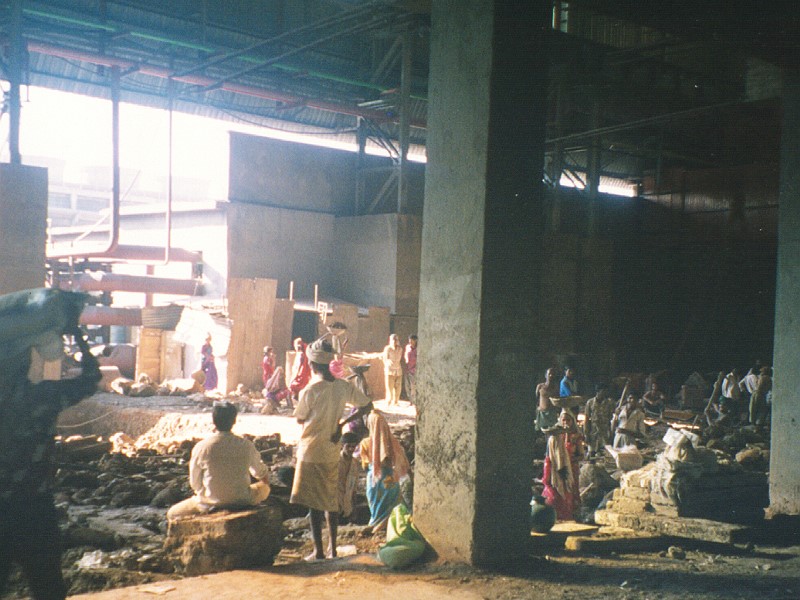
The people were exhausted. Most of their work was removing the debris. One of the taunts was that their stones had been burned. Since stones do not burn, this might seem to be a confusing taunt, but if you have a huge stone and you may not use explosives or jackhammers, you can build a fire at the base. The heat stress on the huge stone will cause a crack to form. It takes patience, but you can reduce a large stone to rubble. But from my years with the US Army Corps of Engineers and subsequent construction projects since then, you have to remove the debris and get to a clean foundation or the construction will not last long. Even in something like rapid runway repair in wartime, the debris must be removed from a bomb crater. Like the ‘burned’ stone, you do not know if the debris is structurally sound even if concrete is poured over it. A pilot would not want to make landing impact on that spot. If the debris crumbled, the ground could shift and the plane could start to tumble.
When Sanballat mustered an army, the Jews in the outlying area warned Nehemiah.
Now with everyone exhausted, half worked on the wall while the other half stood guard. People worked on the wall with one hand while carrying a sword in the other.
There were too few people to adequately cover the perimeter. They used a trumpet. I have been in a military exercise where the unit next to mine did not cover their required territory and my unit was isolated, cut off from the rest of the battalion. Nehemiah used the trumpet to rally the troops where the initial attack was, but if Sanballat used a feint (a false attack), Nehemiah ran a big risk of removing the guards from the real attack location. But that is where Nehemiah relied on prayer and trusting God. Nehemiah had more faith than I have, but then I have never been placed in that severe of a situation.
And I can remember taking a nap, sleeping on top of my M-60 machine gun, so that no one would notice I was the guy with the big gun.
Over the years, I have heard derisive remarks about the Corps of Engineers. They just build things. They cannot be considered a combat arms unit, but in the first Iraq War. The “end run” that was planned could not be done unless the engineers went into Iraq by themselves. There was a huge earthen berm, like a levee along the Mississippi River, blocking any advance. Even the berm was guarded by minefields. Half the engineers guarded while the other half cut a hole in the Iraqi defenses, so that when the attack started, the tanks had smooth ground, free of mines to drive into Iraq. The engineers earn their stripes.
Nehemiah 5 is a shadow of Jeremiah 34. The king pronounced that everyone should free their slaves because the nobles and rich never exercised the law to free the slaves every seven years for about 500 years. The punishment for the exile would be seventy years to remind them of each of the jubilee years that they had missed. The people released their slaves and then enslaved them again the next day. Here in Nehemiah 5, they charge interest on loans which was against Levitical Law. They took land away for not paying the mortgage when the land was a gift from God and the mortgage holder has no right to remove the land. And they placed the debtors in prison or enslaved them. Nehemiah knew they would not do this on his authority alone, so he gathered the people to back him up.
This is done these days, but injustice is a result instead of justice. Mob rule in Nehemiah’s time ensured justice would be done. But these days, it matters how many people show up and who can yell louder or with the most anger. Mob rule has made the world upside down.
But when those who had violated Levitical Law saw they were outnumbered, they swore an oath to do the right thing. Nehemiah shook out his garments to signify they would be shaken out from the Jews if they did not comply.
In contrast to the nobles and the rich, Nehemiah did not take from the governor’s allotment, and he had a crowd at his table each day. He worked and his people worked on the wall. He never took advantage of his governor status.
The wall was finished, but before the gates were set, Sanballat tried again. He taunted. He threatened violence. Neither worked. Then he tried to lure Nehemiah into a trap, but Nehemiah simply said that he was too busy. After three times, Sanballat and Tobiah threatened to spread the rumor that the Jews were rebelling against the Persian king, but Nehemiah sent a message back that they were liars.
At this point, Sanballat and Tobiah infiltrated false prophets to lure Nehemiah, a non-Levite, into the Temple where he was not allowed to be. Nehemiah saw through their ruse.
But then the wall was rebuilt, and their enemies lost heart, knowing that it was through God being with them that they accomplished their mission.
Nehemiah then finds records of Zerubbabel (not Ezra as Rev. MacArthur mentions) of those who left Babylon. He reports these numbers, including how some of these people required the Urim and Thummim to decide whether they were eligible for the priesthood.
Some Serendipitous Reflections
Nehemiah 4: 1. When have you or your church ever attempted something so big it was beyond human control, but within God’s provision? Describe your big dream or vision.
“2. Which gives you more difficulty: External criticism or internal fears? Why?
“3. Do you usually do things one at a time (or ‘one-handed’)? Or do you like to juggle two or more things (‘weapon and water’ in hand)? Which of the juggling acts Nehemiah’s men were doing would you find toughest to do(see vv.t7, 23)?
“4. Which do you tend to do ‘with all your heart’: Work? Worry? Worship? Warfare? Why?
“5. What is one area of your life where there seems to be ‘so much rubble’? In what ways are you cooperating with others and trusting God to build something out of that rubble?
Nehemiah 5: 1. In your church this past year, what financial crisis, party politics, or other morale problems may have hindered your service to God and others? in what ways do you react like, or unlike, Nehemiah?
“2. In money matters, do you deal with a Christian differently than with a non-Christian? Why is that?
“3. Nehemiah shows us that loving God and others may require personal sacrifice. What privileges and rights are you ready to give up so that God’s work may prosper? When have your beliefs really cost you something?
Nehemiah 6:1-14 Further opposition to the Rebuilding 1. How complete is your defense against those who would sidetrack you? What weak spots in the wall of your heart need shoring up?
“2. In going about doing good, when have you been tempted to settle for second best? Why don’t you drop some merely good projects and attempt a truly great project, worthy of your best effort?
“3. How do you distinguish between what is God’s will and the words of a misguided person?
“4. From Nehemiah’s example, how will you handle slander?
Nehemiah 6:15-7:3 The Completion of the Wall 1. What importance do you place on setting goals and making them? Why? Are you accountable for those goals? To whom?
“2. Do you ‘fear God more than most’? Illustrate.
Nehemiah 7:4-73 The List of the Exiles Who Returned 1. Do you keep a diary, save old letters or file away memorabilia of your family and relatives? What would an inventory of them reveal about the kind of person you are, or the kind of family you come from?
“2. Who are the meaningful people in your spiritual journey? What has been passed onto you, spiritually, from your forebears?
“3. What one quality are you now developing as one of God’s people that you would like to pass on to your children and their children? How do you intend to do this?”
- Lyman Coleman, et al, The NIV Serendipity Bible for Study Groups
There is one set of questions each for Nehemiah 4 and Nehemiah 5. Nehemiah 6-7 have three sets of questions as noted.
Substitute whatever group for any reference to a small group or ask who could come to your aid.
If you like these Thursday morning Bible studies, but you think you missed a few, you can use this LINK. I have set up a page off the home page for links to these Thursday morning posts. I will continue to modify the page as I add more.
Soli Deo Gloria. Only to God be the Glory.
 Thoughts from Mark "Hat" Rackley
Leave a comment