It was just before the Passover Festival. Jesus knew that the hour had come for him to leave this world and go to the Father. Having loved his own who were in the world, he loved them to the end.
The evening meal was in progress, and the devil had already prompted Judas, the son of Simon Iscariot, to betray Jesus. Jesus knew that the Father had put all things under his power, and that he had come from God and was returning to God; so he got up from the meal, took off his outer clothing, and wrapped a towel around his waist. After that, he poured water into a basin and began to wash his disciples’ feet, drying them with the towel that was wrapped around him.
He came to Simon Peter, who said to him, “Lord, are you going to wash my feet?”
Jesus replied, “You do not realize now what I am doing, but later you will understand.”
“No,” said Peter, “you shall never wash my feet.”
Jesus answered, “Unless I wash you, you have no part with me.”
“Then, Lord,” Simon Peter replied, “not just my feet but my hands and my head as well!”
Jesus answered, “Those who have had a bath need only to wash their feet; their whole body is clean. And you are clean, though not every one of you.” For he knew who was going to betray him, and that was why he said not every one was clean.
- John 13:1-11
In you, Lord, I have taken refuge;
let me never be put to shame;
deliver me in your righteousness.
Turn your ear to me,
come quickly to my rescue;
be my rock of refuge,
a strong fortress to save me.
Since you are my rock and my fortress,
for the sake of your name lead and guide me.
Keep me free from the trap that is set for me,
for you are my refuge.
Into your hands I commit my spirit;
deliver me, Lord, my faithful God.
- Psalm 31:1-5
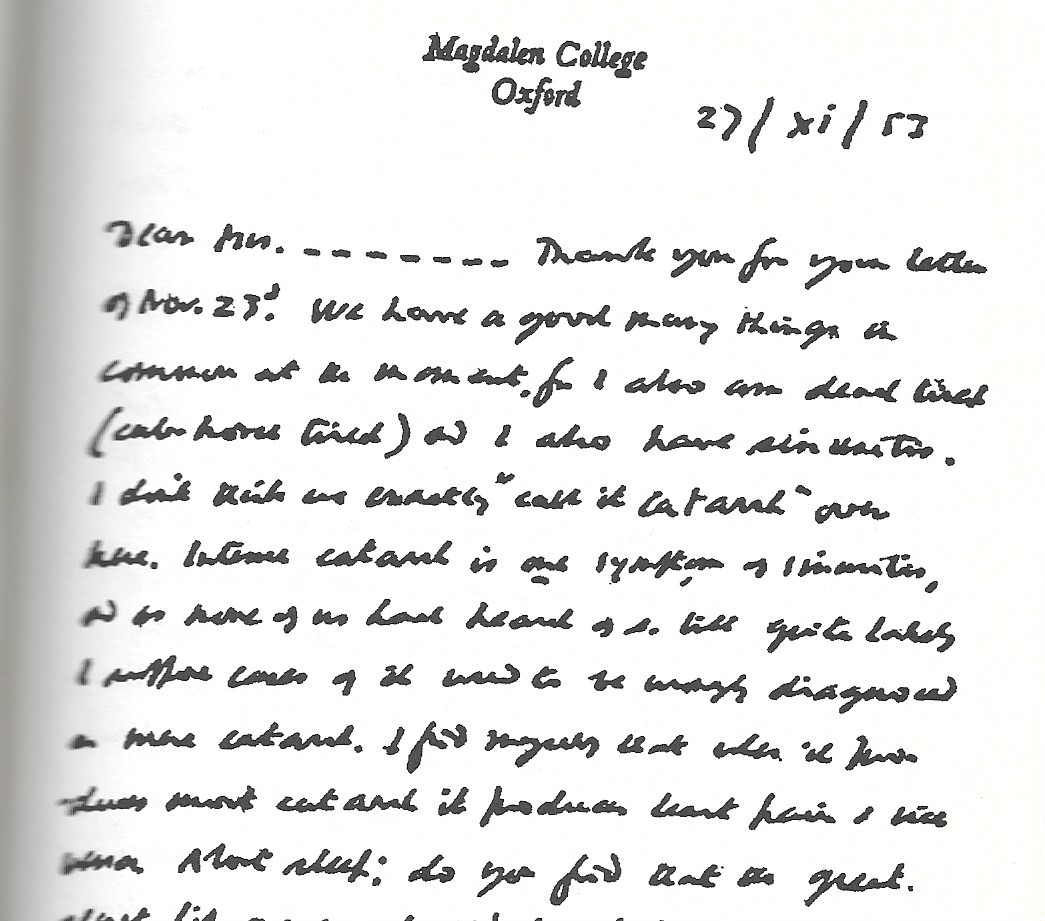
“We all try to accept with some sort of submission our afflictions when they actually arrive. But the prayer in Gethsemane shows that the preceding anxiety is equally God’s will and equally part of our human destiny. The perfect Man experienced it. And the servant is not greater than the master. We are Christians, not Stoics.
“Does not every movement in the Passion write large some common element in the sufferings of our race? First, the prayer of anguish; not granted. Then He turns to His friends. They are asleep-as ours, or we, are so often, or busy, or away, or preoccupied. Then He faces the Church; the very Church that He brought into existence. It condemns Him. This is also characteristic. In every Church, in every institution, there is something which sooner or later works against the very purpose for which it came into existence. But there seems to be another chance. There is the State; in this case, the Roman state. Its pretensions are far lower than those of the Jewish church, but for that very reason it may be free from local fanaticisms. It claims to be just, on a rough, worldly level. Yes, but only so far as is consistent with political expediency and raison d’etat. One becomes a counter in a complicated game. But even now all is not lost. There is still an appeal to the People-the poor and simple whom He had blessed, whom He had healed and fed and taught, to whom He himself belongs. But they have become over-night (it is nothing unusual) a murderous rabble shouting for His blood. There is, then, nothing left but God. And to God, God’s last words are, ‘Why hast thou forsaken me?’
“You see how characteristic, how representative, it all is. The human situation writ large. These are among the things it means to be a man. Every rope breaks when you seize it. Every door is slammed shut as you reach it. To be like the fox at the end of the run; the earths all staked.”
- C.S. Lewis, Preparing for Easter (from Letters to Malcolm, Chiefly on Prayer, chapter, or letter, 8)
Boilerplate
First, the concept of Lent is the preparation for what is to come, the anniversary of Christ’s death and resurrection between Good Friday and Easter Sunday. But in some denominations, the entire time from Advent, the anticipation of Christ’s coming (remembrance of His birth but preparation for His return) to Easter (Christ’s resurrection from the dead)… This bracket of time is a celebration of the entire life of Jesus Christ on earth. Christ’s conception to His ascension and on to the Holy Spirit coming upon the Apostles at Pentecost can be presented and celebrated from early December until Pentecost Sunday.
Many denominations only focus on Christmas and Easter, or maybe the entirety of Holy Week from Palm Sunday to Easter, and then may or may not focus on Pentecost.
But for those that recognize Lent, the Lenten season in many denominations has an element of fasting. Sadly, this is done as Jesus teaches us not to do. They make a big deal out of it when we should do it in private, something just between us and God. But that tradition stems from the forty days of fasting that Jesus did in the wilderness after His baptism and before His ministry started. The Lenten season is kicked off on Ash Wednesday. And after forty days, we reach Palm Sunday, the beginning of Holy Week. The concept of ashes is symbolized by at least one denomination having a cross painted on their forehead in ashes, sometimes from burning the palm fronds from the previous Palm Sunday the year before. Again, that draws attention to the fact that they have started their fast. But they are also announcing that they are Christians. There is good and bad there.
So, when we are in the Lenten season, what should we focus on? It depends. We should focus on Jesus, but we might want to focus on our service to God. What can we do better? How can we spread the Gospel? From Conception to Pentecost… His mission was completed on earth, but He left us with something to do.
As for the Lewis book, it comes from a compilation of Lewis’ writings, edited by Zachry Kincaid. In the book, there is a devotion, of sorts, from Ash Wednesday through Easter Sunday, the Lenten Season. Each devotion contains suggested Scriptures and a writing of C.S. Lewis.
I am going to use my free time posts, Monday, Tuesday, Thursday, and Saturday afternoons (EDST) to correspond with that day’s devotion in the book.
Discussion
I have prayed a similar prayer of please take this cup from me. Did I really wish to take the detours in my career? I hesitate to say that I am a Chemical Engineer in that those years were three years out of an entire career, where I had been an industrial teacher, training and safety manager, and textbook writer for thirty years.
But C.S. Lewis says it correctly. How can we ask for special privilege when our Master asked and was still subjected to the horrors of the cup He must drink from.
Washing the disciples’ feet was child’s play in comparison to what came the following day.
And I think they had a complete meal that night, but it was only the bread and wine that Christ ended the meal with that became symbolic.
And have you ever thought of Jesus’ statement that if you are to be His disciple, you must take up your cross and follow Him?
Sure, you may have done so, but have you ever done so while taking Holy Communion? In partaking of the Last Supper, we are saying that we are prepared to follow Jesus, even unto the cross.
When I was writing this post, I had a moment of very little pain. I had surgery in one place of my body nine days ago. And the possibility of returning kidney stones and muscular issues made the pain where I sit down so minor that I never felt those pains. I called one doctor, and they said if it got worse, go to the ER. But that same doctor had promised a carefully planned alternative if this combination of events took place. But as I write this, the pain, for the time being, is minimal – just no stamina.
And yet that is nothing compared to what Jesus suffered. We only think we have control of our environment. That is our delusion until the other shoe drops. And yet, we are to count it all as Joy.
Soli Deo Gloria. Only to God be the Glory.
 Thoughts from Mark "Hat" Rackley
Leave a comment