Psalm 82
God presides in the great assembly;
he renders judgment among the “gods”:
“How long will you defend the unjust
and show partiality to the wicked?
Defend the weak and the fatherless;
uphold the cause of the poor and the oppressed.
Rescue the weak and the needy;
deliver them from the hand of the wicked.
“The ‘gods’ know nothing, they understand nothing.
They walk about in darkness;
all the foundations of the earth are shaken.
“I said, ‘You are “gods”;
you are all sons of the Most High.’
But you will die like mere mortals;
you will fall like every other ruler.”
Rise up, O God, judge the earth,
for all the nations are your inheritance.
- Psalm 82:1-8
Type of Psalm
Didactic psalms: These psalms are psalms that are intended to teach. In most cases the psalm instructs us in moral principles.
Matthew Henry’s Summary
“This psalm is calculated for the meridian of princes’ courts and courts of justice, not in Israel only, but in other nations; yet it was probably penned primarily for the use of the magistrates of Israel, the great Sanhedrim, and their other elders who were in places of power, and perhaps by David’s direction. This psalm is designed to make kings wise, and “to instruct the judges of the earth” (as Ps. 2:10), to tell them their duty as (2 Sam. 23:3), and to tell them of their faults as Ps. 58:1. We have here, I. The dignity of magistracy and its dependence upon God, ver. 1. II. The duty of magistrates, ver. 3, 4. III. The degeneracy of bad magistrates and the mischief they do, ver. 2, 5. IV. Their doom read, ver. 6, 7. V. The desire and prayer of all good people that the kingdom of God may be set up more and more, ver. 8. Though magistrates may most closely apply this psalm to themselves, yet we may any of us sing it with understanding when we give glory to God, in singing it, as presiding in all public affairs, providing for the protection of injured innocency, and ready to punish the most powerful injustice, and when we comfort ourselves with a belief of his present government and with the hopes of his future judgment.”
- Matthew Henry, Matthew Henry’s Commentary
Noted Biblical Scholars, Teachers, and Preachers Comments
Psalm 82:1 “’God stands in the congregation of the mighty.’ He is the Overlooker who, from His own point of view, sees all that is done by the great ones of the earth. When they sit in state He stands over them, ready to deal with them if they pervert judgment. Judges shall be judged, and to justices justice shall be meted out. Such people today would do well to remember this. Some of them need to master this psalm. Their harsh decisions and strange judgments are made in the presence of Him who will surely visit them for every unseemly act, for He plays no favorites and is the champion of the poor and needy. A higher authority will criticize the decision of petty sessions, and even the judgments of our most impartial judges will be revised by the high court of heaven. ‘He judges among the gods.’ They are gods to other men, but he is God to them. He lends them His name, and this is their authority for acting as judges, but they must take care that they do not misuse the power entrusted to them, for the Judge of judges is in session among them.”
- Charles H. Spurgeon, Spurgeon and the Psalms
My Thoughts
Asaph is asking for governments and courts to think of the poor and needy. The word “widow” is not used, but fatherless is among the words mentioned.
Throughout Scripture widows and fatherless (orphans) are often used as the key people for others to care for.
An injustice in one of these cases would not be headline news. The needy have no voice in secular society. But then the “needy” that the secular world defends are those that are against the Judeo-Christian ethic. We should beware of groups that claim to be helping the needy, without knowing how the group defines the terms.
But without the princes and courts, as per the Matthew Henry commentary, we as individuals can help. As the psalm states, they walk in darkness. We can do a lot by “seeing” them.
Psalm 83
O God, do not remain silent;
do not turn a deaf ear,
do not stand aloof, O God.
See how your enemies growl,
how your foes rear their heads.
With cunning they conspire against your people;
they plot against those you cherish.
“Come,” they say, “let us destroy them as a nation,
so that Israel’s name is remembered no more.”
With one mind they plot together;
they form an alliance against you—
the tents of Edom and the Ishmaelites,
of Moab and the Hagrites,
Byblos, Ammon and Amalek,
Philistia, with the people of Tyre.
Even Assyria has joined them
to reinforce Lot’s descendants.
Do to them as you did to Midian,
as you did to Sisera and Jabin at the river Kishon,
who perished at Endor
and became like dung on the ground.
Make their nobles like Oreb and Zeeb,
all their princes like Zebah and Zalmunna,
who said, “Let us take possession
of the pasturelands of God.”
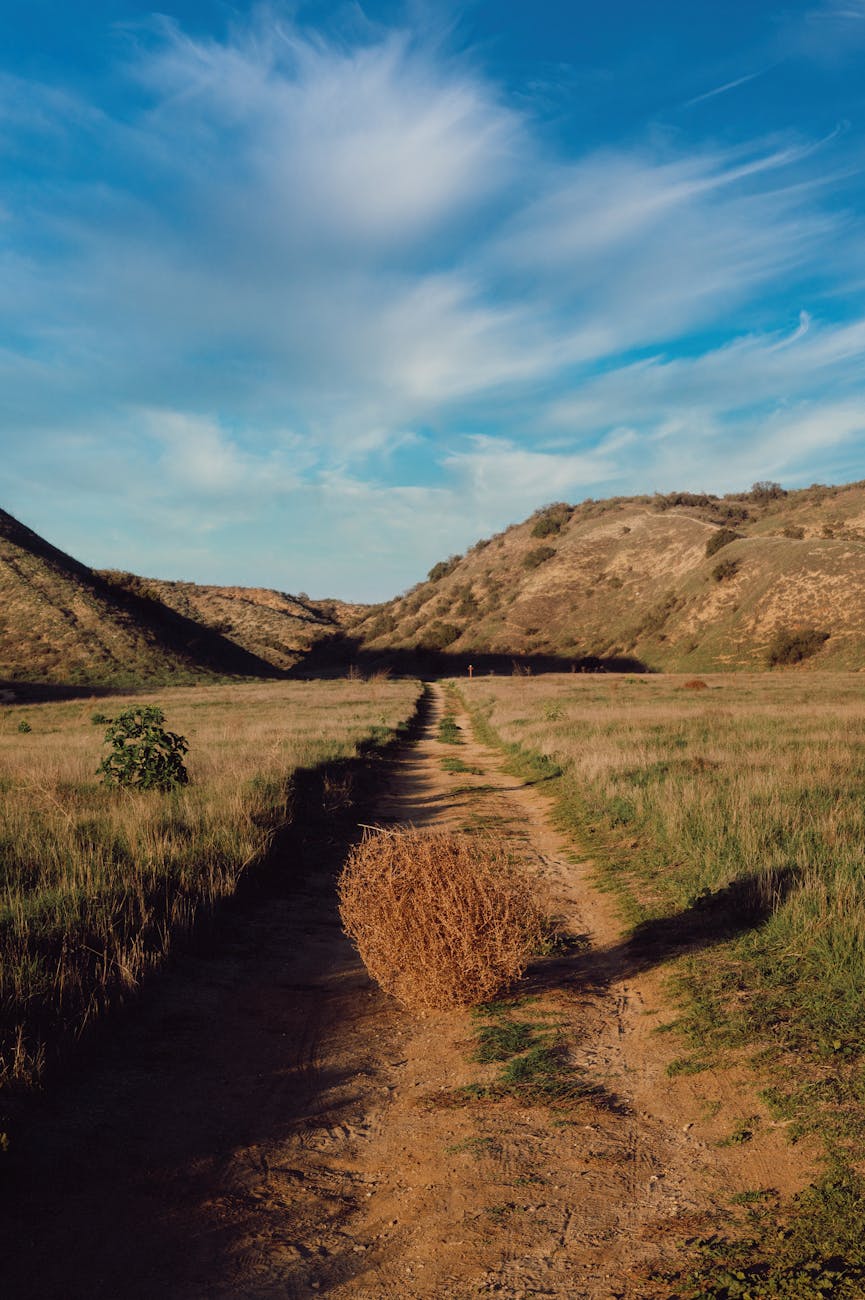
Make them like tumbleweed, my God,
like chaff before the wind.
As fire consumes the forest
or a flame sets the mountains ablaze,
so pursue them with your tempest
and terrify them with your storm.
Cover their faces with shame, Lord,
so that they will seek your name.
May they ever be ashamed and dismayed;
may they perish in disgrace.
Let them know that you, whose name is the Lord—
that you alone are the Most High over all the earth.
- Psalm 83:1-18
Type of Psalm
Psalms of Affliction: Psalms where the psalmist is crying out in pain or distress, asking God where He is in the psalmist’s time of need. But no matter how dire the circumstances or how long the lament, there seems to always be a word of praise. Otherwise, why do we go to God in such times, other than to recognize Him as the only one who can help us?
Imprecatory psalms: Asking for vengeance against enemies. From the two examples above, these requests for vengeance are usually not specific in how God does it. I have written about this type of psalm or prayer in that they are legitimate requests to God. We know that God will eventually stamp out all evil in the world. Praying that God would do as He promises that He will eventually do is legitimate, but when a face is applied to that evil, our first reaction should be one of forgiveness and mercy.
Matthew Henry’s Summary
“This psalm is the last of those that go under the name of Asaph. It is penned, as most of those, upon a public account, with reference to the insults of the church’s enemies, who sought its ruin. Some think it was penned upon occasion of the threatening descent which was made upon the land of Judah in Jehoshaphat’s time by the Moabites and Ammonites, those children of Lot here spoken of (ver. 8), who were at the head of the alliance and to whom all the other states here mentioned were auxiliaries. We have the story 2 Chron. 20:1; where it is said, The children of Moab and Ammon, and others besides them, invaded the land. Others think it was penned with reference to all the confederacies of the neighbouring nations against Israel, from first to last. The psalmist here makes an appeal and application, I. To God’s knowledge, by a representation of their designs and endeavours to destroy Israel, ver. 1-8. II. To God’s justice and jealousy, both for his church and for his own honour, by an earnest prayer for the defeat of their attempt, that the church might be preserved, the enemies humbled, and God glorified, ver. 9-18. This, in the singing of it, we may apply to the enemies of the gospel-church, all anti-christian powers and factions, representing to God their confederacies against Christ and his kingdom, and rejoicing in the hope that all their projects will be baffled and the gates of hell shall not prevail against the church.”
- Matthew Henry, Matthew Henry’s Commentary
Noted Biblical Scholars, Teachers, and Preachers Comments
Psalm 83:9 ”’Deal with them as with Midian.’ Faith delights to light upon precedents and quote them before the Lord. In the present instance Asaph found every appropriate one, for the nations in both cases were very much the same and the plight of the Israelites very similar. Yet Midian perished, and the psalmist trusted that Israel’s present foes would meet with a like overthrow from the hand of the Lord. ‘As with Sisera, as with Jabin at the Brook Kishon.’ The hosts were swept away by the suddenly swollen torrent and utterly perished, which was a second instance of divine vengeance upon confederated enemies of Israel. When God wills it, a brook can be as deadly as a sea. Kishon was as terrible to Jabin as was the Red Sea to Pharaoh. How easily can the Lord smite the enemies of His people. God of Gideon and of Barak, will You not again avenge Your heritage of its bloodthirsty foes?”
- Charles H. Spurgeon, Spurgeon and the Psalms
My Thoughts
This lament, possibly the last of Asaph’s psalms (last one attributed to him), speaks of an alliance between Moab, Ammon and many other players, keen on destroying Israel. This could be said today, just with different names. Asaph mentions that they are the sons of Lot, but they go beyond those two sons (Moab and Ammon).
The psalm then requests that God rescue Israel as He did in the times of the Judges. The reference to Midian, Oreb, Zeeb, Zerah and Zalmunna refers to Gideon. Sisera and Jabin refer to Deborah. Note: Midian was a son, or grandson, of Abraham through Keturah, not a son of Lot. And the Ishmaelites (through the son born of Hagar) are also sons of Abraham.
Then the Scripture above in bold text is the imprecatory verses. The request is a twofold request. Make the enemies like God to be tumbleweeds and then set them ablaze.
I lived for about a year and a half in Washington state, in the high desert. We seemed to have more traffic jams due to tumbleweed than any other cause. The wind would blow them around and they had sharp barbs that had torn through radiators and tires. It was foolhardy to push through them, but then again, they were just small bushes that had broken off from the roots when dry. They could tumble into a large heap that made driving around them difficult.
But the other hazard was wildfires. They speak these days of wildfires as if they were something new. The two summers that I was in Washington state, we had wildfires. The tumbleweed was the big carrier. A single bush, or ball of dried branches, could easily be extinguished if on fire, but a huge pile of tumbleweed that could break free from the fire could easily spread the fire. Then if dry enough, the sagebrush and other dry vegetation can fuel the fire. Our community had very strict green grass rules. I was threatened with a major fine because a tree trunk blocked the sprinkler from watering a patch of grass about one square foot in area. I replaced the grass with rock. From our vantage point atop the horse heaven hills (where they retired the Pony Express ponies – setting them free), we could see many miles if the sky was clear. We could see the smoke from a wildfire for several days before it arrived. Then, we could see nothing as the smoke filled the air. Since most fires spread from northwest to southeast, I would look to the southeast. If I could see the Blue Mountains of Oregon from the front porch of our house and distance of over one hundred miles (roughly 180 km), I knew the smoke was getting thinner and the danger was over, for the moment.
I only say this, an old remembrance, to add some reality to the imprecatory request. There might be smoke for a while, but once the smoke lifts, you have clean air and the “enemies” are gone. And note that this is asking for the enemies to be destroyed, but destroyed by God in righteous judgment. This does not say that the Israelites will destroy their neighbors.
And the last verse of the psalm is that these enemies will come to know the Lord, and as such, will no longer be enemies.
Psalm 84
How lovely is your dwelling place,
Lord Almighty!
My soul yearns, even faints,
for the courts of the Lord;
my heart and my flesh cry out
for the living God.
Even the sparrow has found a home,
and the swallow a nest for herself,
where she may have her young—
a place near your altar,
Lord Almighty, my King and my God.
Blessed are those who dwell in your house;
they are ever praising you.
Blessed are those whose strength is in you,
whose hearts are set on pilgrimage.
As they pass through the Valley of Baka,
they make it a place of springs;
the autumn rains also cover it with pools.
They go from strength to strength,
till each appears before God in Zion.
Hear my prayer, Lord God Almighty;
listen to me, God of Jacob.
Look on our shield, O God;
look with favor on your anointed one.
Better is one day in your courts
than a thousand elsewhere;
I would rather be a doorkeeper in the house of my God
than dwell in the tents of the wicked.
For the Lord God is a sun and shield;
the Lord bestows favor and honor;
no good thing does he withhold
from those whose walk is blameless.
Lord Almighty,
blessed is the one who trusts in you.
- Psalm 84:1-12
Type of Psalm
Psalms of Affliction: Psalms where the psalmist is crying out in pain or distress, asking God where He is in the psalmist’s time of need. But no matter how dire the circumstances or how long the lament, there seems to always be a word of praise. Otherwise, why do we go to God in such times, other than to recognize Him as the only one who can help us?
Didactic psalms: These psalms are psalms that are intended to teach. In most cases the psalm instructs us in moral principles.
Matthew Henry’s Summary
“Though David’s name be not in the title of this psalm, yet we have reason to think he was the penman of it, because it breathes so much of his excellent spirit and is so much like the sixty-third psalm which was penned by him; it is supposed that David penned this psalm when he was forced by Absalom’s rebellion to quit his city, which he lamented his absence from, not so much because it was the royal city as because it was the holy city, witness this psalm, which contains the pious breathings of a gracious soul after God and communion with him. Though it be not entitled, yet it may fitly be looked upon as a psalm or song for the sabbath day, the day of our solemn assemblies. The psalmist here with great devotion expresses his affection, I. To the ordinances of God; his value for them (ver. 1), his desire towards them (ver. 2, 3), his conviction of the happiness of those that did enjoy them (ver. 4-7), and his placing his own happiness so very much in the enjoyment of them, ver. 10. II. To the God of the ordinances; his desire towards him (ver. 8, 9), his faith in him (ver. 11), and his conviction of the happiness of those that put their confidence in him, ver. 12. In singing this psalm we should have the same devout affections working towards God that David had, and then the singing of it will be very pleasant.”
- Matthew Henry, Matthew Henry’s Commentary
Noted Biblical Scholars, Teachers, and Preachers Comments
Psalm 81:10 “Have bad things really happened to you? You and God may have different definitions for the word bad. Parents and children do. Look up the word bad in a middle schooler’s dictionary, and you’ll read definitions such as ‘pimple on nose,’ or ‘pop quiz in geometry.’ ‘Dad, this is really bad!’ the youngster says. Dad, having been around the block a time or two, thinks differently. Pimples pass …
“What you and I might rate as an absolute disaster, God may rate as a pimple-level problem that will pass. He views your life the way you view a movie after you’ve read the book. When something bad happens, you feel the air sucked out of the theater. Everyone else gasps at the crisis on the screen. Not you. Why? You’ve read the book. You know how the good guy gets out of the tight spot. God views your life with the same confidence. He’s not only read your story … he wrote it.”
- Max Lucado, Come Thirsty
My Thoughts
This is said to be a psalm of affliction, but it laments subtly.
The entire psalm is a psalm of praise, and maybe a different source would list it as such. There are no imprecatory verses.
The psalmist, attributed to the Sons of Korah, speaks of being a doorkeeper in Heaven is better than being in the tents of the wicked. Otherwise, the “wicked” is hardly mentioned.
In bad times, we have a tendency to call out to God ever more than in good times, but that is how the psalm starts, yearning to be in God’s presence, without words that indicate gloom and doom. Then the psalmist reminds God that He takes care of the sparrow and the swallow. This is a hint for God to take care of God’s people.
Then the provisions made by the changing weather are mentioned with Autumn rains leading to pools forming.
There is a request that God protect the anointed one, and the psalm ends with blessings to those who love the Lord.
This song is clearly didactic (instructional), but the affliction is only present in understated terms.
Some Serendipitous Reflections
Psalm 82
“1. How did Jesus use this psalm when he was ‘on trial’ (see Jn 10:30-39)?
“2. What responsibility do you have to the ‘weak’? Can the group help?”
- Lyman Coleman, et al, The NIV Serendipity Bible for Study Groups
Psalm 83
“1. Are you generally quiet or talkative? When do you go against your norm: speaking out for once or finally shutting up? How do you feel about periods of silence in conversations?
“2. When have you wanted God to be more ‘talkative’ in your life? How do you communicate your desire to God to ‘break the silence’?
“3. Who are your opponents in the ‘game of life’ right now? Your church’s? Are your enemies also God’s? Do you pray for vengeance or the grace to love your ‘enemy’?”
- Lyman Coleman, et al, The NIV Serendipity Bible for Study Groups
Psalm 84
“1. What makes worship either dull or exciting for you?
“2. Why did God command three pilgrimages a year for the Jews? Why couldn’t they thank God in their hometowns? What is the difference between private and corporate worship?
“3. Are you a ‘settler’ or a ‘pilgrim’? Why? What does insecurity do to you?”
- Lyman Coleman, et al, The NIV Serendipity Bible for Study Groups
There is one set of questions for each of these psalms.
Substitute whatever group for any reference to a small group or ask who could come to your aid.
Soli Deo Gloria. Only to God be the Glory.
 Thoughts from Mark "Hat" Rackley
Leave a comment