When Athaliah the mother of Ahaziah saw that her son was dead, she proceeded to destroy the whole royal family. But Jehosheba, the daughter of King Jehoram and sister of Ahaziah, took Joash son of Ahaziah and stole him away from among the royal princes, who were about to be murdered. She put him and his nurse in a bedroom to hide him from Athaliah; so he was not killed. He remained hidden with his nurse at the temple of the Lord for six years while Athaliah ruled the land.
In the seventh year Jehoiada sent for the commanders of units of a hundred, the Carites and the guards and had them brought to him at the temple of the Lord. He made a covenant with them and put them under oath at the temple of the Lord. Then he showed them the king’s son. He commanded them, saying, “This is what you are to do: You who are in the three companies that are going on duty on the Sabbath—a third of you guarding the royal palace, a third at the Sur Gate, and a third at the gate behind the guard, who take turns guarding the temple—and you who are in the other two companies that normally go off Sabbath duty are all to guard the temple for the king. Station yourselves around the king, each of you with weapon in hand. Anyone who approaches your ranks is to be put to death. Stay close to the king wherever he goes.”
The commanders of units of a hundred did just as Jehoiada the priest ordered. Each one took his men—those who were going on duty on the Sabbath and those who were going off duty—and came to Jehoiada the priest. Then he gave the commanders the spears and shields that had belonged to King David and that were in the temple of the Lord. The guards, each with weapon in hand, stationed themselves around the king—near the altar and the temple, from the south side to the north side of the temple.
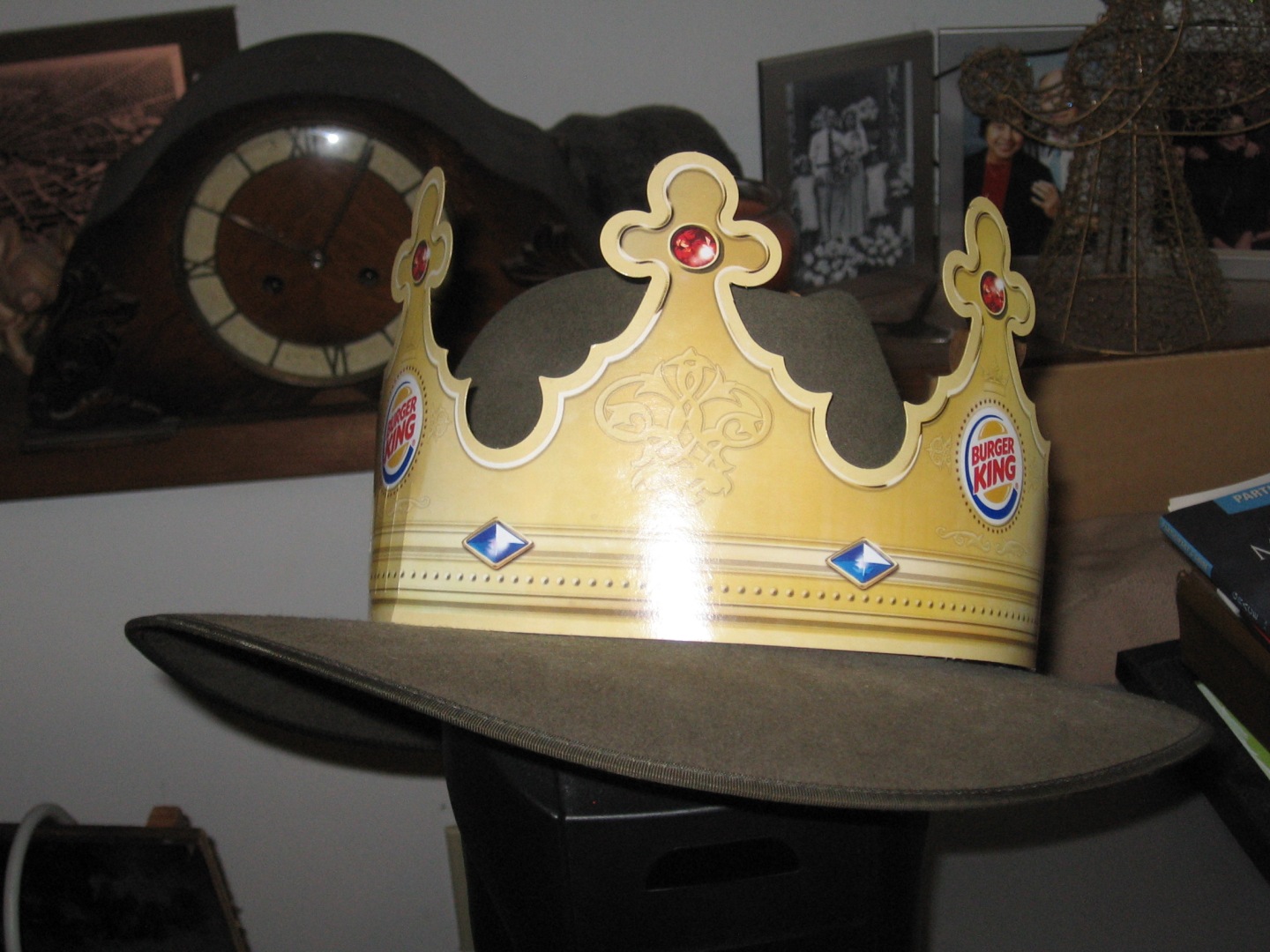
Jehoiada brought out the king’s son and put the crown on him; he presented him with a copy of the covenant and proclaimed him king. They anointed him, and the people clapped their hands and shouted, “Long live the king!”
When Athaliah heard the noise made by the guards and the people, she went to the people at the temple of the Lord. She looked and there was the king, standing by the pillar, as the custom was. The officers and the trumpeters were beside the king, and all the people of the land were rejoicing and blowing trumpets. Then Athaliah tore her robes and called out, “Treason! Treason!”
Jehoiada the priest ordered the commanders of units of a hundred, who were in charge of the troops: “Bring her out between the ranks and put to the sword anyone who follows her.” For the priest had said, “She must not be put to death in the temple of the Lord.” So they seized her as she reached the place where the horses enter the palace grounds, and there she was put to death.
Jehoiada then made a covenant between the Lord and the king and people that they would be the Lord’s people. He also made a covenant between the king and the people. All the people of the land went to the temple of Baal and tore it down. They smashed the altars and idols to pieces and killed Mattan the priest of Baal in front of the altars.
Then Jehoiada the priest posted guards at the temple of the Lord. He took with him the commanders of hundreds, the Carites, the guards and all the people of the land, and together they brought the king down from the temple of the Lord and went into the palace, entering by way of the gate of the guards. The king then took his place on the royal throne. All the people of the land rejoiced, and the city was calm, because Athaliah had been slain with the sword at the palace.
Joash was seven years old when he began to reign.
- 2 Kings 11:1-21
In the seventh year of Jehu, Joash became king, and he reigned in Jerusalem forty years. His mother’s name was Zibiah; she was from Beersheba. Joash did what was right in the eyes of the Lord all the years Jehoiada the priest instructed him. The high places, however, were not removed; the people continued to offer sacrifices and burn incense there.
Joash said to the priests, “Collect all the money that is brought as sacred offerings to the temple of the Lord—the money collected in the census, the money received from personal vows and the money brought voluntarily to the temple. Let every priest receive the money from one of the treasurers, then use it to repair whatever damage is found in the temple.”
But by the twenty-third year of King Joash the priests still had not repaired the temple. Therefore King Joash summoned Jehoiada the priest and the other priests and asked them, “Why aren’t you repairing the damage done to the temple? Take no more money from your treasurers, but hand it over for repairing the temple.” The priests agreed that they would not collect any more money from the people and that they would not repair the temple themselves.
Jehoiada the priest took a chest and bored a hole in its lid. He placed it beside the altar, on the right side as one enters the temple of the Lord. The priests who guarded the entrance put into the chest all the money that was brought to the temple of the Lord. Whenever they saw that there was a large amount of money in the chest, the royal secretary and the high priest came, counted the money that had been brought into the temple of the Lord and put it into bags. When the amount had been determined, they gave the money to the men appointed to supervise the work on the temple. With it they paid those who worked on the temple of the Lord—the carpenters and builders, the masons and stonecutters. They purchased timber and blocks of dressed stone for the repair of the temple of the Lord, and met all the other expenses of restoring the temple.
The money brought into the temple was not spent for making silver basins, wick trimmers, sprinkling bowls, trumpets or any other articles of gold or silver for the temple of the Lord; it was paid to the workers, who used it to repair the temple. They did not require an accounting from those to whom they gave the money to pay the workers, because they acted with complete honesty. The money from the guilt offerings and sin offerings was not brought into the temple of the Lord; it belonged to the priests.
About this time Hazael king of Aram went up and attacked Gath and captured it. Then he turned to attack Jerusalem. But Joash king of Judah took all the sacred objects dedicated by his predecessors—Jehoshaphat, Jehoram and Ahaziah, the kings of Judah—and the gifts he himself had dedicated and all the gold found in the treasuries of the temple of the Lord and of the royal palace, and he sent them to Hazael king of Aram, who then withdrew from Jerusalem.
As for the other events of the reign of Joash, and all he did, are they not written in the book of the annals of the kings of Judah? His officials conspired against him and assassinated him at Beth Millo, on the road down to Silla. The officials who murdered him were Jozabad son of Shimeath and Jehozabad son of Shomer. He died and was buried with his ancestors in the City of David. And Amaziah his son succeeded him as king.
- 2 Kings 12:1-21
In the twenty-third year of Joash son of Ahaziah king of Judah, Jehoahaz son of Jehu became king of Israel in Samaria, and he reigned seventeen years. He did evil in the eyes of the Lord by following the sins of Jeroboam son of Nebat, which he had caused Israel to commit, and he did not turn away from them. So the Lord’s anger burned against Israel, and for a long time he kept them under the power of Hazael king of Aram and Ben-Hadad his son.
Then Jehoahaz sought the Lord’s favor, and the Lord listened to him, for he saw how severely the king of Aram was oppressing Israel. The Lord provided a deliverer for Israel, and they escaped from the power of Aram. So the Israelites lived in their own homes as they had before. But they did not turn away from the sins of the house of Jeroboam, which he had caused Israel to commit; they continued in them. Also, the Asherah pole remained standing in Samaria.
Nothing had been left of the army of Jehoahaz except fifty horsemen, ten chariots and ten thousand foot soldiers, for the king of Aram had destroyed the rest and made them like the dust at threshing time.
As for the other events of the reign of Jehoahaz, all he did and his achievements, are they not written in the book of the annals of the kings of Israel? Jehoahaz rested with his ancestors and was buried in Samaria. And Jehoash his son succeeded him as king.
In the thirty-seventh year of Joash king of Judah, Jehoash son of Jehoahaz became king of Israel in Samaria, and he reigned sixteen years. He did evil in the eyes of the Lord and did not turn away from any of the sins of Jeroboam son of Nebat, which he had caused Israel to commit; he continued in them.
As for the other events of the reign of Jehoash, all he did and his achievements, including his war against Amaziah king of Judah, are they not written in the book of the annals of the kings of Israel? Jehoash rested with his ancestors, and Jeroboam succeeded him on the throne. Jehoash was buried in Samaria with the kings of Israel.
Now Elisha had been suffering from the illness from which he died. Jehoash king of Israel went down to see him and wept over him. “My father! My father!” he cried. “The chariots and horsemen of Israel!”
Elisha said, “Get a bow and some arrows,” and he did so. “Take the bow in your hands,” he said to the king of Israel. When he had taken it, Elisha put his hands on the king’s hands.
“Open the east window,” he said, and he opened it. “Shoot!” Elisha said, and he shot. “The Lord’s arrow of victory, the arrow of victory over Aram!” Elisha declared. “You will completely destroy the Arameans at Aphek.”
Then he said, “Take the arrows,” and the king took them. Elisha told him, “Strike the ground.” He struck it three times and stopped. The man of God was angry with him and said, “You should have struck the ground five or six times; then you would have defeated Aram and completely destroyed it. But now you will defeat it only three times.”
Elisha died and was buried.
Now Moabite raiders used to enter the country every spring. Once while some Israelites were burying a man, suddenly they saw a band of raiders; so they threw the man’s body into Elisha’s tomb. When the body touched Elisha’s bones, the man came to life and stood up on his feet.
Hazael king of Aram oppressed Israel throughout the reign of Jehoahaz. But the Lord was gracious to them and had compassion and showed concern for them because of his covenant with Abraham, Isaac and Jacob. To this day he has been unwilling to destroy them or banish them from his presence.
Hazael king of Aram died, and Ben-Hadad his son succeeded him as king. Then Jehoash son of Jehoahaz recaptured from Ben-Hadad son of Hazael the towns he had taken in battle from his father Jehoahaz. Three times Jehoash defeated him, and so he recovered the Israelite towns.
- 2 Kings 13:1-25
Noted Biblical Scholars, Teachers, and Preachers Comments
2 Kings 11:1 ‘Athaliah’: “A granddaughter of Omri (8:26) and daughter of Ahab and Jezebel. She was zealous to rule after the death of her son, Ahaziah (9:27) and was dedicated to seeing the worship of Baal officially sanctioned in Judah (see … 8:18). She reigned for 6 years (v. 3) ca. 841–835 B.C. See … 2 Chr. 22:10–23:21. destroyed all the royal heirs. The previous deaths of Jehoram’s brothers (2 Chr. 21:4) and Ahaziah’s brothers and relatives (10:12–14; 2 Chr. 21:17) left only her grandchildren for Athaliah to put to death to destroy the Davidic line. Though the Lord had promised that the house of David would rule over Israel and Judah forever (2 Sam. 7:16), Athaliah’s purge brought the house of David to the brink of extinction.”
- John MacArthur, John MacArthur Commentary (quoted Scripture without bold/italics)
2 Kings 11:2 ‘Jehosheba’: ”She was probably the daughter of Jehoram by a wife other than Athaliah, and so a half-sister of Ahaziah, who was married to the High-Priest, Jehoiada (2 Chr. 22:11). Joash. The grandson of Athaliah who escaped her purge. bedroom. Lit. ‘the room of the beds.’ It was either the palace storeroom where servants kept the bedding or a room in the living quarters of the temple priests.”
- John MacArthur, John MacArthur Commentary (quoted Scripture without bold/italics)
2 Kings 11:4-8 ‘A coup against Athaliah’: “In the seventh year, the high priest Jehoiada decided it was time to act. He gathered a loyal band of men, showed them Joash, and planned a coup against Athaliah (11:4). The idea was to split them into three groups to protect the king’s palace, while also supplying the young king with protection when the coup was revealed (11:5-7). Anyone trying to approach their ranks was to be put to death (11:8).”
- Tony Evans, The Tony Evans Bible Commentary (quoted Scripture without bold/italics)
2 Kings 11:9-16 ‘Military supported the coup’: “The men were armed and stationed; everything was ready (11:9-11). That’s when Jehoiada brought out young Joash, crowned him, and anointed him, as the crowd shouted, Long live the king! (11:12). The commotion attracted Athaliah to the scene, as Jehoiada had hoped it would. When she saw (no doubt with wide eyes) Joash whom she’d assumed was as dead as his siblings-she cried out, Treason! Treason! (11:14). (Given her treachery in murdering the ‘royal heirs’ (11:1), it’s absurd that she would have the gall to accuse others of treason!) But, it was too late for anyone to save her. The commanders … in charge of the army, who were loyal to the rightful king, seized Athaliah, putting her and her followers to death (11:15-16).”
- Tony Evans, The Tony Evans Bible Commentary (quoted Scripture without bold/italics)
2 Kings 11:10 ‘Guarded with David’s Weapons in the Temple’: “When David had fought with an adversary and overcome him, he bore his armor and his weapons home as mementos of his prowess. These, which seem to have been numerous, were placed in the house of the Lord and later in Solomon’s temple where they adorned the walls. Now Athaliah, the usurping queen of Judah, had played the tyrant for nearly seven years. The time had come when she should be put to death, and the young prince who had been hidden away should be proclaimed king. It was arranged that he should be proclaimed in the temple court. Yet the men that were to be the bodyguard were not armed with weapons for fear an alarm might be given and the matter discovered too soon. But these weapons that were hung up long ago in the temple were taken down, and the Levites and other friends were armed with them. When Athaliah came in and saw the young king surrounded by his bodyguard, her doom was sealed; escape was impossible, and she was slain. Likewise, when Christians have spiritual victories, we should hang up the trophies in the house of the Lord and give him the credit. We never fought with a sin, a temptation, or a doubt, and overthrew it except by the Spirit’s aid; we never won a soul for Jesus; we never spoke a valiant word that repelled an error; we never did an enterprising deed for the success of the kingdom unless the Lord was in it all. When David hung up these swords and shields, he never supposed that one of his descendants would need them to establish himself on the throne. And we never know when we praise God for his mercies, but that the praises might come back into our bosoms and be our own enrichment in the days to come. The memorials we put up to record God’s goodness may be to us in later years among the most useful things in all our treasuries.“
- Charles H. Spurgeon, from sermon notes
2 Kings11:12 ‘the Testimony’: “This was a copy of the whole law (Ps. 119:88). According to Deut. 17:18–20, a copy of the law was to be kept with the king always so that it became his guide for life. anointed. A priest or prophet customarily anointed kings, as here (1 Sam. 10:1; 16:13; 1 Kin. 1:39; 2 Kin. 9:6).”
- John MacArthur, John MacArthur Commentary (quoted Scripture without bold/italics)
2 Kings 11:16 ‘king’s house … she was killed’: “Execution was not appropriate in the temple area since it was a place of worship (cf. 2 Chr. 24:20–22). Thus, the soldiers seized Athaliah and put her to death at one of the entrances to the palace grounds.”
- John MacArthur, John MacArthur Commentary (quoted Scripture without bold/italics)
2 Kings 11:18 ‘the temple of Baal’: “A temple that had been built in Jerusalem and used by Athaliah to promote the worship of Baal in Judah. As Jezebel had promoted Baalism in Israel, her daughter Athaliah had sought its sanction in Judah. During Athaliah’s reign as queen, Baalism gained its strongest foothold in Judah. This purge of Baalism in Judah paralleled the earlier purge of Baalism led by Jehu in the northern kingdom (10:18–29).”
- John MacArthur, John MacArthur Commentary (quoted Scripture without bold/italics)
2 Kings 12:3 ‘the high places’: “As with most kings of Judah, Joash failed to remove these places of worship where, contrary to the Mosaic law, the people sacrificed and burned incense to the Lord (cf. Deut. 12:2–7, 13, 14).”
- John MacArthur, John MacArthur Commentary (quoted Scripture without bold/italics)
2 Kings 12:4-8 ‘temple renovations delayed’: “In spite of his failings, Joash did decide to undertake a renovation program for the temple, which would have been about one hundred years old by this time and in need of repairs. His plan was to have the priests set aside a part of the dedicated silver that they received in offerings from the people to repair whatever damage was found in the temple (12:4-5). But, that plan didn’t work because the priests didn’t follow through. So, by the twenty-third year of his reign, Joash got exasperated and called Jehoiada and the other priests on the carpet for their lack of progress and told them to forget the original plan because he had a new idea (12:6-8).”
- Tony Evans, The Tony Evans Bible Commentary (quoted Scripture without bold/italics)
2 Kings 12:4 ‘dedicated gifts’: “Lit. ‘holy gifts.’ These offerings were given to the priests and used to support the temple. These 3 main offerings were the half a shekel assessed from every male 20 years old and above whenever a census was taken (Ex. 30:11–16), the payments of personal vows (Lev. 27:1–8), and voluntary offerings (Lev. 22:18–23; Deut. 16:10).”
- John MacArthur, John MacArthur Commentary (quoted Scripture without bold/italics)
2 Kings 12:9 ‘priests who kept the door’: “These were priests who normally screened the people to keep unclean worshipers from entering the temple (25:18; Jer. 52:24). These priests took the offerings from the worshipers, who then personally watched the priests drop them into the chest.”
- John MacArthur, John MacArthur Commentary (quoted Scripture without bold/italics)
2 Kings 12:17 ‘Joash became apostate’: “In 2 Chronicles 24, we learn of the downfall of Joash. Jehoiada, his spiritual mentor, died. Then, Joash became an apostate, serving false gods and even murdering Jehoiada’s son. So, the attack by King Hazael of Aram in view here was God’s judgment against Joash and Judah because they had abandoned the Lord (see 2 Chr 24:24).”
- Tony Evans, The Tony Evans Bible Commentary (quoted Scripture without bold/italics)
2 Kings 12:18 ‘all the sacred things’: ”When Joash’s army was defeated by Hazael and his leading men killed (2 Chr. 24:23, 24), he averted further attacks against Jerusalem by sending tribute to the king of Syria. This tribute included gifts donated to the temple in Jerusalem by kings of Judah (cf. 1 Kin. 15:15, 18).”
- John MacArthur, John MacArthur Commentary (quoted Scripture without bold/italics)
2 Kings 13:1-3 ‘Jehoahaz’: “While Joash was on the throne in Judah beginning repairs on the temple, Jehoahaz son of Jehu rose to power in Israel (13:1). He was the first of the four generations of Jehu’s descendants whom God promised would occupy Israel’s throne (see 10:30). Sadly, though, none of the four was anything to write home about. Jehoahaz did what was evil in God’s eyes by following steadfastly in the sins of Jeroboam, the idolatrous founder of the northern kingdom (13:2). So once again, God used a foreign power (Aram) to serve as an instrument of judgment against his rebellious people (13:3).”
- Tony Evans, The Tony Evans Bible Commentary (quoted Scripture without bold/italics)
2 Kings 13:5 ‘a deliverer’: “The deliverer was not specifically named. This deliverer was: 1) the Assyrian king Adad-Nirari III (ca. 810–783 B.C.), whose attack on the Syrians enabled the Israelites to break Syria’s control over Israelite territory (see v. 25, 14:25); or 2) Elisha, who as the leader of Israel’s military successes (see v. 14; cf. 6-13, 16-23) commissioned Joash to defeat the Syrians (vv. 15-19); or 3) Jeroboam II (ca. 793–753 B.C.), who was able to extend Israel’s boundaries back into Syrian territory (14:25-27).”
- John MacArthur, John MacArthur Commentary (quoted Scripture without bold/italics)
2 Kings 13:6 ‘sins of … Jeroboam’: “This idol representing Asherah, a Canaanite goddess and a consort of Baal, had been set up by Ahab (1 Kin. 16:33) and had escaped destruction by Jehu when he purged Baal worship from Samaria (10:27, 28). Along with the other idolatrous religion of Jeroboam II, there were still remnants of Baal worship in the northern kingdom.”
- John MacArthur, John MacArthur Commentary (quoted Scripture without bold/italics)
2 Kings 13:9-13 ‘Jehoash’: “Jehoash followed Jehoahaz as king over Israel and reigned sixteen years, but his tenure was like that of his father and grandfather: he did what was evil (13:10-11). Little is said about his reign except that he went to war against his Jewish brothers in Judah (13:12).”
- Tony Evans, The Tony Evans Bible Commentary (quoted Scripture without bold/italics)
2 Kings 13:14-19 ‘The Prophecy of Joash’s Victories’: “On his deathbed, Elisha prophesies to King Joash that Israel will achieve three military victories over the Arameans. This is fulfilled in 2 Kings 13:25.”
- Tim LaHaye and Ed Hindson, Exploring Bible Prophecy
2 Kings 13:14 ‘Elisha’: “The last previous reference to Elisha the prophet was in 9:1 when Jehu was anointed king of Israel. Since Jehu and Jehoahaz reigned from 841–798 B.C. (see … 10:36; 13:1), nothing was recorded for over 40 years of Elisha’s life. Elisha began ministering with Elijah during the kingship of Ahab ca. 874–853 B.C. (1 Kin. 19:19–21) and so must have been over 70 years of age when these final events of his life took place. my father. Jehoash humbly voiced his great respect for Elisha and his dependence upon his counsel (see … 2:12). the chariots of Israel and their horsemen. Jehoash acknowledged through this metaphor that the Lord, through Elisha, was the real strength and power of Israel against all her adversaries (see note on 2:11).”
- John MacArthur, John MacArthur Commentary (quoted Scripture without bold/italics)
2 Kings 13:18-19 ‘The Little Things’: “God may call us to do some big things in our lives, but being obedient to God in the little things He calls us to do on a day-to-day basis is critical. Too often we don’t see the importance of the little things because they seem so insignificant. Or sometimes we are not sure that we can pull them. off, so we end up stopping short of where we know God wants us to go.
“In almost every football game there are a couple of crucial downs that determine the outcome of the game. You just don’t know beforehand which ones they will be. Every play could be game changing. Doing the little things right is critical in those situations. …
“The little things we fail to do or fail to see-and the result is less than we planned. The little things we fail to do can make us come up short of where we wanted to be. How many victories in our lives are we missing because we fail to do the little things or we pull up just a couple of yards short? How many victories in our lives are just around the next corner, but we stop walking and never get to that corner?
“God has an assignment for your life-it is perfect, and it is filled with purpose. Run the play to the end. Don’t pull up short. Press through any obstacle that gets in your way.”
- Tony Dungy with Nathan Whitaker, Uncommon Life – Daily Challenge (excerpt from devotion for 22 November)
2 Kings 13:19 ‘Great and small’: “That God has purposed all things both great and little is a fact. It is also a sure and certain fact that events often hang on human choice. Someone’s will has a singular potency. In the case before us, the arrows are in the hands of the king of Israel, and so will the nation’s history be affected. How these two things can both be true, I cannot say. Neither, probably, could the wisest people in heaven, not even with the assistance of cherubim and seraphim. They are two facts that run side by side like parallel lines. Things are often left to the will of people, yet everything does come to pass in the end according to the will of God. Can we not believe them both? And is not the space between them a convenient place to kneel in, adoring and worshiping him whom we cannot understand? If we could understand our religion, it would be one that did not come from God; it would have been made by a person of limited capacity, like ourselves, who was, therefore, able to make what we can comprehend. But inasmuch as there are mysteries in our faith, to the top of which we cannot climb, we may be thankful that we need not climb them. Nevertheless, great events depend on little matters, as large vessels hang on small nails. We who are meditating on our future course of action may do what will lead many to heaven. But if we decide another way, we may do what will curse many through time and eternity. Remember that, and remember in what a position of responsibility we may be placed many a time in our lives and how necessary it is that the grace of God should be with us to guide us that we may not be an injury to others by what we do or leave undone.”
- Charles H. Spurgeon, from sermon notes
2 Kings 13:20 ‘spring’: “The prophet, who was Israel’s defense (v. 14), was dead, and it was the season for war campaigns to begin after the rains of winter.”
- John MacArthur, John MacArthur Commentary (quoted Scripture without bold/italics)
2 Kings 13:21 ‘he revived’: “A dead man returned to life after touching Elisha’s bones. This miracle was a sign that God’s power continued to work in relationship to Elisha even after his death. What God had promised to Jehoash through Elisha when he was alive would surely come to pass after the prophet’s death (cf. vv. 19, 25) in the defeat of the enemy, the recovery of the cities that had been taken, and their restoration to the kingdom of Israel (vv. 22-25).”
- John MacArthur, John MacArthur Commentary (quoted Scripture without bold/italics)
2 Kings 13:22-25 ‘Jehoash defeats Aram three times dues to God’s covenant’: “As Elisha had prophesied, King Jehoash defeated Aram three times, regaining cities that Israel had lost (13:25). God was gracious toward Israel. but not because of their goodness. Instead, God was faithful to his covenant with Abraham, Isaac, and Jacob, their forefathers. Even after all they had done, he had not yet banished Israel from his presence (13:23). What a beautiful reminder that the Lord is ‘slow to anger and abounding in faithful love and truth’ (Exod. 34:6). But, eventually; his patience would run out; in time, the northern kingdom would be defeated and carried away.”
- Tony Evans, The Tony Evans Bible Commentary (quoted Scripture without bold/italics)
My Thoughts
Athaliah heard that her son was dead and commenced to destroy the family of Jehoram. There are kingdoms and empires of the past that when the new leader was crowned, the rest of the family would be killed. That eliminated any question of the new ruler’s authority. But Athaliah was the mother of the king who had been killed by Jehu. To be precise, Ahaziah was wounded by one of Jehu’s men and died from the wound after reaching Megiddo. The point is that Athaliah was not in line to ascend to the throne. She was simply the Queen Mother. We paint Jezebel, Athaliah’s mother, as being the most evil person in the world, ever. But Athaliah did not fall far from the tree. I was thinking of saying that she was vile and then I thought that it is interesting that vile and evil only differ in the position of one letter.
Now consider Jehosheba. She was daughter of Jehoram, but probably not Athaliah as the mother. Thus, she was the half-sister of the deceased king, Ahaziah. She would be a niece by marriage with Athaliah being a wife of Jehoram. And she was married to the priest Jehoiada. She is present when Athaliah is on her murderous rampage. She grabs Joash, the infant grandson of Athaliah. She hides Joash for seven years, give or take a few months.
Have you ever wondered what happened during those years? Let me do some guessing… Athaliah came by to visit and she sees a little toddler. She asks Jehosheba when she was pregnant, and Jehosheba says, obviously about a year ago. Athaliah only shrugs. Jehosheba was the wife of the priest of the true God and since she never believed in the true God, Athaliah probably did not “see” Jehoiada or Jehosheba. Those two, although related, were beneath her radar, off the radar screen entirely. But my point is that hiding the infant king, may or may not have been much of a problem. Athaliah probably only saw what she saw in the mirror.
And think about Satan at this point in history. He thought he had won. Athaliah was full of greed and avarice. She lusted for power and wealth. And she had killed every member of the royal family. Satan had won! God had never fallen short of keeping a promise. And now, God would have to create some kind of “rock turning into a human” to give King David an heir to the throne.
Jehosheba did not happen to be there, maybe tending to the infant Joash. She was sent there by God. She was given the courage to risk her life to save the life of the only descendant of David…
Joash would be the only descendant of the kingly line of David. This was part of the promise. But in the Luke version of the genealogy of Jesus, Mary was a descendant of Solomon’s brother Nathan. And Nathan was a full brother of Solomon, David – father and Bathsheba – mother. So, Matthew’s mentioning of several women: Tamar, Rahab, Ruth, the wife of Uriah (Bathsheba) was true for both Solomon and Nathan. But although not part of the bloodline, the kingly line would have stopped if it was not for Jehosheba, another strong woman of the Bible.
Then, have you ever thought about having a second grader as king? How does that work? When my son was in second grade, maybe first or third, he had a permission slip that had to be signed, but he forgot. So, he carefully forged my wife’s signature. My wife got a call from the school, “Mrs. Rackley, I am concerned about your son. He did a perfect job of forging your signature. Doing something illegal at his age is disturbing.” My wife asked if he had done a perfect job, how did the school know that it was a forgery? The teacher replied, “He signed your name in crayon.”
Yes, Joash is made king of Judah, and now I wonder if he signed his first edict as king in crayon. Okay, I doubt if they had crayons in those days…
But my point is that Jehosheba realized that if he did not act then, probably being filled with the Spirit, there would not be a Judah in which to recover.
Many think that the USA is on that same brink, too far gone to have a national revival. I think those people may be right, but God may have stowed away the new Joash in Jehosheba’s closet. With God anything is possible, but sooner or later, the American voters will get greedy and impatient and vote for the slick talker who can make false claims and has Satan on speed dial.
But the true ruler, in a practical sense, was the priest, Jehoiada. He was the guide for the young Joash. He sets up the temple guards first. Then he secures military who are loyal to the true God. Then the coup begins. Similar to the anointing of Solomon with loud trumpets so that Adonijah heard at the palace where he was throwing his own self-proclaimed coronation party, Athaliah sees the young boy anointed and proclaimed king. She yells “Treason!” But really, who was the traitor? The nation had been ruled by someone who had no rightful place on the throne.
Athaliah is killed away from the temple to keep the temple a holy place of God.
Joash, probably stating what Jehoiada told him to say, instructs the priests to gather the money given to the temple in the census, free will offerings, etc. That money would be used to renovate the temple. But when he is thirty years old, give or take a bit, there is not enough evidence to see that anything has been done. Now, he is putting his sole advisor to the task. Jehoiada has to show progress.
It is thought that the source of the money that is collected was established in the time of Moses and may not have been collected for some time. It became known as the temple tax. This is the same temple tax that Jesus was quizzed about in Matthew 17:24-27. Jesus instructs Peter to go catch a fish and he would find enough money to cover the temple tax for both Jesus and himself in the mouth of the fish.
Funny how you establish a tax for a specific purpose and that purpose has been paid off decades ago. They made the Pennsylvania Turnpike a toll road to pay off the Johnstown flood. The initial flood damages were paid off decades ago, but the tolls continue to increase, so that locals avoid the toll roads like the plague. Someone knows where the money goes, but not the common person of the commonwealth.
But all old priests die at one point or another. When Jehoiada died, Joash went off the rails. Was it grief? Was it his true heart, doing what he wanted but Jehoiada had never let him do it? Or did he simply not cultivate good advisors in case Jehoiada died before he did? But, he had gone bad, like an egg left on the counter too long. God sent Hazael king of Aram to attack Judah, as punishment for all the wrong being done. Joash gave Hazael the sacred things of the temple as tribute.
His officials conspired to kill Joash. He died and was buried with the kings before him, and Amaziah, his son became king. He was roughly forty-seven years old when he was assassinated.
In the meantime, Jehoahaz, son of Jehu became king. Not much to tell other than he was about as rotten and ill-prepared to be a king as his father Jehu had been. Jehoahaz turned to God for deliverance and a “deliverer” was provided. Rev. MacArthur gives three guesses as to who that was, but Jehoahaz was left with an army of dust. And yet, they still worshipped the false gods. Jehoahaz died and Jehoash became king.
Jehoash was evil and he even went to war against Judah, when Amaziah was king.
But about the time that Jehoash was about to face the Aramean army, Elisha had become ill and was dying. Jehoash hurried to his side and begged for a prophecy that he could win against the Aramean army.
Elisha instructed Jehoash to get a bow and arrows. Jehoash did so. Elisha said to take the arrows and shoot an arrow. After Jehoash did so, Elisha said that he would win the next battle against Aram. Then he told Jehoash to take the arrows and strike the ground. Jehoash did so three times. Elisha sighed. If he had struck the ground five or six times, he would have utterly defeated the Arameans, but instead, he would only have three victories before the Arameans would win. Elisha died and was buried.
Some time later, the Moabites were attacking, a raiding party. The Israelites were burying someone and in the melee with the Moabites, they tossed the body quickly into Elisha’s tomb. The body touched Elisha’s bones and came back to life.
In the remaining years of Jehoash, he defeated Ben-Hadad, son of Hazael, three times, recovering three cities that Jehoahaz had lost to Hazael.
Some Serendipitous Reflections
2 Kings 11 1., Who is as vicious today as Athaliah? What makes them so? Who is as courageous today as Jehosheba and Jehoiada? What builds such courage?
“2. What covenants of responsibility and privilege have you been given: As a child? Teenager? Adult? What covenants have you in turn entered into with others?
“3. What turning points (protective custodians, godly influences, popular mandates) have made your life radically different than if it were not for these agents of God?
“4. Was Mattan just in the wrong place at the wrong time (v.18)? Would he be allowed to live in the modern era? Why? Is our ‘religious pluralism’ defined as ‘anything God enjoys’? What does that exclude?
“5. Do you have a covenant with God and other people? Or do you prefer private faith? What’s the good and bad of each?
2 Kings 12 1. How could a person whose life centered around the temple end on such a downbeat? For what apparent reasons do you see leaders (in church and state) not remaining true to their initial calling?
“2. Are you a role model for someone younger than you? How do you feel about living up to their expectations? What are the pitfalls of being a mentor?
“3. Are you trying to establish your independence , as did Joash, the boy king, in relation to Jehoiada? What role does God play in the process of ‘becoming your own person’?
“4. Are you as trusting with your money as Joash was with his? When you delegate work without supervising, what happens? If you don’t inspect, what can you expect?
2 Kings 13:1-9 Jehoahaz King of Israel 1. Is it easier to seek God when you are prospering or on the skids?
“2. What long-term problems does your family have a hard time shaking off?
“3. Have things gone well for you in times of sin? Poorly in times of prayer?
2 Kings 13:10-25 Jehoash King of Israel 1. How can Elisha’s bones have such power? Have you heard stories of miraculous relics of the Christian era? Share one.
“2. How is your image of God challenged by these stories of miraculous power, fulfilled prophecy, wrath and mercy?”
- Lyman Coleman, et al, The NIV Serendipity Bible for Study Groups
Second Kings 11 and 12 each have one set of questions. There are two sets of questions for 2 Kings 13 as noted.
Substitute whatever group for any reference to a small group or ask who could come to your aid.
If you like these Thursday morning Bible studies, but you think you missed a few, you can use this LINK. I have set up a page off the home page for links to these Thursday morning posts. I will continue to modify the page as I add more.
Soli Deo Gloria. Only to God be the Glory.
 Thoughts from Mark "Hat" Rackley
Leave a comment