To read 2 Kings 17, click the link HERE.
In the third year of Hoshea son of Elah king of Israel, Hezekiah son of Ahaz king of Judah began to reign. He was twenty-five years old when he became king, and he reigned in Jerusalem twenty-nine years. His mother’s name was Abijah daughter of Zechariah. He did what was right in the eyes of the Lord, just as his father David had done. He removed the high places, smashed the sacred stones and cut down the Asherah poles. He broke into pieces the bronze snake Moses had made, for up to that time the Israelites had been burning incense to it. (It was called Nehushtan.)
Hezekiah trusted in the Lord, the God of Israel. There was no one like him among all the kings of Judah, either before him or after him. He held fast to the Lord and did not stop following him; he kept the commands the Lord had given Moses. And the Lord was with him; he was successful in whatever he undertook. He rebelled against the king of Assyria and did not serve him. From watchtower to fortified city, he defeated the Philistines, as far as Gaza and its territory.
In King Hezekiah’s fourth year, which was the seventh year of Hoshea son of Elah king of Israel, Shalmaneser king of Assyria marched against Samaria and laid siege to it. At the end of three years the Assyrians took it. So Samaria was captured in Hezekiah’s sixth year, which was the ninth year of Hoshea king of Israel. The king of Assyria deported Israel to Assyria and settled them in Halah, in Gozan on the Habor River and in towns of the Medes. This happened because they had not obeyed the Lord their God, but had violated his covenant—all that Moses the servant of the Lord commanded. They neither listened to the commands nor carried them out.
In the fourteenth year of King Hezekiah’s reign, Sennacherib king of Assyria attacked all the fortified cities of Judah and captured them. So Hezekiah king of Judah sent this message to the king of Assyria at Lachish: “I have done wrong. Withdraw from me, and I will pay whatever you demand of me.” The king of Assyria exacted from Hezekiah king of Judah three hundred talents of silver and thirty talents of gold. So Hezekiah gave him all the silver that was found in the temple of the Lord and in the treasuries of the royal palace.
At this time Hezekiah king of Judah stripped off the gold with which he had covered the doors and doorposts of the temple of the Lord, and gave it to the king of Assyria.
The king of Assyria sent his supreme commander, his chief officer and his field commander with a large army, from Lachish to King Hezekiah at Jerusalem. They came up to Jerusalem and stopped at the aqueduct of the Upper Pool, on the road to the Washerman’s Field. They called for the king; and Eliakim son of Hilkiah the palace administrator, Shebna the secretary, and Joah son of Asaph the recorder went out to them.
The field commander said to them, “Tell Hezekiah:
“‘This is what the great king, the king of Assyria, says: On what are you basing this confidence of yours? You say you have the counsel and the might for war—but you speak only empty words. On whom are you depending, that you rebel against me? Look, I know you are depending on Egypt, that splintered reed of a staff, which pierces the hand of anyone who leans on it! Such is Pharaoh king of Egypt to all who depend on him. But if you say to me, “We are depending on the Lord our God”—isn’t he the one whose high places and altars Hezekiah removed, saying to Judah and Jerusalem, “You must worship before this altar in Jerusalem”?
“‘Come now, make a bargain with my master, the king of Assyria: I will give you two thousand horses—if you can put riders on them! How can you repulse one officer of the least of my master’s officials, even though you are depending on Egypt for chariots and horsemen? Furthermore, have I come to attack and destroy this place without word from the Lord? The Lord himself told me to march against this country and destroy it.’”
Then Eliakim son of Hilkiah, and Shebna and Joah said to the field commander, “Please speak to your servants in Aramaic, since we understand it. Don’t speak to us in Hebrew in the hearing of the people on the wall.”
But the commander replied, “Was it only to your master and you that my master sent me to say these things, and not to the people sitting on the wall—who, like you, will have to eat their own excrement and drink their own urine?”
Then the commander stood and called out in Hebrew, “Hear the word of the great king, the king of Assyria! This is what the king says: Do not let Hezekiah deceive you. He cannot deliver you from my hand. Do not let Hezekiah persuade you to trust in the Lord when he says, ‘The Lord will surely deliver us; this city will not be given into the hand of the king of Assyria.’
“Do not listen to Hezekiah. This is what the king of Assyria says: Make peace with me and come out to me. Then each of you will eat fruit from your own vine and fig tree and drink water from your own cistern, until I come and take you to a land like your own—a land of grain and new wine, a land of bread and vineyards, a land of olive trees and honey. Choose life and not death!
“Do not listen to Hezekiah, for he is misleading you when he says, ‘The Lord will deliver us.’ Has the god of any nation ever delivered his land from the hand of the king of Assyria? Where are the gods of Hamath and Arpad? Where are the gods of Sepharvaim, Hena and Ivvah? Have they rescued Samaria from my hand? Who of all the gods of these countries has been able to save his land from me? How then can the Lord deliver Jerusalem from my hand?”
But the people remained silent and said nothing in reply, because the king had commanded, “Do not answer him.”
Then Eliakim son of Hilkiah the palace administrator, Shebna the secretary, and Joah son of Asaph the recorder went to Hezekiah, with their clothes torn, and told him what the field commander had said.
- 2 Kings 18:1-37
To read 2 Kings 19, click the link HERE.
Noted Biblical Scholars, Teachers, and Preachers Comments
2 Kings 17:1-4 ‘Prophetic Account of Assyria’s Invasions’: “The alliance made by Pekah of Israel and Rezin of Syria failed. As Isaiah had foretold (Is. 17:1–11), Tiglath-Pileser of Assyria overcame Syria and crushed it, destroying 591 towns in the campaign that ended in 732 B.C. Israel, however, survived briefly after the Syro-Ephraimite War, now under King Hoshea (732–722 B.C.). When Tiglath-Pileser died, Hoshea rebelled against Assyria, depending on help from Egypt. Tiglath-Pileser’s successor, Shalmaneser V (726–722 B.C.), moved quickly.”
- Timothy B. Cargal, et al., The Chronological Study Bible
2 Kings 17:2 ‘he did evil’: ”Though Hoshea was characterized as a wicked king, it is not stated that he promoted the religious practices of Jeroboam I. In this way, he was some improvement on the kings of Israel who had gone before him. However, this slight improvement did not offset the centuries of sin by Israel’s kings nor divert her inevitable doom.”
- John MacArthur, John MacArthur Commentary (quoted Scripture without bold/italics)
2 Kings 17:3 ‘Shalmaneser’: “Shalmaneser V succeeded his father Tiglath-Pileser III as king of Assyria and reigned from 727–722 B.C. During the siege of Samaria, when the Assyrians began the destruction and captivity of the northern kingdom, Shalmaneser V died and was succeeded by Sargon II (see Is. 20:1), who completed the siege, captured the city, destroyed the nation of Israel, and exiled the inhabitants (v. 6). Sargon II reigned as king from 722–705 B.C. See … Hosea 10:14.”
- John MacArthur, John MacArthur Commentary (quoted Scripture without bold/italics)
2 Kings 17:4 ‘King So or Dynasty So’: “King Hoshea of Israel attempted to procure military aid from ‘So, king of Egypt’ (2 Kin. 17:4) for a rebellion against Assyria, but was unsuccessful. The positive identification of this king with monarchs listed in Egyptian records also has been unsuccessful.
“Though no Egyptian king is known by the name ‘So,’ two kings are possible candidates. Both ruled in Egypt during Hoshea’s reign in Israel (732–722 B.C.), and both ruled at a time when Egypt was politically divided. In fact, they were contemporaries: Osorkon IV (730–715 B.C.) and Tefnakht I (727–720 B.C.).
“Osorkon IV was the last ruler of the 22nd Dynasty (c. 945–715 B.C.). The Egypt of his time was no longer a united kingdom, but rather consisted of small, rival Libyan dynasties. Some scholars suggest that ‘So’ was a short form of the name ‘Osorkon.’
“Tefnakht I was able to consolidate a kingdom in Egypt’s West Delta, establishing a capital at Sais. Scholars have supposed that ‘So’ could be a place name corresponding to Sais, or to ‘the Saite,’ a name referring to the dynasty of pharaohs who ruled from the city of Sais. If this were the case, then the writer of 2 Kings possibly meant that Hoshea sent ‘to Sais (So), to the king of Egypt,’ emphasizing the Egyptian monarch’s dynasty rather than his personal name.
“These two contemporary monarchs are the most likely candidates to be King So of Egypt. Although Osorkon IV would have been physically closer to Palestine, Tefnakht campaigned in Arabia, according to tradition.”
- Timothy B. Cargal, et al., The Chronological Study Bible
2 Kings 17:5-41 ‘The Fall of Samaria’: “Modern history-writing aims at objectivity and tries to present only what can be independently verified. This is a new notion. Ancient historians invariably had their own polemic purposes and—more to the point—were quite open about it. The historian of the Book of Kings cannot tell of such an event as the fall of the northern kingdom without giving the theological reason that such a thing could have happened.
“Practical reasons for the fall, such as Assyria’s superior armies, are unimportant to the biblical historian. Israel had broken the statutes and commandments of the Lord (2 Kin. 17:15, 16). Ultimately it was Israel’s rejection by her God that brought about her fall (17:18, 20, 23).
“The identity of the Assyrian king who captured Samaria in 722 B.C. is not clear. Shalmaneser V died sometime during or after the 3-year siege. His brother and successor, Sargon II (721–705 B.C.), was probably the king who actually entered the city and led the conquered Israelites into exile.
“In an inscription Sargon claims credit for deporting 27,290 captives. The custom of many Assyrian kings was to replace the deported captives with inhabitants from other conquered areas. The mixture of races broke rebellious tendencies and blended religious practices (17:24-41). This ethnic and religious blending in Samaria is the reason for the Jewish prejudice against Samaritans that is so evident in the New Testament.”
- Timothy B. Cargal, et al., The Chronological Study Bible
2 Kings17:6 ‘king of Assyria’: “Sargon II (see note on 17:3). carried Israel away. The capture of Samaria marked the end of the northern kingdom. According to Assyrian records, the Assyrians deported 27,290 inhabitants of Israel to distant locations. The relocation of populations was characteristic of Assyrian policy during that era. The Israelites were resettled in the upper Tigris-Euphrates Valley and never returned to the Promised Land. ‘Halah’ was a city NE of Nineveh. The ‘Habor’ River was a northern tributary of the Euphrates. The ‘cities of the Medes’ were NE of Nineveh. Samaria was resettled with foreigners (v. 24). God did what He said He would do in Deut. 28. The Jews were carried as far E as Susa, where the book of Esther later took place.”
- John MacArthur, John MacArthur Commentary (quoted Scripture without bold/italics)
2 Kings 17:9 ‘built … high places’: “In addition to their private sins (‘secret’), judgment came for public wickedness and idolatry. These were not the high places utilized by Israel for worshiping God before the building of the temple (see … 1 Kin. 3:2). In direct disobedience to Deut. 12:1–4, the Israelites built new raised altars in the Canaanite pattern after the temple was constructed. These high places were in all the habitations of Israel, from small fortified structures to large garrison cities, i.e., from the smallest to largest towns. The ‘high place’ altars were on wooded hills with images representing the false gods (v, 10; cf. Deut. 16:21, 22).”
- John MacArthur, John MacArthur Commentary (quoted Scripture without bold/italics)
2 Kings 17:13-18 ‘Israel is conquered’: ”The book of 2 Kings traces the continuing decline of these two kingdoms. Israel, the northern kingdom, is the first to fall. In chapter 17, while under the reign of King Hoshea, Israel is conquered by Assyria’s King Shalmaneser and carried away into slavery and captivity.“
- Ray C. Stedman, Adventuring Through the Bible
2 Kings 17:18-20 ‘while good kings prayed, the people …’: “In spite of the author’s condemnation of Israel, Judah was not blameless either. After King Solomon died, the nation of Israel had divided into the northern kingdom of Israel and the southern kingdom of Judah. And, though Judah had several godly kings while Israel had none, that kingdom too, experienced great depravity and fell far from God’s standards. Thus, the author wants to make it clear that Israel wasn’t the only guilty party. He makes a parenthetical comment that even Judah did not keep the commands of the LORD … but lived according to the customs Israel had practiced (17:19). Though Judah’s punishment was yet to come, they would not escape God’s righteous wrath. In time, Judah would suffer a fate similar to Israel’s.”
- Tony Evans, The Tony Evans Bible Commentary (quoted Scripture without bold/italics)
2 Kings 17:24-26 ‘security by mixing nations – no national identity’: “When rulers in the ancient Near East conquered a nation and took its people into exile, they would often settle peoples from other conquered nations into the newly conquered land. This separation of the people from their lands-and supposedly from their gods-was intended to prevent nationalistic sentiment from arising. Exiling the people and mixing them with other peoples would make them less likely to rebel. Thus, the Assyrians settled all sorts of foreigners in the cities of Samaria in place of the Israelites (17:24).
“Importantly; these foreigners brought their religions and gods with them, a situation to which God responded by sending lions among them, which killed some of them (17:25). These settlers quickly realized that the God of the Israelites was, someone to be reckoned with, so they asked the king of Assyria for help because they didn’t know what to do to placate the god of the land (17:26). They wanted to take measures to ensure they didn’t offend what they believed to be the local god in whose land they were taking up residence.”
- Tony Evans, The Tony Evans Bible Commentary (quoted Scripture without bold/italics)
2 Kings 17:27-28 ‘one of the priests’: “In response, the Assyrian king ordered an Israelite priest back to Samaria from exile to teach the people what the God of the land required in worship.”
- John MacArthur, John MacArthur Commentary (quoted Scripture without bold/italics)
2 Kings 17:33 ‘Mone feared the Lord’: “Satan can imitate repentance with remorse. He can match faith with credulity. He can mimic assurance with presumption. He can give us the pleasures of this world instead of the joy of the Lord; and instead of a simple confidence in Christ, he can offer us what may look remarkably like it yet be confidence in self. Hence, one of the first things we must do if we would be right at last is to search our own hearts, to test whether it is the work of God or only a vile imitation of it. Conversion, which is absolutely necessary to salvation-conversion by which one turns from sin to righteousness, from self to Christ, from the world to heaven, from rebellion to obedience-conversion too has been mimicked in many ways. Here is one way the false has been put for the true in order that by the light of this instance, as by a beacon, we may be warned off this dangerous rock. Another person’s shipwreck ought always to be a beacon to us-so where these Samaritans failed, let us take heed unto ourselves lest we fall after the same fashion. What follows ‘they feared the LORD’ is ugly and shows it was a sham conversion. It involved only an outward change. It was caused entirely by terror. The teeth and fangs and fiery eyes of lions and the thunders of their roars converted them. We should always be somewhat unsure of our own conversion if we can trace it solely to motives of terror. Their conversion was also marred by ignorance. Rather than wanting to know God, they wanted to know how they were to behave. Their thought was altogether of externals. In fact, according to v. 34, ‘None of them fear the LORD.’ To try and keep religion and yet to keep our sins is not to fear God but to insult him. If we must sin, do not add to our sins this needless and unnecessary one of making a hypocritical pretense of fearing the living God. We may save ourselves that abundance of evil.“
- Charles H. Spurgeon, from sermon notes
2 Kings 18:1-12 ‘A Different Type of king – Hezekiah’: “The reign of Ahaz had not been good for Judah. His pro-Assyrian policy resulted in Judah becoming a vassal to Assyria. He compromised Judah’s worship of Yahweh through his worship of foreign deities. During Ahaz’s rule, Judah lost the port of Elath to Aram, and it became inhabited by Edomites. Furthermore, Chronicles records invasions by the Philistines into southern Judah at this time (2 Chr. 28:18).
Judah needed a change of direction, and it came in Hezekiah, the son and successor of Ahaz. During his reign (715–686 B.C.), Hezekiah led an unparalleled reformation of worship (2 Kin. 18:4–6); revolted against Assyria, reversing the policy of Ahaz (18:7); and reconquered Philistia (18:8). This first rebellion against Assyria may have occurred in 705 B.C. when the Assyrian king Sargon died.”
- Timothy B. Cargal, et al., The Chronological Study Bible
2 Kings 18:3 ‘Clean out God’s sanctuary’: “Keep your mind pure. Clean out the sanctuary the way old Hezekiah did. They had dirtied up that sanctuary, so when he had taken over, Hezekiah got all of the priests together. It took them days and days, but they carried out all of the filth and burned it, threw it over the bank and got rid of it, and then went back and sanctified the temple. Then the blessed God came, and they had their worship again.
“Our thoughts are the decorations inside the sanctuary where we live. If our thoughts are purified by the blood of Christ, we are living in a clean room, no matter if we are wearing overalls covered with grease. Our thoughts largely decide the mood and weather and climate within our beings, and God considers our thoughts as part of us. They should be thoughts of peace, thoughts of pity and mercy and kindness, thoughts of charity, thoughts of God and the Son of God-these are pure things, good things, and high things.
| . |
“Therefore, if we would cultivate the Spirit’s acquaintance, we must have the control of our thoughts. Our mind ought not to be a wilderness in which every kind of unclean thought makes, its own way.”
- A. W. Tozer, The Counselor
2 Kings 18:4 ‘Worship only God’: “We are not to worship any other god, and we are not to worship the true God by the use of representative symbols. He is a Spirit and is to be worshiped in spirit and in truth, and not by the use of visible imagery. The human mind since the fall finds it hard to keep to this. There is much idol breaking to be done in the church of God. For example, we are all too apt as Christians to place some degree of reliance on those God in his infinite mercy raises up to be leaders in the Christian church. We ought to be thankful for the Paul who plants so well and the Apollos who waters so ably, but the danger is that we look to the person not only with the respect that is due to him as God’s ambassador but with some degree of superstitious reliance on his authority and ability. Do not be content to say, ‘That is true, for such and-such a man of God has said it.’ Also, we must avoid a rigid adhesion to certain modes of Christian service. ‘As it was in the beginning, is now, and ever shall be, world without end, Amen,’ seems to be the chant of many good but mistaken Christians who cannot think a thing ought to be done if it never has been done before. So it is with the forms of divine worship. I have frequently met with the most determined protests against the most trivial alteration of the routine of worship. We must sing at such a time, we must pray at such a moment, and if we can keep to the same quantity of minutes usually occupied, so much the better. We must also beware putting much value on our accomplishments. An old Puritan quaintly says, ‘Suppose a loving husband were to give to his wife many rings and jewels out of love to her, and she should come to think so highly of the love tokens that she sat and looked at them, and admired them, and forgot her husband?’ So with our graces and our enjoyments; if we think too much of them, the iconoclastic hammer will come in, and these things will vanish because they have provoked the Lord to jealousy.“
- Charles H. Spurgeon, from sermon notes
2 Kings 18:4 ‘removed the high places’: “Hezekiah was the first king of Judah to totally eradicate the high places, i.e., the worship centers built contrary to the Mosaic law (cf. Deut. 12:2–7, 13, 14). sacred pillars … wooden image. Hezekiah destroyed the idols used in the worship of Baal and Asherah. the bronze serpent. Hezekiah broke the Nehushtan into pieces, i.e., the bronze snake made by Moses in the wilderness (see … Num. 21:4–9), because Judah had come to worship it as an idol, perhaps influenced by Canaanite religion, which regarded snakes as fertility symbols.”
- John MacArthur, John MacArthur Commentary (quoted Scripture without bold/italics)
2 Kings 18:5 ‘He trusted in the Lord God of Israel’: “The most noble quality of Hezekiah (in dramatic contrast to his father, Ahaz) was that he relied on the Lord as his exclusive hope in every situation. What distinguished him from all other kings of Judah (after the division of the kingdom) was his firm trust in the Lord during a severe national crisis (18:17–19:34). Despite troublesome events, Hezekiah clung tightly to the Lord, faithfully following Him and obeying His commands (v. 6). As a result, the Lord was with him and gave him success (v. 7).”
- John MacArthur, John MacArthur Commentary (quoted Scripture without bold/italics)
2 Kings 18:13-16 ‘Sennacherib’s Invasion’: “After flirting with the idea for years, Hezekiah finally rebelled against Assyria. The Assyrian king, Sennacherib (704–681 B.C.), promptly attacked Judah.
“The chronology of Sennacherib’s invasion is difficult. The 14th year of Hezekiah (2 Kin. 18:13; Is. 36:1) would be 701 B.C., but the siege was interrupted by an attack from Tirhakah of Egypt (2 Kin. 19:9; Is. 37:9), whose reign (690–664 B.C.) did not begin until about 10 years after this date. Some suggest that the Bible uses the name ‘Tirhakah,’ the most famous of the Ethiopian pharaohs, for a different and less well known king. Others argue that Hezekiah actually rebelled against Sennacherib twice, and the two accounts have been compressed into one narrative.
“The suggestion that there were two invasions would also explain why there are two different reasons given for Jerusalem’s deliverance. Hezekiah rebelled and was invaded in 701 B.C. He survived this first invasion only by paying exorbitant tribute to Sennacherib (2 Kin. 18:14–16). This payment is corroborated by Assyrian records, but interestingly enough, the parallel passage in Isaiah (Is. 36:1, 2) does not mention Hezekiah’s tribute.”
- Timothy B. Cargal, et al., The Chronological Study Bible
2 Kings 18:18 ‘Eliakim … Shebna’: “Eliakim was the palace administrator and Shebna, the secretary. See notes on Is. 22:19–22. Joah …the recorder. The position was that of an intermediary between the king and the people (cf. 2 Sam. 8:16).”
- John MacArthur, John MacArthur Commentary (quoted Scripture without bold/italics)
2 Kings 18:19-25 ‘Sennacherib’s spokesman loudly proclaims that the battle is over’: “Sennacherib’s royal spokesman (18:19) made what he thought was a slam dunk case for Hezekiah and his people to open their gates and surrender. First, Egypt was a useless ally that would not deliver them (18:21). This was true. Second, he was sure the people of Judah had angered their God by destroying his worship centers-that is, the forbidden high places and altars that Hezekiah had demolished (18:22). Of course, Hezekiah had been right to demolish them. But likely, even the king’s supporters would question the king’s actions in light of what was happening. Third, Sennacherib’s spokesman reminded them that Judah’s army was too weak to repel the Assyrian army (18:24). Given Hezekiah’s attempt to pay off Assyria, this was also probably true. And finally, he claimed that the LORD himself had told him to attack this land and destroy it (18:25), essentially saying, ‘Hey, your God is on my side!’ This point was a lie, but to the demoralized people of Jerusalem, it certainly may have looked as if he were right. After all, their northern neighbors had fallen to Assyria, and those same cruel conquerors were now at their gates.”
- Tony Evans, The Tony Evans Bible Commentary (quoted Scripture without bold/italics)
2 Kings 18 ‘Summary’: “When Hezekiah comes to the throne in chapter 18, his first official act is to cleanse the temple. It took the Levite priests sixteen days just to remove all the rubbish and filth out of the temple before they could even begin purifying it for service. That’s how corrupt the nation had become.
“Next, Hezekiah reintroduced the Passover. He destroyed the brass serpent the people worshiped. This was the very serpent God had used for their blessing when Moses lifted it up in the wilderness (see Num. 21:8-9), but God never intended it to become an object of worship. It was merely a symbol of the saving work of Christ, which still lay ahead in history. Hezekiah understood that there was nothing intrinsically sacred about the brass serpent, so he destroyed it to make sure it would never again be used for idolatrous worship.
“Here’s an important lesson for us all: Anything, even a God-given blessing in our lives, can become a source of idolatry if we put our trust in it. That includes money, a career, a religious leader, or a church. Instead of trusting in our blessings, we must trust solely in the One from whom all blessings flow.”
- Ray C. Stedman, Adventuring Through the Bible
2 Kings 18 ‘Challenge’: “On Monday, as we go about our different duties and tasks, are we aware of the Presence of God? The Lord desires still to be in His holy temple, wherever we are. He wants the continuing love and delight and worship of His children, wherever we work.
“Is it not a beautiful thing for a businessman to enter his office on Monday morning with an inner call to worship: ‘The Lord is in my office-let all the world be silent before Him.’
“If you cannot worship the Lord in the midst of your responsibilities on Monday, it is not very likely that you were worshiping on Sunday! …
“I guess many people have an idea that they have God in a box. He is just in the church sanctuary, and when we leave and drive toward home, we have a rather faint, homesick feeling that we are leaving God in the big box.
“You know that is not true, but what are you doing about it?”
- A. W. Tozer, Whatever Happened to Worship?
2 Kings 19:1 ‘tore … sackcloth’: ” See … 6:30. A reaction that symbolized Hezekiah’s grief, repentance, and contrition. The nation had to repent and the king had to lead the way. house of the LORD. See … Is. 37:1.”
- John MacArthur, John MacArthur Commentary (quoted Scripture without bold/italics)
2 Kings 19:5-7 ‘King of Assyria to be Assassinated’: “Isaiah prophesies to Hezekiah that he should not fear Assyria, for their king, Sennacherib, would soon abandon his siege of Jerusalem and be assassinated in his homeland. Indeed, the king meets his fate while at worship within an Assyrian temple (19:36-37; 2 Chronicles 32:21).”
- Tim LaHaye and Ed Hindson, Exploring Bible Prophecy
2 Kings 19:6 ‘Do not be afraid’: “Sennacherib had blasphemed the Lord by equating Him with other gods. The Lord would personally demonstrate to the Assyrian king His superiority over all other so-called deities.”
- John MacArthur, John MacArthur Commentary (quoted Scripture without bold/italics)
2 Kings 19:7 ‘spirit’: “The Lord promised to incline Sennacherib’s attitude in such a way that he would leave Jerusalem unharmed and return home. How the Lord did that is recorded in vv. 35-37.”
- John MacArthur, John MacArthur Commentary (quoted Scripture without bold/italics)
2 Kings 19:8-13 ‘Cush – a distraction’: “Sennacherib’s royal spokesman was probably camped at the walls of Jerusalem waiting for an answer from Hezekiah when a report came that the king had pulled his army out of Lachish and was fighting at Libnah, located twenty-five miles southwest of Jerusalem (19:8). Sennacherib had heard a report that King Tirhakah of Cush was coming out to fight him (19:9), causing the Assyrian king to divert his attention from Jerusalem for what he thought was only a short time. So, Sennacherib made sure that Hezekiah knew he would be back, repeating the threats his underling had made earlier (19:10-13).”
- Tony Evans, The Tony Evans Bible Commentary (quoted Scripture without bold/italics)
2 Kings 19:14-19 ‘Hezekiah’s reaction was prayer’: “Hezekiah didn’t tear his clothes in anguish when he read the letter from Sennacherib. He took it to the temple and spread it out before God and prayed (19:14- 15). Acknowledging his submission to the divine King, Hezekiah began, LORD God of Israel, enthroned between the cherubim (19:15). He then reminded God of his unique relationship with Israel as opposed to the purported relationships between conquered peoples and the false gods of the nations Assyria had defeated. He knew that none of the gods of the nations had delivered their people because they were made by human hands and lacked any power (19:18). But, the Lord is different. He isn’t a creation of man; he is the Creator of man. He made the heavens and the earth (19:15). Hezekiah saw Sennacherib’s letter as an attack on God’s character (19:16), and he pleaded with God to vindicate himself and his people (19:19). Hezekiah was reminding him that answering his prayer would bring God great glory. This prayer is a model for believers in distress.”
- Tony Evans, The Tony Evans Bible Commentary (quoted Scripture without bold/italics)
2 Kings 19:20-34 ‘Jerusalem to be Saved’: “Isaiah delivers an extensive prophecy to Hezekiah and predicts that the Assyrian siege of Jerusalem will prove futile. The Lord guarantees the security of Jerusalem for a period of three years (19:20-33), saying, ‘I will defend this city to save it for My own sake and for My servant David’s sake’ (19:34). That very evening the Lord annihilates 185,000 of the Assyrians encamped around Jerusalem, terminating the Assyrian threat and fulfilling the prophecy (19:35-36; 2 Chronicles 32:21).”
- Tim LaHaye and Ed Hindson, Exploring Bible Prophecy
2 Kings 19:29 ‘sign’: “The two years in which they were sustained by the growth of the crops were the two in which Sennacherib ravaged them. He left immediately after the deliverance (v. 36), so in the third year the people remaining could plant again.”
- John MacArthur, John MacArthur Commentary (quoted Scripture without bold/italics)
2 Kings 19:37 ‘Starvation or Siegeworks’: “An army attacking a city would typically lay siege to it, or surround it and try to starve it into submission. Within its walls a city had to have food and water to resist a siege. The attacking army could try to build a ‘siege mound’ (2 Kin. 19:32), a ramp of dirt leading up to the top of the city walls. Using such a ramp, the soldiers could march over the fortifications.”
- Timothy B. Cargal, et al., The Chronological Study Bible
My Thoughts
Hoshea was the last king of Israel. He aligned with Egypt and quit paying tribute to Assyria. Assyria labeled Hoshea a traitor and attacked the country, taking Samaria in Hoshea’s ninth year as king.
The history of the northern kingdom is recounted. God would provide prophets and object lessons to tell them that they were not worshipping God as they should. Each generation ignored the warnings. Finally, God released them to their own desires. And the country was conquered by the Assyrians, when Shalmaneser was emperor. There exiled the Israelites to other countries, and they brought in people from those countries to settle in Samaria. Each town set up its own god based on who had control of the town. But the emperor ordered that they worship the God of the land. They went out to the exiles to find a priest. They brought him back to teach the foreigners how to worship the true God, but the people ignored the priest.
This practice was common, and it had some practical value. It is hard for a conquered land to rebel against their oppressors, when the conquered land no longer has any discernible identity. That is why they brought the priest back. Each town took on the identity of the ruling body of that town, worshipping the gods that they brought with them. Having these foreigners worship the true God in the way God wanted would strip that town of its loyalties.
In contrast, when I first came to the Pittsburgh area, I was given the “cook’s” tour. The railroad stop in Pittsburgh had been at the grand concourse on the South Side of the Monongahela River, across from Downtown Pittsburgh. When people arrived, they showed their credentials from the country of their origin, and the Swedes went to the Swedish settlement, Russians to the Russian Hill District, Germans to the German town area, etc. I live a block from the Belgian Club, so you can imagine who lived in our little coal mining town in the early days. As for the Italians, they went anywhere and with the way they reproduced, they were going to be dominant if you did not watch out. And the Italians were a great example of taking your culture with you. Living just an hour from Pittsburgh, Dean Martin, the singer, actor, and TV show host, did not speak a word of English until he was five-years-old. He did not have to. There were enough Italian neighbors that he could do just fine speaking Italian. I met many people in the area who never learned English until first grade, about six-year-old. But language is only one part of the culture. Churches matched the community that they served. Food in restaurants was designed for the local population. And the way people dressed showed that culture. Now, there is a lot of intermarriage between cultures.
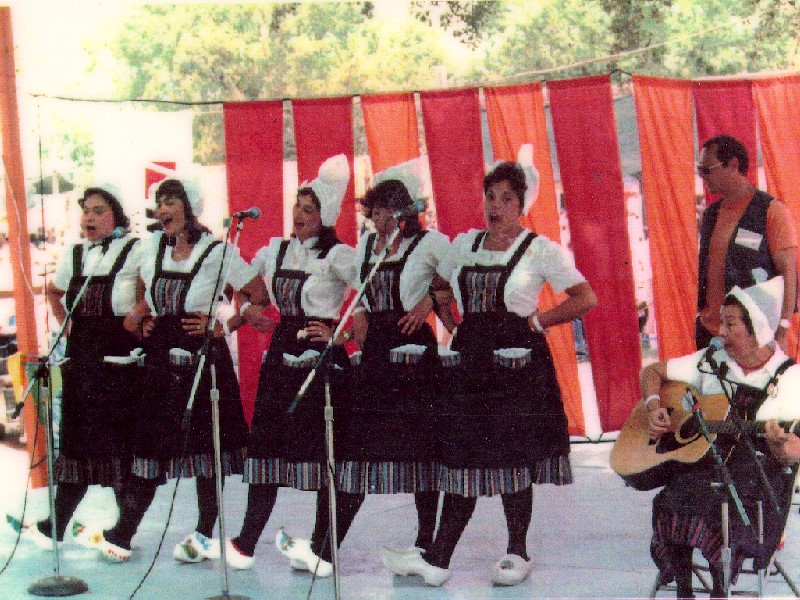
In contrast, my father-in-law insisted that the six older children and his wife speak nothing but English in the home. After weeks of crying, since English is not that easy of a language, he allowed them to speak Dutch on Friday nights. His wife pulled out the guitar and they started singing. That led to the singing group that went to the Texas Folklife festival for over twenty years. And although they joined Dutch clubs, none of them married a Dutch immigrant. Yet, they celebrated Sinterklaas and followed a few Dutch traditions.
Second Kings 18 starts with Hezekiah becoming king of Judah in the third year of Hoshea’s reign. He is the only good king to be compared to King David. He tore down the high places. He tore the bronze snake that Moses had made into tiny pieces because the people were worshipping the snake. He reestablished celebration of the Passover.
But Assyria continued their conquests and forced Hezekiah to pay silver and gold. Hezekiah stripped the doors of the temple in order to obtain the needed amount of gold.
The Assyrian king sent his military commander to Jerusalem to tell them that the war was over before it had begun. They were going to surround the city and set up siegeworks if they did not surrender peacefully. Eliakim, Shebna, and Joah begged that the commander would speak in Aramaic and not in Hebrew, and not proclaim loudly. The commander refused. What Hezekiah’s officials wanted was for the people guarding the walls to not lose heart, but that is why the commander spoke in Hebrew and loud enough for the soldiers at the gates and on the walls to hear.
Psychological warfare is much more sophisticated these days. People learn the customs of the enemy and they play against their superstitions and fears. I once saw, in an army exercise, a platoon sized force (about forty people) abandon their posts when the Psych-war guys blasted a recording of dogs barking at about two in the morning. There were enough in the platoon who feared dogs that the others ran with them, not wanting to be the few left behind when the enemy attacked. Telling the people that the war is over, is just the beginning of the Psych-war campaign.
The messenger to Hezekiah tore his clothes before he gave Hezekiah the message. Hezekiah tore his clothes and put on sackcloth. But then he went to the temple to pray. He called for Isaiah the prophet. Isaiah prophesied that the Assyrian Commander had not blasphemed the people as much as they had blasphemed the Lord. The Assyrians would be dealt with. God will make their king Sennacherib want to return home. In fact, once Sennacherib returns home, actually some time later, he will be cut down with the sword.
Sennacherib, in the meantime, is fighting other foes. He was content to lay siege on Jerusalem if they did not surrender peacefully. Even though Egypt was attacking, unsure of the king of Egypt, since the name got lost in translation, “So”. But for a moment Sennacherib had his hands full. He reminded Hezekiah that no one’s god up to this point had ever stood up against him.
Hezekiah went to God at the temple and humbled himself. He laid out the problem before the Lord. They were outnumbered. The enemy had more weapons. And while they had water, they had limited food. The water had been redirected under the orders of Hezekiah and that allowed the people to at least have water. But Hezekiah paints a picture that only God can rescue them, and God, please do so.
Then Isaiah prophesies that Assyria will not fire a single arrow at the city. Hezekiah will eat what grows this year and eat what grows from that next year. Thus, there will be a temporary peace. At least Hezekiah could take a deep breath for a while.
That night, the death angel went through the Assyrian camp, killing 185,000 soldiers. Sennacherib, without an army to lay siege on Jerusalem returned to Assyria. One day, some time later, he was worshipping at his god’s temple and his sons killed him.
Some Serendipitous Reflections
2 Kings 17:1-23 Hoshea Last King of Israel 1. Is it fair to describe any nation’s history as if God was in the business of punishing them for sin? Is this how we see God and history today? Why or why not?
“2. What has God done for you, recently and not-so-recently, that evokes your heart-felt gratitude? If a gratitude meter could be plugged into your heart, what would it read?
“3. Is any part of your life more like the practices of your neighbors than like the commands of God? How so?
“4. Any gods in your life that would provoke the true God to jealousy? Who functions as the ‘prophet’ in your life? What have you done with his or her spiritual warnings?
2 Kings 17:24-41 Samaria Resettled 1. If you had been the priest selected to return (v.27), what would be your conditions? The supplies you would insist on? Vacation schedule? Prayer support? What else?
“2. How exclusive is your devotion to the one true God? What competes for your heart’s loyalty to him?
“3. Can people who have never heard of God or Jesus be judged or condemned? Can people who are illiterate and fighting for survival go to hell for hazy theological perspectives?
2 Kings 18:1-16 Hezekiah King of Judah 1. If God can raise up for Judah a reformer king like Hezekiah, what does that imply for the future of God’s spiritual kingdom? Do you live each day expecting great things from God?
“2. God spared Judah from falling to the siege by Assyria in 701 B.C., but it cost Hezekiah more than his silver and gold. Will God aid you when you’re in trouble from overreaching? At what cost?
“3. Have you ever paid a price for overreaching? Are you recovered? On to greater heights? Do you pray as if God will rescue you at any cost-on your terms or his?
2 Kings 18:17-37 Sennacherib Threatens Jerusalem 1. If your pastor’s or president’s character were being smeared by outside accusers, would you and your fellow parishioners jump on the band wagon, remain silent, or voice your objections? Why?
“2. Have any friendships been threatened because you took the side of the accuser rather than your friend?
“3. When events look bleak, will friends stand with you? Will God really deliver? How do you go about the process of faithful discovery?
“4. What’s the equivalent of torn clothing today? What do you use to get a similar message through?
2 Kings 19:1-19 Jerusalem deliverance foretold and Hezekiah’s Prayer 1. Why do faithful Christians worry? Do you worry a lot? Why or why not? What about? Who’.s to blame? What’s to be done? 2. When matters are out of your hands, how do you feel? What do you do (or not do)? 3. In the days of the kings, it seems that war helped determine which people were following the correct religion. Is that any longer true, if it ever was? Why? Why did people on both sides of World War II pray for victory? Should today’s soldiers in conflicts pray for victory? Will God take sides?
2 Kings 19:20-37 Isaiah Prophesies Sennacherib’s Fall 1. What promising prospect do you feel the next three years hold for you personally? For your family? For your church? Where do such intuitions come from?
“2. Do angels still intervene in human affairs, or are they a thing of the past? When have you sensed the presence of a guardian angel when no other explanation suffices?
“3. Do you get arrogant? When? Why? What do you do about it?
“4. Like athletic training or permanent weight loss, the first months of any extended spiritual growth program are the toughest. Rarely do we see results overnight, as in this story What do you imagine those early months would be like for you? When would you know you were making progress?”
- Lyman Coleman, et al, The NIV Serendipity Bible for Study Groups
Second Kings 17, 18, and 19 have two sets of questions as noted.
Substitute whatever group for any reference to a small group or ask who could come to your aid.
If you like these Thursday morning Bible studies, but you think you missed a few, you can use this LINK. I have set up a page off the home page for links to these Thursday morning posts. I will continue to modify the page as I add more.
Soli Deo Gloria. Only to God be the Glory.
 Thoughts from Mark "Hat" Rackley
Leave a comment