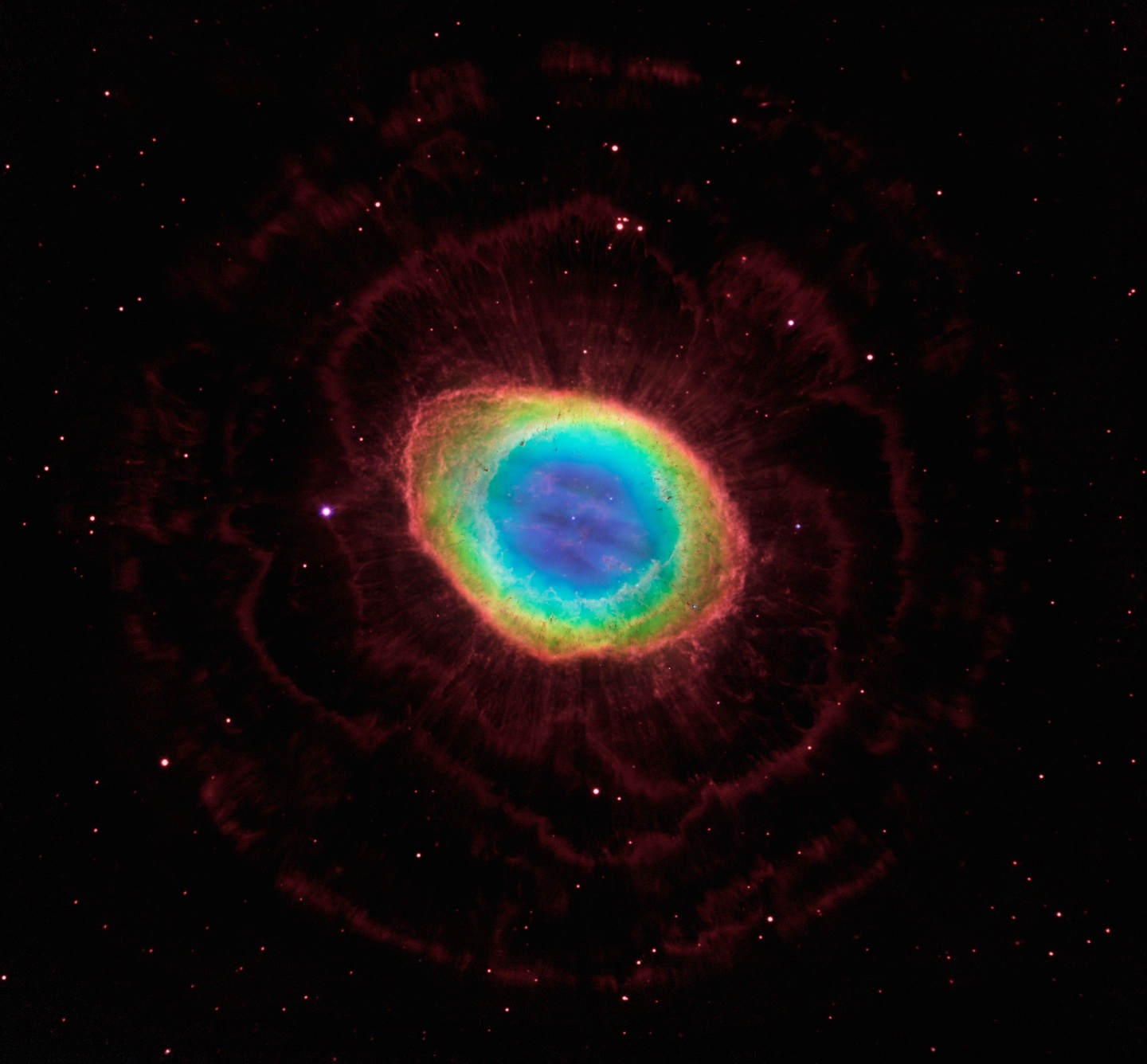
For since the creation of the world God’s invisible qualities—his eternal power and divine nature—have been clearly seen, being understood from what has been made, so that people are without excuse.
- Romans 1:20
Do not conform to the pattern of this world, but be transformed by the renewing of your mind. Then you will be able to test and approve what God’s will is—his good, pleasing and perfect will.
- Romans 12:2
For this is what the Lord says—
he who created the heavens,
he is God;
he who fashioned and made the earth,
he founded it;
he did not create it to be empty,
but formed it to be inhabited—
he says:
“I am the Lord,
and there is no other.
- Isaiah 45:18
And without faith it is impossible to please God, because anyone who comes to him must believe that he exists and that he rewards those who earnestly seek him.
- Hebrews 11:6
“Erigena argued that since correct reasoning cannot lead to false conclusions, there can never be any conflict between reason and divine revelation: they are independent ways of arriving at truth, and both are valid. So he set out to demonstrate rationally all the truths of the Christian faith. This was to bring his work under official suspicion on the ground that if he were right, it would render both faith and revelation unnecessary. His philosophical approach was that of Neo-Platonism, and as such very much in the tradition of St. Augustine; but he was a more rigorous thinker than Augustine – the technical quality of the argumentation is higher, and his intellectual points drive deeper. One of his profoundest arguments was to the effect that since God is unknowable, in the sense of not being the sort of entity that constitutes a possible object of knowledge, it is impossible for God to know himself, to understand his own nature. After many centuries this insight was generalized by Kant into the point that it is impossible for any consciously aware being – not only God, but also, for example, a human being- to understand its own nature.”
- Bryan Magee, The Story of Philosophy
“Good philosophy must exist, if for no other reason, because bad philosophy needs to be answered.”
- C.S. Lewis, The Weight of Glory
John Scotus Eriugena, also known as Johannes Scotus Erigena, John the Scot or John the Irish-born (c. 800 – c. 877), was an Irish philosopher and theologian. I have written about him before in Body, Soul, Mind, Strength, Heart and in To Know, To Not Know, and To Find when Truly Seeking.
The author gave a little history lesson leading up to this discussion of John Scotus (Scotus meaning Irish born). It was rather fascinating. When the Roman Empire was defeated by the German barbarians, the barbarism spread throughout the empire, even to England, but the barbarians never crossed over to Ireland. Thus, intellectuals migrated to Ireland as a sanctuary to continue philosophical discussions. Whether this was the purpose or just what happened, in Ireland, they were not as oppressed as they might have been elsewhere. Thus, during this part of medieval times, there is a significant swing toward Irish philosophers, but not before or after.
But in this discussion of John Scotus, the author glorifies his efforts in trying to use reason to explain the teachings of the Bible.
When I first got out of college, I thought that I could mathematically model any chemical process, and beyond that, just about anything known to mankind. But the one thing that can mess up any mathematical model is the human element. You have no idea whether the human that can get involved in the process will do what he is supposed to do when he is supposed to do it.. Of course, when AI takes over every job on earth, all humankind will be unemployed, but the processes will run smoothly. I doubt if humankind will like that when it happens.
But here, we have a process or system that is partly intellectual and partly theological. Thomas Aquinas, who the author barely mentions, came up with a philosophy that resolves the philosophical versus the theological, with only part of both that overlap. With John Scotus, you can intellectualize all you want, but then the human gets involved and things start to unravel.
Now, as for the ways of the church, something that is not spiritual, John Scotus may have a point.
And these days, among apologists, they argue against the concept of “blind faith.” But at some point, no matter how close you get intellectually, you will have to trust God on a spiritual level. It is like the trust fall, but instead of trusting a strong human teammate, you are trusting almighty God. God is stronger, but He is a spirit. So, there is an element in “blind faith” in that you cannot see God right behind you when you trust Him to catch you when you fall. And I am using this as an example. I would not recommend randomly doing a trust fall thinking that God would catch me.
But in apologetics, the concepts that John Scotus proposes might be a good method in establishing intellectually that there is a God, and the Jesus came to earth, died, and rose from the dead.
But the next step is to accept those intellectual facts into your life and trust Jesus in everything. That goes beyond the intellect. But once you make that step, that all or nothing, unconditional step, you begin to see God at work within you.
If you like these Tuesday morning essays about philosophy and other “heavy topics,” but you think you missed a few, you can use this LINK. I have set up a page off the home page for links to these Tuesday morning posts. I will continue to modify the page as I add more.
Soli Deo Gloria. Only to God be the Glory.
 Thoughts from Mark "Hat" Rackley
Leave a comment