Let no one deceive you with empty words, for because of such things God’s wrath comes on those who are disobedient.
- Ephesians 5:6
But I tell you that everyone will have to give account on the day of judgment for every empty word they have spoken.
- Matthew 12:36
They are not just idle words for you—they are your life. By them you will live long in the land you are crossing the Jordan to possess.”
- Deuteronomy 32:47
“Bacon was one of the first to see that scientific knowledge could give men power over nature, and therefore that the advance of science could be used to promote human plans and prosperity on an unimaginable scale. But he thought that no one had yet gone about this in the right way. The more rational thinkers were like spiders who spin their webs out of matter secreted inside their own bodies: their structures are impressive but everything comes from within and lacks sufficient content with external reality. The more empirical thinkers, on the other hand, were like ants, who mindlessly collect data but have only limited ideas about what to do with it. The traditional logic of Aristotle was useless as a tool for discovery: it compels assent after the fact, but reveals nothing new. Similarly with definitions: the idea that definitions advance knowledge is an illusion. ’Words are but the images of matter,’ said Bacon: ’To fall in love with them is to fall in love with a picture.’”
- Bryan Magee, The Story of Philosophy
“Good philosophy must exist, if for no other reason, because bad philosophy needs to be answered.”
- C.S. Lewis, The Weight of Glory
The book’s author followed up the discussion, highlighted last week on the advances in natural philosophy by Sir Isaac Newton, with an aside discussion of how Newton, after making great discoveries, tried to reconcile those discoveries with his religious beliefs. I had mentioned last week that Newton made his discoveries to learn how God did it. The author got things backwards, yet again.
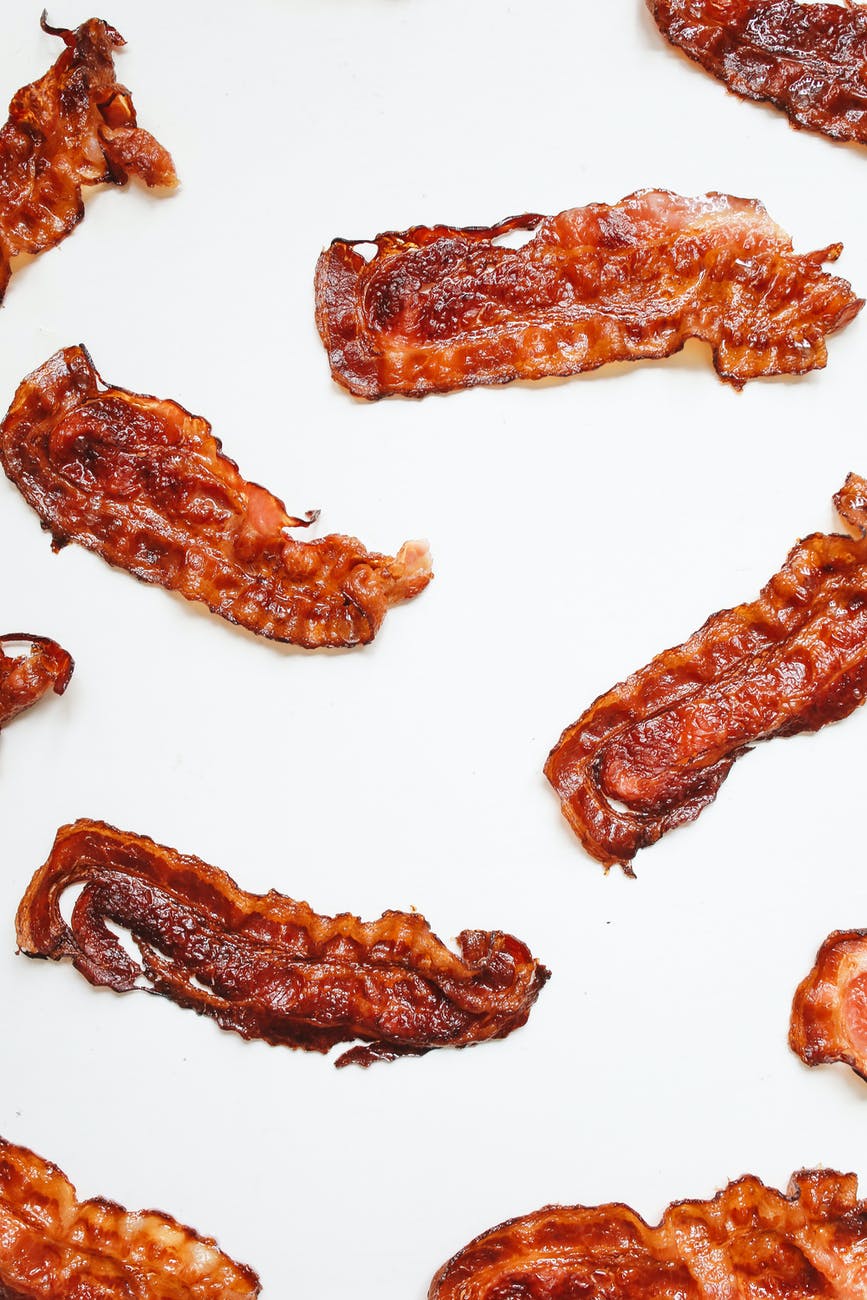
I have already written about Sir Francis Bacon’s scientific method and his wanting to separate science from religion in The Science of Frying Bacon.
In the quote above, we see how Francis Bacon attacked philosophy also. Philosophy literally means the love of wisdom, using the roots of the word. The science of philosophy, if you will, is divided into the fields of metaphysics, epistemology and ethics, for the most part. Metaphysics is the study of reality where epistemology is the study of knowledge.
Considering the Woke concept that there is no absolute truth, then I guess epistemology is the study of “nothing.” But in the time of Sir Francis Bacon, Natural Philosophy would hover between metaphysics and epistemology.
While Francis Bacon’s argument to establish a scientific method to bridge between the rational thinkers who have little data and the empirical thinkers who have the data but no idea what it means, his attack on “words” was a sales pitch to emphasize the need for a “method.”
Thus, Aristotle, and with him a lot of philosophers over the centuries, were drug under the bus when Bacon suggested that a love of words was like falling in love with a picture instead of the real thing. I know my next question is absurd and inappropriate, but it is illustrative. Did they have Playboy centerfold’s in the time of Sir Francis Bacon?
Yes, the intellectual can fall in love with the logical process of going from point A to B to prove something. The emotional can fall in love with a picture and if they saw the subject of that picture, they might have their tongue tangled, or if that happened, they might say “tang tonguled.” But we still need words to understand the scientific method. We still need words to explain how the scientific method is advantageous to understanding the world around us. And we need words to tell the world our latest discovery by using the scientific method.
And those words need to be logical and thorough so that the “Aristotle” on the back row cannot shoot our discovery down by asking, “But what if…”
But the love of words is getting out of hand. As I was writing this, I took a break to lie down for a few minutes and clear my head. A sportscaster used the phrase “as well.” I groaned. The words “too” and “also” work, but the people of the media have decided to eliminate those words from the news and sports broadcasts. Thus, the common folk quit using them too, also. I nearly fell out of my seat a few months ago when I heard a more experienced sportscaster say the word “also.” I wonder if the network fined him for that infraction.
But word censorship has been around for ages, and maybe one of the reasons Sir Francis Bacon made his argument. When I first started working for a well-known chemical company after leaving military service, I was given a copy of the company’s dictionary. The problem with it was that it was an unwritten reverse dictionary. You read the word and its definition, but the key was that you were not allowed to use any word other than the one mentioned for that definition. So, you studied the definitions, and then you knew the word to use.
As an example, and the only one I can remember from a sizeable number of pages, was assure, ensure, and insure. Assure was a word used to apply confidence in what was said. Ensure was used for logically and scientifically proving that what was said was true. And Insure was only used if monetary assets were applied to the words being said – basically whether you had an insurance policy to guarantee success.
Sadly, having ten years of the use of that dictionary, more than thirty years ago, I use those three words by those definitions still today, and I cringe when I read a scientific report or paper where they insure that their findings are correct. Don’t they know that the word is “ensure”?!?!?! And I worked with a fellow instructor for twenty years who never said “ensure”. It was “make it sure.” To each his own.
But we need to be careful with our words. We will be judged by them, not just our physical actions. As Deuteronomy 32 says, they are not just idle words, they are life.
If you like these Tuesday morning essays about philosophy and other “heavy topics,” but you think you missed a few, you can use this LINK. I have set up a page off the home page for links to these Tuesday morning posts. I will continue to modify the page as I add more.
Soli Deo Gloria. Only to God be the Glory.
 Thoughts from Mark "Hat" Rackley
Leave a comment