Speak up for those who cannot speak for themselves,
for the rights of all who are destitute.
Speak up and judge fairly;
defend the rights of the poor and needy.
- Proverbs 31:8-9
While they curse, may you bless;
may those who attack me be put to shame,
but may your servant rejoice.
May my accusers be clothed with disgrace
and wrapped in shame as in a cloak.
With my mouth I will greatly extol the Lord;
in the great throng of worshipers I will praise him.
For he stands at the right hand of the needy,
to save their lives from those who would condemn them.
- Psalm 109:28-31
For this is what the Lord has commanded us: “‘I have made you a light for the Gentiles, that you may bring salvation to the ends of theearth.’”
- Acts 13:47
But the Jews who refused to believe stirred up the other Gentiles and poisoned their minds against the brothers.
- Acts 14:2
But when they opposed Paul and became abusive, he shook out his clothes in protest and said to them, “Your blood be on your own heads! I am innocent of it. From now on I will go to the Gentiles.”
- Acts 18:6
But I tell you, love your enemies and pray for those who persecute you, that you may be children of your Father in heaven. He causes his sun to rise on the evil and the good, and sends rain on the righteous and the unrighteous. If you love those who love you, what reward will you get? Are not even the tax collectors doing that? And if you greet only your own people, what are you doing more than others? Do not even pagans do that?
- Matthew 5:44-47
“Although Spinoza was the first great philosopher to follow Descartes he repudiated Cartesian dualism, a repudiation that was to become orthodoxy in the 20th century, but not until then. He was the first great philosopher to set out the basic case for freedom of speech, which he did a generation before Locke. And his unaffected yet lofty, almost mystical attitude to the unimportance of our personal problems in the overall scheme of things has brought aid and comfort to many hard-pressed individuals.”
- Bryan Magee, The Story of Philosophy
“Good philosophy must exist, if for no other reason, because bad philosophy needs to be answered.”
- C.S. Lewis, The Weight of Glory
Baruch Spinoza, a.k.a. Benedictus de Spinoza (1632-1677) was of Portuguese-Jewish heritage, born in the Netherlands. He was raised as an Orthodox Jew, but his philosophical ideas were decidedly non-orthodox (heterodox). He was excommunicated from the synagogue. He argued against some stumbling blocks in Descartes’ philosophy of the dualism of mind and body being separate entities, like how can the mind move physical objects if they are two separate systems. As the quote states, his heterodoxic ideas became orthodox in philosophical circles, but well after his death.
His arguments toward the freedom of speech were for self-preservation to a certain extent. He was offered a chair of philosophy at the University of Heidelberg, but he turned it down. He spent his time split between grinding lenses for reading glasses and telescopes and writing his thoughts on philosophy. He may have been afraid that his freedom of thought might be curbed by the university position. He failed to publish much of his writings (them being published after his death). He was afraid of being ostracized even more. He had been excommunicated already. He faced opposition and persecution. He did not publish much of his works in fear of the escalation of persecution.
In the Scriptures, Proverbs 31 speaks of the necessity to speak up, but Psalm 109 speaks of backlash and persecution if our speech is not in agreement with the general opinion.
But then in Acts, we see Paul speaking out at Pisidian Antioch. The people who were offended in Antioch followed Paul and incited others to join them until they had a strong enough group to stone Paul to death – but they failed in killing him. Paul later recounts those tales of woe. He gave the message that the Holy Spirit put on his heart and it caused many threats to his life. And his final sermons, those in the last chapters of the book of Acts, were while imprisoned.
My father told me early on in life that the USA had freedom of speech that was protected by the constitution. But that did not mean that there were no ill effects when your speech contradicted what others thought. I could be beaten up for saying the wrong thing.
Then, in one of my earliest jobs, I was pulled aside and told that my beliefs were rather radical (simply strong Christian beliefs). I had the freedom to say anything, but if my beliefs became an embarrassment to the company, I would lose my job. Of course, they never defined what the line was that might be drawn in the sand. They left that totally subjective on their part.
I have a feeling that I was not the only one who was given that lecture.
Today, universities have safe spaces so that if you agreed with the university’s agenda and philosophy, then you could be afforded a safe space. The safe space protects you from the harm of anyone giving you the idea that you might be wrong. But if you are wrong, they protect you from ever being right.
But those same universities, either openly or turning a blind eye, will persecute anyone who opposes their single idea of what is right. Thus, these “liberal” universities, in politics only, are far from liberal educators. They limit what the students see as being proper thought to only one view.
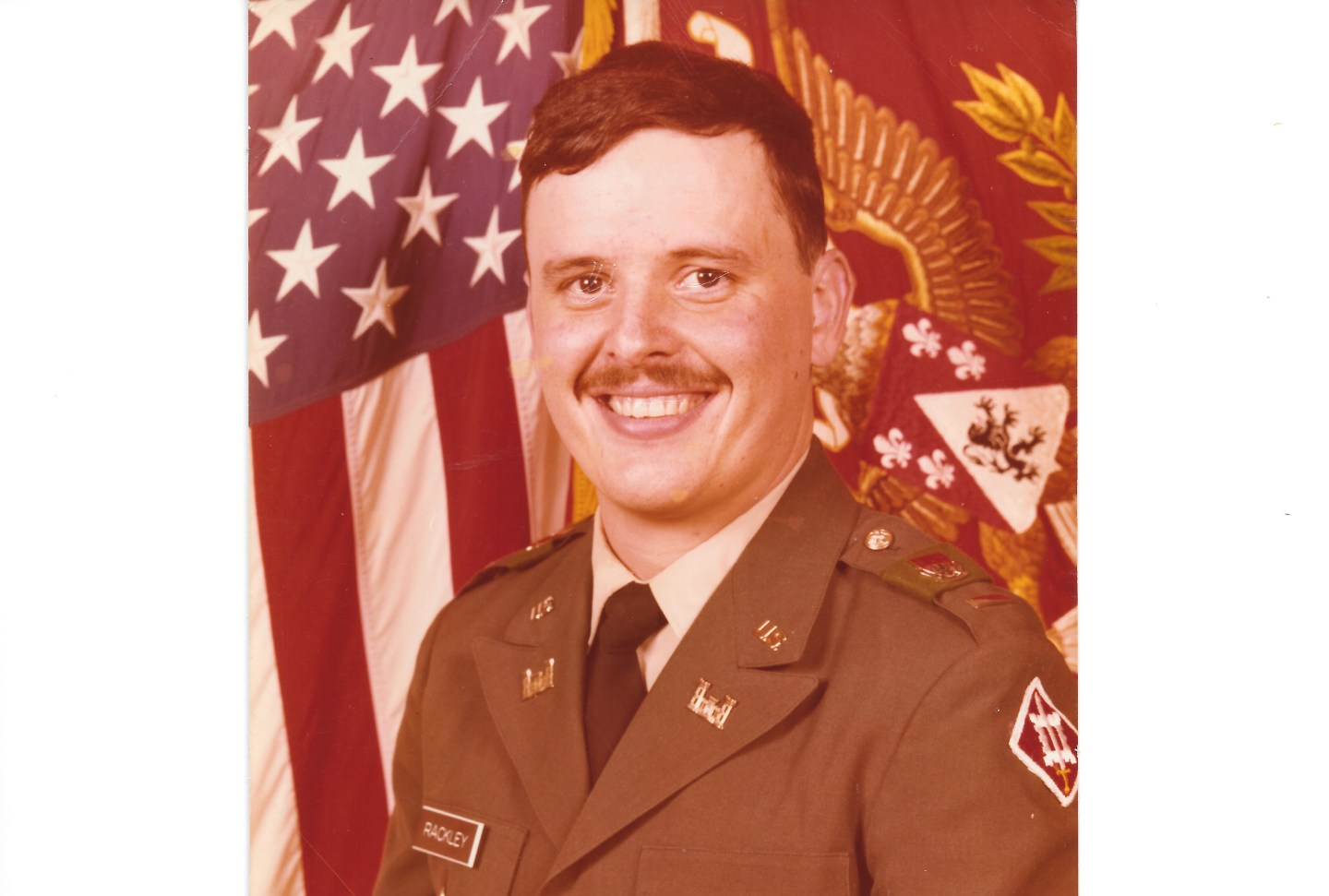
When I was in ROTC, the major who instructed us in courtesy, honor, duty, etc. during our senior year loved yelling at me during class. I was, in his opinion, the most conservative in the room. We had only a couple of liberal (politically) thinkers in the room. But there had been an incident on the west coast where the National Guard was guarding a federal asset of some sort, a building or a monument, I cannot remember. A female hippie approached, hiked up her floor length skirt, and defecated onto the boots of one of the soldiers. He got in my face and asked how I would handle the situation. I said that I did not know. He told me what I had been ordered to do. And then he screamed at me, over and over, “Would you stand your ground?!”
The point was that if you reacted to the offense, you escalated what ended up being a single event into a riot. The honorable thing to do was to stand your ground, to not do anything when someone had just desecrated someone’s uniform, a uniform that contained an American flag, thus disrespecting the USA in general.
Then, after he got the right answers out of me, although I hated saying them, he turned to the class. He said, “The freedom of speech means absolutely nothing if you defend someone’s right to speak the ideas for which you agree. The freedom of speech only means something when you, as a defender of the constitution, defend someone who opposes your ideas of what is right and wrong.”
I once had a confrontation on this topic in a Sunday school class, and I told the story about the major in class yelling at me. The liberal, who had been “offended” when people spoke against their ideas, went to the pastor to have me removed as a teacher, and the pastor suggested the “offended” person go to a different class. I think the “offended” person quit going to Sunday school altogether. While I had learned to hear dissenting viewpoints, even though my feelings might get hurt, the liberal could not stand in the same room with people that disagreed with them.
If they get full control, there will be no freedom of speech, anywhere.
If you like these Tuesday morning essays about philosophy and other “heavy topics,” but you think you missed a few, you can use this LINK. I have set up a page off the home page for links to these Tuesday morning posts. I will continue to modify the page as I add more.
Soli Deo Gloria. Only to God be the Glory.
 Thoughts from Mark "Hat" Rackley
Nice uniform
LikeLiked by 1 person
Yes, but I didn’t get the memo that officers don’t smile. In the entire battalion, I was the only one.
LikeLiked by 1 person
Wow
LikeLiked by 1 person