“Do you know when the mountain goats give birth?
Do you watch when the doe bears her fawn?
Do you count the months till they bear?
Do you know the time they give birth?
They crouch down and bring forth their young;
their labor pains are ended.
Their young thrive and grow strong in the wilds;
they leave and do not return.
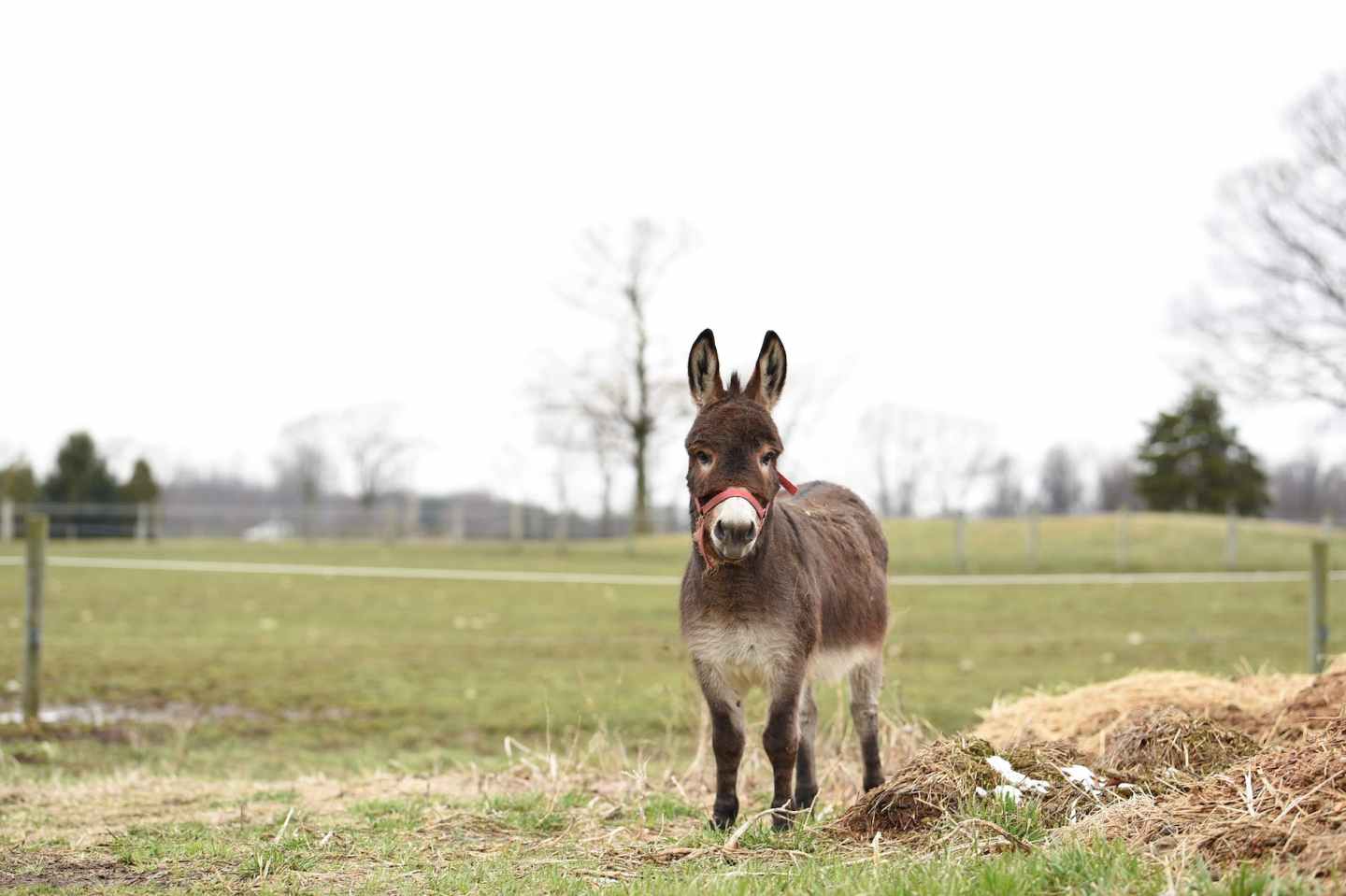
“Who let the wild donkey go free?
Who untied its ropes?
I gave it the wasteland as its home,
the salt flats as its habitat.
It laughs at the commotion in the town;
it does not hear a driver’s shout.
It ranges the hills for its pasture
and searches for any green thing.
“Will the wild ox consent to serve you?
Will it stay by your manger at night?
Can you hold it to the furrow with a harness?
Will it till the valleys behind you?
Will you rely on it for its great strength?
Will you leave your heavy work to it?
Can you trust it to haul in your grain
and bring it to your threshing floor?
“The wings of the ostrich flap joyfully,
though they cannot compare
with the wings and feathers of the stork.
She lays her eggs on the ground
and lets them warm in the sand,
unmindful that a foot may crush them,
that some wild animal may trample them.
She treats her young harshly, as if they were not hers;
she cares not that her labor was in vain,
for God did not endow her with wisdom
or give her a share of good sense.
Yet when she spreads her feathers to run,
she laughs at horse and rider.
“Do you give the horse its strength
or clothe its neck with a flowing mane?
Do you make it leap like a locust,
striking terror with its proud snorting?
It paws fiercely, rejoicing in its strength,
and charges into the fray.
It laughs at fear, afraid of nothing;
it does not shy away from the sword.
The quiver rattles against its side,
along with the flashing spear and lance.
In frenzied excitement it eats up the ground;
it cannot stand still when the trumpet sounds.
At the blast of the trumpet it snorts, ‘Aha!’
It catches the scent of battle from afar,
the shout of commanders and the battle cry.
“Does the hawk take flight by your wisdom
and spread its wings toward the south?
Does the eagle soar at your command
and build its nest on high?
It dwells on a cliff and stays there at night;
a rocky crag is its stronghold.
From there it looks for food;
its eyes detect it from afar.
Its young ones feast on blood,
and where the slain are, there it is.”
- Job 39:1-30
Job 39:13-18 ”Ostrich. The silly bird that leaves her eggs on the ground lacks sense. God has not given her wisdom. She is almost a picture of Job, who is a mixture of foolishness and strength (v. 18).”
- John MacArthur, John MacArthur Commentary (quoted Scripture without bold/italics)
The Message
The next chapter that speaks of God’s response to all that has been discussed by Job and the “friends” is Job 39.
This chapter speaks of the wisdom, or lack of wisdom, for a few wild animals. It is basically a biology lesson delivered by God to give Job some of the knowledge that he has been missing. Elihu said he lacked knowledge and God has been following that line of thinking.
The mountain goats and deer are the first mentioned and the extreme care that they are born with to take care of their young. But the young grow strong quickly and do not return.
Next is the onager in some translations. The NIV is less specific, simply mentioned them as a wild donkey, which in a way is a misnomer, since a wild animal of that species would be an ass. Due to the double meaning, the other being crude, they have avoided the topic. This ass or specifically an onager is an animal that is adapted to the drier climates of the Judah wilderness. It can roam great distances to find anything “green.” And if an onager, they are extremely fast, but that is not mentioned here.
Next is the wild ox. It is more like the buffalo or bison, and some old translations will use “unicorn.” But this wild beast could do a lot more, pound for pound than the domesticated ox, but this beast is unwilling to cooperate. I have been caught in a heard of American bison. They pretty much do what they want to do. You sit quietly until they give you their permission to move forward.
The ostrich is characterized as not being given wisdom. They leave their young carelessly, but then when pitted against a horse and rider, the ostrich excels.
Then God speaks of the horse, specifically a horse trained in battle. But a battle horse is ready for battle once the trumpet sounds. The horse is portrayed as a trusty animal that is well-fitted for battle.
Then we come to the hawk and eagle. They soar overhead. Their eyesight is strong from long distances, thus, they can live in high crags with their young and when there is the dead on the ground, you will find these birds of prey.
Each of these animals is not controlled by man. The horse being the exception, but even then, the horse is stronger. They are not widely known by man, at least in Job’s time. Yet, God has given them certain strengths that allow them to survive and thrive. Man does not control them, thus we do not have dominion over them. So, who is Job to question God?
In all these questions, God allows Job to speak in the next chapter.
And now let us sing.
The following song is Into the Wild. This is sung by Josh Baldwyn.
Closing Prayer
Dear Lord,
We need Your wisdom. Lord, we keep hearing that You will answer all our questions when we get to Paradise. But do we need to ask any questions when we are in Your presence? The wild animals do not have questions. They are complete in who they are. Lord, make us whole. What is missing in us is You, and we have rebelled against You. In thy Name we pray.
Amen
Soli Deo Gloria. Only to God be the Glory.
 Thoughts from Mark "Hat" Rackley
Leave a comment