Jesus called them together and said, “You know that those who are regarded as rulers of the Gentiles lord it over them, and their high officials exercise authority over them. Not so with you. Instead, whoever wants to become great among you must be your servant, and whoever wants to be first must be slave of all. For even the Son of Man did not come to be served, but to serve, and to give his life as a ransom for many.”
- Mark 10:42-45
“This is my blood of the covenant, which is poured out for many,” he said to them.
- Mark 14:24
But the gift is not like the trespass. For if the many died by the trespass of the one man, how much more did God’s grace and the gift that came by the grace of the one man, Jesus Christ, overflow to the many!
- Romans 5:15
and from Jesus Christ, who is the faithful witness, the firstborn from the dead, and the ruler of the kings of the earth.
To him who loves us and has freed us from our sins by his blood, and has made us to be a kingdom and priests to serve his God and Father—to him be glory and power for ever and ever! Amen.
- Revelation 1:5-6
“ ‘[To those who state] ‘God bestows faith on some. not on others’, l reply: Did [Jesus Christ] purchase this distinguishing grace [the gift of faith] for those who receive it, in a manner not true of those who do not receive it? If that is so, then Christ did not die equally for all — for he died that some might have faith, but not others.
“Indeed, in comparison he cannot be said to die at all for those others. For he did not die in order that they might have faith – and he knew that all the rest [of his work] would be unprofitable and fruitless without faith. But suppose, on the other hand, that [saving faith] is not purchased for [the elect] by Christ. Then have those that are saved no more for which to thank Christ than those that are damned — which is strange and contrary to Revelation 1.5-6: ‘Unto him that loved us and washed us from our sins in his own blood …’. (Death of Death in the Death of Christ 3.2)”
- Tony Lane, A Concise History of Christian Thought
John Owen (1616-1683) was a theologian and an influential reformer who emerged after the Westminster Confessions. The Presbyterians seemed to have the upper hand after the Westminster Confessions. The Puritans were too … ummm … Puritanical. They were harsh and unyielding. The Presbyterians were mostly Scottish, and they had a reputation of being … stubborn. If Cromwell was to institute a theocracy, as was his goal, they had to have someone who was willing to bend and occasionally make some compromises.
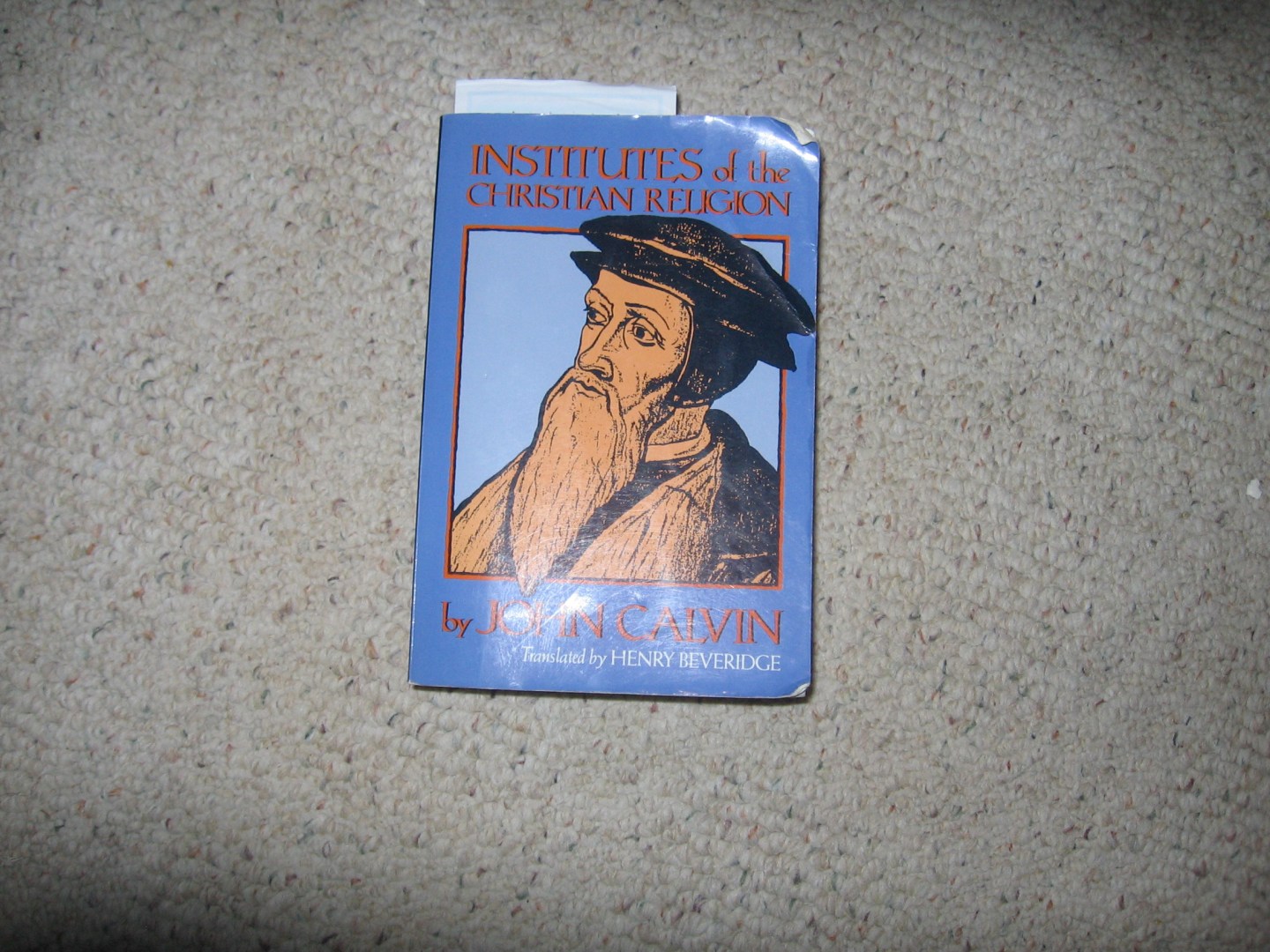
John Owen is identified in various websites as a Puritan and a Calvinist. Yet, the quote above tears at the most controversial principles of Calvinism, predestination, the elect, and Christ not dying for all.
The first two Scriptures are from the words of Jesus where He states that He died for “many.”
My dearest friend, who died of Lymphoma during the COVID lockdown, gave me a full page list of Bible verses stating that Christ died for all. I carefully read each of the verses and all hinted that Christ’s death was sufficient for all, none saying that He died for all. The truth is that not all will accept the Gospel. And if we must “accept” Jesus into our hearts, that is a work and salvation is not by works. Rather, we surrender our will to that of God.
Again, the argument of “all” vs. “many” is like the Puritan argument last week, in that salvation is by faith, but if works do not ensue, the conversion was counterfeit. As with many arguments between true believers, it comes down to the interpretation of a few Bible verses and the definition of specific words. Regardless of which side you are on, God chooses those that enter the Kingdom of Heaven, and we only have a part in our own salvation. We do not decide anyone else’s fate, although sometimes, we would want to do so.
While Owen, who followed most other Calvinist beliefs, goes hardcore in his argument that Christ died for all. In his intended insult of the Calvinists in saying that Christ did not die for the damned, a true Calvinist would reply, “Yeah? So?” Christ died for those who God elected before the world began. We still have to surrender our will to God at some point, but a true Calvinist would counter Owen’s argument that if Christ died for all, then Jesus Christ is a liar (having said more than once dying or a ransom for many), AND Christ died in vain, in that if anyone rejected the Gospel, the atoning sacrifice was incapable of saving that sinner who did not wish to repent. In other words, if one soul goes to Hell, Jesus failed if His intended mission was to die for all.
Jesus is not a failure. His Father, our Heavenly Father, is not a failure either. When Jesus prayed that the ones that the Father gives Him will never slip through His hands (John 17), the Father ensures they will not.
I do not think I have given an adequate argument to convert an Arminian, but I doubt Owen’s argument did not convert a Calvinist. But it did keep the communication lines open so that all sides in Cromwell’s theocracy could have a voice at the bargaining table. Thus, John Owen is considered a powerful reformer in the Christian church during his age and beyond.
If you like these Tuesday morning essays about philosophy and other “heavy topics,” but you think you missed a few, you can use this LINK. I have set up a page off the home page for links to these Tuesday morning posts. I will continue to modify the page as I add more.
Soli Deo Gloria. Only to God be the Glory.
 Thoughts from Mark "Hat" Rackley
I appreciate this discussion about Calvinism
LikeLiked by 1 person
You are welcome.
LikeLiked by 1 person
😀
LikeLiked by 1 person