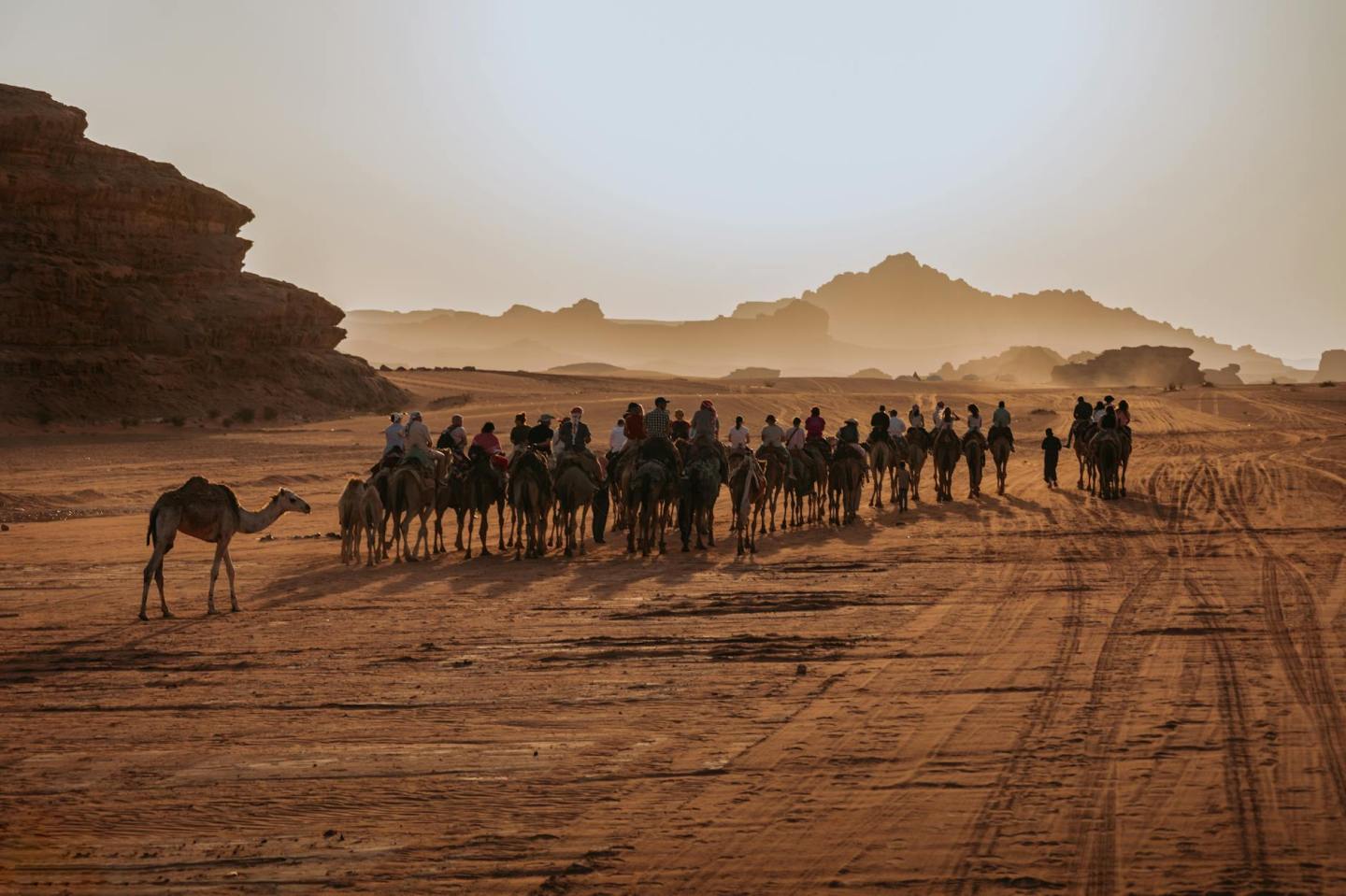
After these things, during the reign of Artaxerxes king of Persia, Ezra son of Seraiah, the son of Azariah, the son of Hilkiah, the son of Shallum, the son of Zadok, the son of Ahitub, the son of Amariah, the son of Azariah, the son of Meraioth, the son of Zerahiah, the son of Uzzi, the son of Bukki, the son of Abishua, the son of Phinehas, the son of Eleazar, the son of Aaron the chief priest—this Ezra came up from Babylon. He was a teacher well versed in the Law of Moses, which the Lord, the God of Israel, had given. The king had granted him everything he asked, for the hand of the Lord his God was on him. Some of the Israelites, including priests, Levites, musicians, gatekeepers and temple servants, also came up to Jerusalem in the seventh year of King Artaxerxes.
Ezra arrived in Jerusalem in the fifth month of the seventh year of the king. He had begun his journey from Babylon on the first day of the first month, and he arrived in Jerusalem on the first day of the fifth month, for the gracious hand of his God was on him. For Ezra had devoted himself to the study and observance of the Law of the Lord, and to teaching its decrees and laws in Israel.
This is a copy of the letter King Artaxerxes had given to Ezra the priest, a teacher of the Law, a man learned in matters concerning the commands and decrees of the Lord for Israel:
Artaxerxes, king of kings,
To Ezra the priest, teacher of the Law of the God of heaven:
Greetings.
Now I decree that any of the Israelites in my kingdom, including priests and Levites, who volunteer to go to Jerusalem with you, may go. You are sent by the king and his seven advisers to inquire about Judah and Jerusalem with regard to the Law of your God, which is in your hand. Moreover, you are to take with you the silver and gold that the king and his advisers have freely given to the God of Israel, whose dwelling is in Jerusalem, together with all the silver and gold you may obtain from the province of Babylon, as well as the freewill offerings of the people and priests for the temple of their God in Jerusalem. With this money be sure to buy bulls, rams and male lambs, together with their grain offerings and drink offerings, and sacrifice them on the altar of the temple of your God in Jerusalem.
You and your fellow Israelites may then do whatever seems best with the rest of the silver and gold, in accordance with the will of your God. Deliver to the God of Jerusalem all the articles entrusted to you for worship in the temple of your God. And anything else needed for the temple of your God that you are responsible to supply, you may provide from the royal treasury.
Now I, King Artaxerxes, decree that all the treasurers of Trans-Euphrates are to provide with diligence whatever Ezra the priest, the teacher of the Law of the God of heaven, may ask of you—up to a hundred talents of silver, a hundred cors of wheat, a hundred baths of wine, a hundred baths of olive oil, and salt without limit. Whatever the God of heaven has prescribed, let it be done with diligence for the temple of the God of heaven. Why should his wrath fall on the realm of the king and of his sons? You are also to know that you have no authority to impose taxes, tribute or duty on any of the priests, Levites, musicians, gatekeepers, temple servants or other workers at this house of God.
And you, Ezra, in accordance with the wisdom of your God, which you possess, appoint magistrates and judges to administer justice to all the people of Trans-Euphrates—all who know the laws of your God. And you are to teach any who do not know them. Whoever does not obey the law of your God and the law of the king must surely be punished by death, banishment, confiscation of property, or imprisonment.
Praise be to the Lord, the God of our ancestors, who has put it into the king’s heart to bring honor to the house of the Lord in Jerusalem in this way and who has extended his good favor to me before the king and his advisers and all the king’s powerful officials. Because the hand of the Lord my God was on me, I took courage and gathered leaders from Israel to go up with me.
- Ezra 7:1-28
For a link to Ezra 8, click HERE.
After these things had been done, the leaders came to me and said, “The people of Israel, including the priests and the Levites, have not kept themselves separate from the neighboring peoples with their detestable practices, like those of the Canaanites, Hittites, Perizzites, Jebusites, Ammonites, Moabites, Egyptians and Amorites. They have taken some of their daughters as wives for themselves and their sons, and have mingled the holy race with the peoples around them. And the leaders and officials have led the way in this unfaithfulness.”
When I heard this, I tore my tunic and cloak, pulled hair from my head and beard and sat down appalled. Then everyone who trembled at the words of the God of Israel gathered around me because of this unfaithfulness of the exiles. And I sat there appalled until the evening sacrifice.
Then, at the evening sacrifice, I rose from my self-abasement, with my tunic and cloak torn, and fell on my knees with my hands spread out to the Lord my God and prayed:
“I am too ashamed and disgraced, my God, to lift up my face to you, because our sins are higher than our heads and our guilt has reached to the heavens. From the days of our ancestors until now, our guilt has been great. Because of our sins, we and our kings and our priests have been subjected to the sword and captivity, to pillage and humiliation at the hand of foreign kings, as it is today.
“But now, for a brief moment, the Lord our God has been gracious in leaving us a remnant and giving us a firm place in his sanctuary, and so our God gives light to our eyes and a little relief in our bondage. Though we are slaves, our God has not forsaken us in our bondage. He has shown us kindness in the sight of the kings of Persia: He has granted us new life to rebuild the house of our God and repair its ruins, and he has given us a wall of protection in Judah and Jerusalem.
“But now, our God, what can we say after this? For we have forsaken the commands you gave through your servants the prophets when you said: ‘The land you are entering to possess is a land polluted by the corruption of its peoples. By their detestable practices they have filled it with their impurity from one end to the other. Therefore, do not give your daughters in marriage to their sons or take their daughters for your sons. Do not seek a treaty of friendship with them at any time, that you may be strong and eat the good things of the land and leave it to your children as an everlasting inheritance.’
“What has happened to us is a result of our evil deeds and our great guilt, and yet, our God, you have punished us less than our sins deserved and have given us a remnant like this. Shall we then break your commands again and intermarry with the peoples who commit such detestable practices? Would you not be angry enough with us to destroy us, leaving us no remnant or survivor? Lord, the God of Israel, you are righteous! We are left this day as a remnant. Here we are before you in our guilt, though because of it not one of us can stand in your presence.”
- Ezra 9:1-15
For a link to Ezra 10, click HERE.
Noted Biblical Scholars, Teachers, and Preachers Comments
Ezra 7:1 ‘Artaxerxes’: “King of Persia from 464-423 B.C. Ezra. … the son of. Ezra traced his lineage back through such notable high priests as Zadok (1 Kin. 2:35), Phinehas (Num. 25:10-13), and Eleazar (Num. 3:4).”
- John MacArthur, John MacArthur Commentary (quoted Scripture without bold/italics)
Ezra 7:6 ‘the second return’: ”The latter part of the book concerns the ministry of Ezra, who led the second return to the land.”
- Ray C. Stedman, Adventuring Through the Bible
Ezra 7:10 ‘Ezra’s character’: ”Wouldn’t you like to have this written of you: ‘the king granted him everything he asked’? What kind of person is this whom a heathen Gentile king regards so highly that he will give Ezra anything he asks? We find the secret of this man’s character in this chapter.”
- Ray C. Stedman, Adventuring Through the Bible
Ezra 7:10 ‘being well read’: “All else being equal it is desirable that Christians, especially ministers of the gospel, should be widely read. It is a disagreeable experience to present oneself before a teacher for religious instruction and discover in less than three minutes that the said teacher should have changed places with his listeners and learned from them rather than they from him. If he is a humble man and sticks close to the small plot of ground with which he is familiar, he may, if he loves God and men, succeed in ministering to the spiritual needs of his flock. If, however, his ignorance is exceeded by his arrogance, then God help his hearers. If he boasts of his ignorance and scorns learning, show me the nearest exit! l can learn more from a child laughing on the lawn or a cloud passing overhead.”
- A. W. Tozer, The Size of the Soul
Ezra 7:12 ‘king of kings’: “Though it was true that Artaxerxes ruled over other kings, Jesus Christ is the ultimate King of kings (cf. Rev. 19:16), who alone can genuinely make that claim since He will rule over all kings in His coming kingdom (cf. Rev. 11:15).”
- John MacArthur, John MacArthur Commentary (quoted Scripture without bold/italics)
Ezra 7:25 ‘And you, Ezra’: “The letter in which the decree was embedded was written to Ezra. The king turned to him in a demonstration of administrative trust and granted him permission to appoint magistrates and judges for the region. The effect of this decision would be to offer a measure of local autonomy to the Jews.”
- John MacArthur, John MacArthur Commentary (quoted Scripture without bold/italics)
Ezra 8:15 ‘river … Ahava’: “An unknown location where a canal/river flowed into the Euphrates River. This was in Babylon and chosen for the place where the returning Jews would render vows for several days in preparation to leave. none … of Levi. There were no Levites who chose to return so Ezra pursued such needed men by sending a command to Iddo, who was chief of the Nethinim. Iddo’s influence brought 38 Levites and 220 Nethinim (vv. 16-20).”
- John MacArthur, John MacArthur Commentary (quoted Scripture without bold/italics)
Ezra 8:21-23 ‘I proclaimed a fast.’: “They would soon begin the long journey. Such travel was dangerous, since the roads were frequented by thieves who robbed for survival. Even messengers traveled with caravans to ensure their safety. Ezra and the people did not want to confuse the king about their trust in God’s protection so they entreated Him for safety with a prayerful fast. God honored their prayer of faith with His protection.”
- John MacArthur, John MacArthur Commentary (quoted Scripture without bold/italics)
Ezra 8:36 ‘they delivered the king’s orders.’: “The plural ‘orders’ may account for a change of terminology. This would include the decrees plus other orders in the official correspondence Artaxerxes gave to Ezra to deliver, to support the Jews and their building of the temple.”
- John MacArthur, John MacArthur Commentary (quoted Scripture without bold/italics)
Ezra 9:1-2 ‘strengthen and beautify’: ”Ezra is a man of the Word. Therefore, God sent him to Jerusalem to strengthen and beautify the temple. That is the work of the Word of God in our lives: strengthening and beautifying within us the place of fellowship with God.”
- Ray C. Stedman, Adventuring Through the Bible
Ezra 9:3-4 ‘married outside the Chosen People’: ”The leaders of the nation came to Ezra and reported that the Jews were once again mingling with the surrounding nations, adopting their idolatrous practices, and taking wives and husbands from among those alien people. These were the very practices that had broken the strength of the nation before. These were the sins that caused God to finally disperse the Jewish people, separate them into two nations, and deliver them into captivity and exile. Now, it seemed, after seventy years under the Lord’s disciplining hand, they hadn’t learned a thing!
“The flesh never changes. No matter how long you walk in the Spirit, you will never get to a place where you cannot fall, where you cannot revert to your worst spiritual condition. All it takes is a little inattention, a little straying, a little departure from your dependence upon God’s Spirit, and before you realize it you are back in the mire of your old ways. Ezra was shattered to learn that this has happened.
“As the book nears its close, Ezra prays to God and confesses the great sin of the nation. In response, God graciously moves in the hearts of the people. The leaders come to Ezra brokenhearted, acknowledging their sin. Then the leaders issue a proclamation, calling all the people to assemble together. Though it is raining, the people still gather, thousands thronging into the square before the temple, and together, they confess their disobedience.
“What happens next is hard for us to accept: The people pledge to put away the wives and children they had acquired outside of God’s will. Now this is a hurtful thing, isn’t it? This is what Jesus meant when He said, ‘If anyone comes to me and does not hate his father and mother, his wife and children … he cannot be my disciple’ (Luke 14:26). Our relationship with God comes first.
“This is a symbolic teaching. God is not saying that we have to divorce and then abandon our children today. Rather, He is saying that we should ruthlessly divorce ourselves from anything that comes from the flesh and hinders our spiritual purity and our relationship with God. We must divorce ourselves from our materialism, our lusts and coveting, our ungodly goals and values, our anger and grudges, our habits and sins, all of which are symbolized by these Canaanite tribes in the land.
“It was hard for the Israelites to put away their wives and children, but they realized that their only chance of being restored to fellowship with God lay in absolute, radical obedience to His Word.”
- Ray C. Stedman, Adventuring Through the Bible
Ezra 9:8-9 ‘grace … mercy’: “God had been true to His character and His covenant (cf. Lam. 3:22, 23) in restoring Israel, Jerusalem, and the temple.”
- John MacArthur, John MacArthur Commentary (quoted Scripture without bold/italics)
Ezra 9:9 ‘a wall’: “As a people scattered all over the Fertile Crescent, the Jews were vulnerable to the nations. Together in Judah, with God as protector, they were safe. The wall does not exclude the walls of Jerusalem yet to be built, but it speaks more broadly of God’s provision for protection.”
- John MacArthur, John MacArthur Commentary (quoted Scripture without bold/italics)
Ezra 9:10-12 ‘Your commandments’: “This is not a quotation of any single text of Scripture, but rather a summation of God’s commands on the subject (cf. Ex. 34:15-17; Deut. 7:1-6).”
- John MacArthur, John MacArthur Commentary (quoted Scripture without bold/italics)
Ezra 10:2 ‘Shechaniah’: “This leader, not involved in the mixed marriages since his name does not appear in the list in verses 18-44 (though his father and five paternal uncles do appear in v. 26), was bold and chose to obey God rather than please his relatives. hope in Israel in spite of this. This hope is centered in God’s covenant love and forgiveness of truly repentant sinners.”
- John MacArthur, John MacArthur Commentary (quoted Scripture without bold/italics)
Ezra 10:4 ‘your responsibility’: “Ezra is acknowledged as the chief spiritual leader with appropriate divine authority and human responsibility to take on the execution of this formidable task of dealing with divorces for so many (cf. vv. 18-44).”
- John MacArthur, John MacArthur Commentary (quoted Scripture without bold/italics)
Ezra 10:5 ‘swear an oath’: “The oath stands in relation to the covenant specified in verse 3. Cf. Nehemiah 10:28-39 for the content of a later oath under similar conditions.”
- John MacArthur, John MacArthur Commentary (quoted Scripture without bold/italics)
Ezra 10:10-11 ‘Confession’: “Have you been there? Have you felt the ground of conviction give way beneath your feet? The ledge crumbles, your eyes widen, and down you go. Poof!
“Now what do you do? … When we fall, we can dismiss it. We can deny it. We can distort it. Or we can deal with it …
“We keep no secrets from God. Confession is not telling God what we did. He already knows. Confession is simply agreeing with God that our acts were wrong …
“How can God heal what we deny? … How can God grant us pardon when we won’t admit our guilt? Ahh, there’s that word: guilt. Isn’t that what we avoid? Guilt. Isn’t that what we detest? But is guilt so bad? What does guilt imply if not that we know right from wrong, that we aspire to be better than we are … That’s what guilt is: a healthy regret for telling God one thing and doing another.“
- Max Lucado, A Gentle Thunder
Ezra 10:18 ‘the sons of Jeshua the son of Jozadak, and his brothers’: “At the head of the list of those who had intermarried were the descendants and other relatives of the high priest who first returned with Zerubbabel and led in the temple reconstruction. They set the example for all the people in giving the appropriate trespass offering (v. 19).”
- John MacArthur, John MacArthur Commentary (quoted Scripture without bold/italics
My Thoughts
In the seventh year of Artaxerxes, Ezra is granted all he needs to finish the work of the temple. Was the work under Zerubbabel not finished as reported in the sixth chapter or had things gone into disarray and decay? There is about an eighty-year gap between Ezra 1 and Ezra 7. There were many years of delays in the building of the temple, so the completion and dedication was not eighty years before Ezra left for Jerusalem. Odd, that the book of Ezra only has Ezra in the action in less than a half of the book, but Ezra probably took the records from the first remnant returning.
King Artaxerxes sent with Ezra silver and gold to be used to purchase the animals for the offerings. Ezra was well-informed of the Law. He knew what they needed and what needed to be done. He was of a priestly family line. Artaxerxes said that he could levy taxes but not from anyone that was a temple worker.
Besides the separation of church and state (so horribly misinterpreted by the Supreme Court), here is a biblical decree, albeit from a Persian to not tax the clergy or workers in the temple.
Ezra, being a teacher as well as a priest, he was to teach anyone who did not know what was necessary. Disobedience of the Law could be punishable by death, banishment, confiscation of property, or prison.
When their caravan reached Ahava, they stopped. Ezra realized he did not have any Levites. He sent men to Iddo to get both Levites and Nethinim, descendants of the Gibeonites assigned servile duties at the temple. Ezra left the silver and gold objects in the care of the Levites. The Levites and the items were consecrated to God’s service.
Then Ezra ordered a fast. They had left without guards or an army to protect them. They were in danger of attack. Ezra called for a fast. God heard their request and granted them protection. They made it safely to Jerusalem. The Levites accounted for every item, turning them over to the priest, Uriah.
Then Ezra learned that the first remnant, many of them at least, had intermarried with non-Jews. Ezra tore his tunic and cloak. He pulled hair from his head and beard. He fell to his knees in shame. At the end of the day, he began to pray. The people had polluted themselves in just those years. They had done all the things their ancestors had done that deserved the punishment of exile. And here they were a remnant that had returned. They did not deserve what they had been given.
Then Shekaniah suggested that the people could divorce their wives and send their wives and children, if any, back to their peoples. It was agreed that this would be the covenant they would make with God. While they gathered everyone, Ezra fasted, no food or water until the problem was resolved. It was rainy and cold, and the people realized this would take some time. They agreed to go from town to town with judges and deal with the matter. Only a couple of the people did not agree.
The book of Ezra ends with a list of names, a list of infamy as it were, those who had intermarried with the other peoples of the land.
It is noted that the priests who were on the list offered a ram as a guilt offering. This may have been a move to show what others should also do, but it was not recorded.
This was a radical decision. Divorcing a wife with no children put a burden on the wife in returning to her people and she might not be accepted. But to take the children from their father was yet another hard lesson. But the remnant that returned knew why they had been sent into exile. As Samuel told Saul, obedience is much more important than sacrifice because you have sinned.
Some Serendipitous Reflections
Ezra 7:1-10 Ezra Comes to Jerusalem 1. Ezra was ‘well-versed’ in the Law (vv.6,10; see Ne 8). What subject matter are you well-versed in? By comparison, how well-versed are you in the Bible?
“2. Who instilled in you a love for the Word? What do you do to build upon that?
Ezra 7:11-28 King Artaxerxes’ Letter to Ezra 1. How is the ‘hand of the Lord’ evident in your life? What leadership role does that encourage you to take?
“2. How does the experience of ‘God’s hand’ differ among your group members?
“3. Artaxerxes’ letter to Ezra and his commission of Nehemiah (see Ne 1:1,11) have been regarded as the first of Daniel‘s 69 ‘sevens’ (see Da 9:24-27). Whichever starting point one uses, Daniel sees the restoration of Israel under Artaxerxes as prefiguring the first coming of Christ. What meaning for Jews and Christians do you ascribe to the historic restoration of Israel, then (in 538-430 B.C.) and now?
“4. Why is it important for some people to have their religious leader‘s pedigree or ordination related to a great high priest (as in Ezra’s lineage, vv.1-5), or even the High Priest (see Heb 7-8).
“5. What aspect of praise, gratitude, and healthy self-esteem does your small group enjoy as a result of your devotion to God’s Word? What group doxology would reflect this (as in vv. 27-28)?
Ezra 8: 1. ls God‘s hand more directly involved in the lives of those who strip themselves of all visible means of support and protection? Or are God’s ‘fingerprints’ just more ‘obvious,’ or better yet ‘necessary,’ at such times of naked trust? Why do you think so?
“2. The trek from Ahava to Jerusalem around the Euphrates River is about 900 miles. After an 11-day interlude, their journey took 110 days to complete (vv.21,31; compare 7:9). Nine miles per day was a good pace for a large mass-migration back then, but not by today‘s standards. When has your journey with the Lord seemed no faster than ‘nine miles/day’? What does this say about your need for patience, especially in bringing others along with you in your vision (as did Ezra)?
“3. Ezra fasted before approaching God for direction, as did Jesus and his disciples (see Mt 4:2; 6:16-18). How might fasting help you to know God’s answer for an important decision you are facing?
“4. Ezra entrusts 24 men with millions of dollars and holds them accountable for every last ‘talent.’ For what talents have you been ‘set aside’? How do you see people today being held accountable for their money: Through taxes? Church review boards? Media pressure? For what and by whom is your small group held accountable?
“5. How and when have you sensed ‘God protecting you from enemies’? What enemies (internal and external) might you still need God‘s protection from?
“6. What articles do you so revere that they are ‘consecrated to the Lord’? What might the Lord be asking you now to consecrate to him?
Ezra 9: 1. What effect do you suppose this public and published prayer had on the first audience? On later readers? On God? On you? Explain.
“2. Some 25 years later, Nehemiah dealt with the same problem of intermarriage with foreigners, but ‘pulled more hair’ than Ezra (see Ne 13:23-29). if confronted with a similarly offensive sin, would you respond more like Nehemiah or Ezra (‘beating them’ versus ‘abasing self’)? How else do you express your grief over sin?
“3. What problem do you have with people marrying outside the Christian faith? How common is that among your friends? With what results?
“4. What else could compromise a struggling community of faith as much as mixed marriages in ancient Israel? What could your small group do to express your grief over that threat or sin?
“5. Do you pray more personal ‘I-prayers,’ or more priestly ‘we-prayers’? Why?
“6. How has God given you ‘new life’ (v.9) along your journey: Short-lived? Long-lasting? Or what?
Ezra 10:1-17 The People’s Confession of Sin 1. What is the connection here between repentance and hope? Between prayer and action? Between unilateral covenant and mutual agreement? Point of decision and process of implementation?
“2. Why do many people find it valuable to make a decision and act quickly? Why do others procrastinate and compromise? Which do you like to do? Why?
“3. Does your small group decide things on their own, independent of higher authority or church-wide consensus? If so, how do you arrive at those decisions?
“4. Does your small group represent change to the larger church, or resist change as suggested by the larger church? How so? Over what issues do you covenant for change?
Ezra 10:18-44 Those Guilty of Intermarriage 1. What does the total of 111 guilty men, their ex spouses, and broken homes do to you? How would you feel seeing your name listed here? Does such sentiment tend to overshadow the principles involved?
“2. This list of guilty men attests to a momentary purge and purification of Israel. Some 12 and 25 years later (see Ne 10:30 and 13:23-29), Nehemiah must confront that same sin of mixed marriages. What does that say about human nature? About the tenacity of sin? About the effect of legal sanctions? About the need for continuing to renew divine-human covenants?
“3. Where then would you place your hope for a purified Church today (see Mt 13:24-30)?
“4. In your study of Ezra, what have you learned about your human nature? About God‘s nature? About his desires for you? His discipline of you?
“5. What kind of pilgrim would you have made back in Ezra‘s day? How is that shown in your faith now?”
- Lyman Coleman, et al, The NIV Serendipity Bible for Study Groups
There is one set of questions each for Ezra 8 and Ezra 9. Ezra 7 and 10 have two sets of questions as noted.
Substitute whatever group for any reference to a small group or ask who could come to your aid.
If you like these Thursday morning Bible studies, but you think you missed a few, you can use this LINK. I have set up a page off the home page for links to these Thursday morning posts. I will continue to modify the page as I add more.
Soli Deo Gloria. Only to God be the Glory.


Leave a comment