The Lord said to Moses, “Speak to the entire assembly of Israel and say to them: ‘Be holy because I, the Lord your God, am holy.
- Leviticus 19:1-2
for it is written: “Be holy, because I am holy.”
- 1 Peter 1:16
And a highway will be there;
it will be called the Way of Holiness;
it will be for those who walk on that Way.
The unclean will not journey on it;
wicked fools will not go about on it.
- Isaiah 35:8
Lord, who may dwell in your sacred tent?
Who may live on your holy mountain?
The one whose walk is blameless,
who does what is righteous,
who speaks the truth from their heart;
- Psalm 15:1-2
Who may ascend the mountain of the Lord?
Who may stand in his holy place?
The one who has clean hands and a pure heart,
who does not trust in an idol
or swear by a false god.
- Psalm 24:3-4
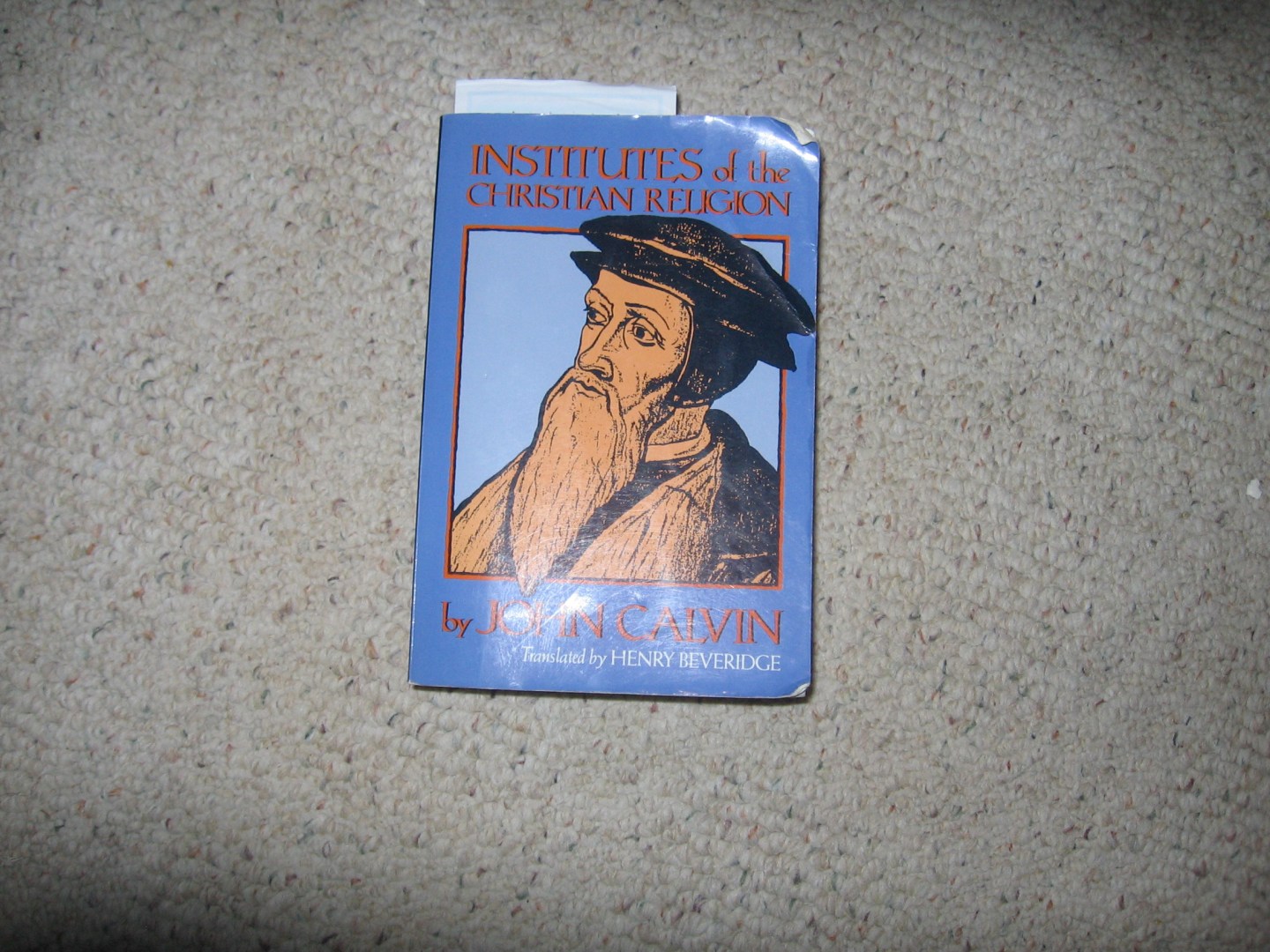
“The Scripture system of which we speak aims chiefly at two objects. The former is, that the love of righteousness, to which we are by no means naturally inclined, may be instilled and implanted into our minds. The latter is … to prescribe a rule which will prevent us while in the pursuit of righteousness from going astray. It has numerous admirable methods of recommending righteousness. Many have been already pointed out in different parts of this work; but we shall here also briefly advert to some of them. With what better foundation can it begin than by reminding us that we must be holy, because ‘God is holy’? (Lev. xix. 1; 1 Pet. i. 16.) For when we were scattered abroad like lost sheep, wandering through the labyrinth of this world, he brought us back again to his own fold. When mention is made of our union with God, let us remember that holiness must be the bond; not that by the merit of holiness we come into communion with him (we ought rather first to cleave to him, in order that, pervaded with his holiness, we may follow whither he calls), but because it greatly concerns his glory not to have any fellowship with ·wickedness and impurity. Wherefore he tells us that this is the end of our calling, the end to which we ought ever to have respect, if we would answer the call of God. For to what end were we rescued from the iniquity and pollution of the world into which we were plunged, if we allow ourselves, during our whole lives, to wallow in them? Besides, we are at the same time admonished, that if we would be regarded as the Lord’s people, we must inhabit the holy city Jerusalem (Isaiah xxxv. 8, et alibi), which, as he hath consecrated it to himself, it were impious for its inhabitants to profane by impurity. Hence the expressions, ‘Who shall abide in thy tabernacle? Who shall dwell in thy holy hill? He that walketh uprightly, and worketh righteousness’ (Ps. xv. 1, 2; xxiv. 3, 4); for the sanctuary in which he dwells certainly ought not to be like an unclean stall.”
- John Calvin, Institutes of the Christian Religion, Volume 2
John Calvin (1509-1564) was a French philosopher, pastor and one of the influential leaders of the Protestant Reformation. Frankly, he wrote his Institutes of the Christian Religion to the French king, Francis I. Like Luther, who sought the backing of local government, Calvin sought the backing of the king with a theological explanation of the reformation of the existing church. Neither Luther nor Calvin wanted a new denomination, but the powers within the corrupted church did not allow for reformation, although a minimal amount of reformation has occurred in the 500 years since then. Calvin had to run for his life. He left Geneva and went to Basel in exile. He later became a pastor in a reformed church in Strassburg, France.
I wrote a few philosophical discussions on Volume one of Institutes of the Christian Religion in 2020. I intended to come back for volume 2, but I never thought it would be nearly six full years later.
In this introductory thought, it is our calling from God to be sanctified, to become more like Jesus. The effort will not be complete until we die and we are with Jesus. R.C. Sproul said in a question and answer session at a conference that the biggest chunk of his being that is not like Jesus would fall away upon death, and Sproul was one of the top reformed theologians of the past century. I agree with him. Our sin nature gets in the way, the temptations of this world prey upon that sin nature.
But God is holy. We have to be holy to be in His presence in Heaven. Of course, God promises to separate us from our sins as far as east is from west. We will have that greatest portion of sanctification before we come into God’s presence, for it is necessary.
But should we be hoping for that last-second cleansing?
Isaiah 35 says that the road to the new Jerusalem can only be traveled by the righteous. The quoted psalms above speak of no one, but the holy, can ascend God’s holy hill.
We may not be perfect until the end, but we must strive toward that goal.
We must love Jesus so much that our desires will be to be like Him.
In all our imperfection, it is the desire of our heart that matters. We will be with Jesus forever, infinitely longer than our time on earth. It only makes sense to emulate our Savior in thought, word, and deed.
If you like these Tuesday morning essays about philosophy and other “heavy topics,” but you think you missed a few, you can use this LINK. I have set up a page off the home page for links to these Tuesday morning posts. I will continue to modify the page as I add more.
Soli Deo Gloria. Only to God be the Glory.


Leave a Reply