Paul then stood up in the meeting of the Areopagus and said: “People of Athens! I see that in every way you are very religious. For as I walked around and looked carefully at your objects of worship, I even found an altar with this inscription: to an unknown god. So you are ignorant of the very thing you worship—and this is what I am going to proclaim to you.
- Acts 17:22-23
The sinners in Zion are terrified;
trembling grips the godless:
“Who of us can dwell with the consuming fire?
Who of us can dwell with everlasting burning?”
- Isaiah 33:14
“1. The true wisdom of man consists in the knowledge of God the creator and Redeemer.
“2. This knowledge is naturally implanted in us, and the end of it ought to be the worship of God rightly performed, or reverence for the Deity accompanied by fear and love.”
“3. But this seed is corrupted by ignorance, whence arises superstitious worship; and by wickedness, whence arise slavish dread and hatred of the Deity.
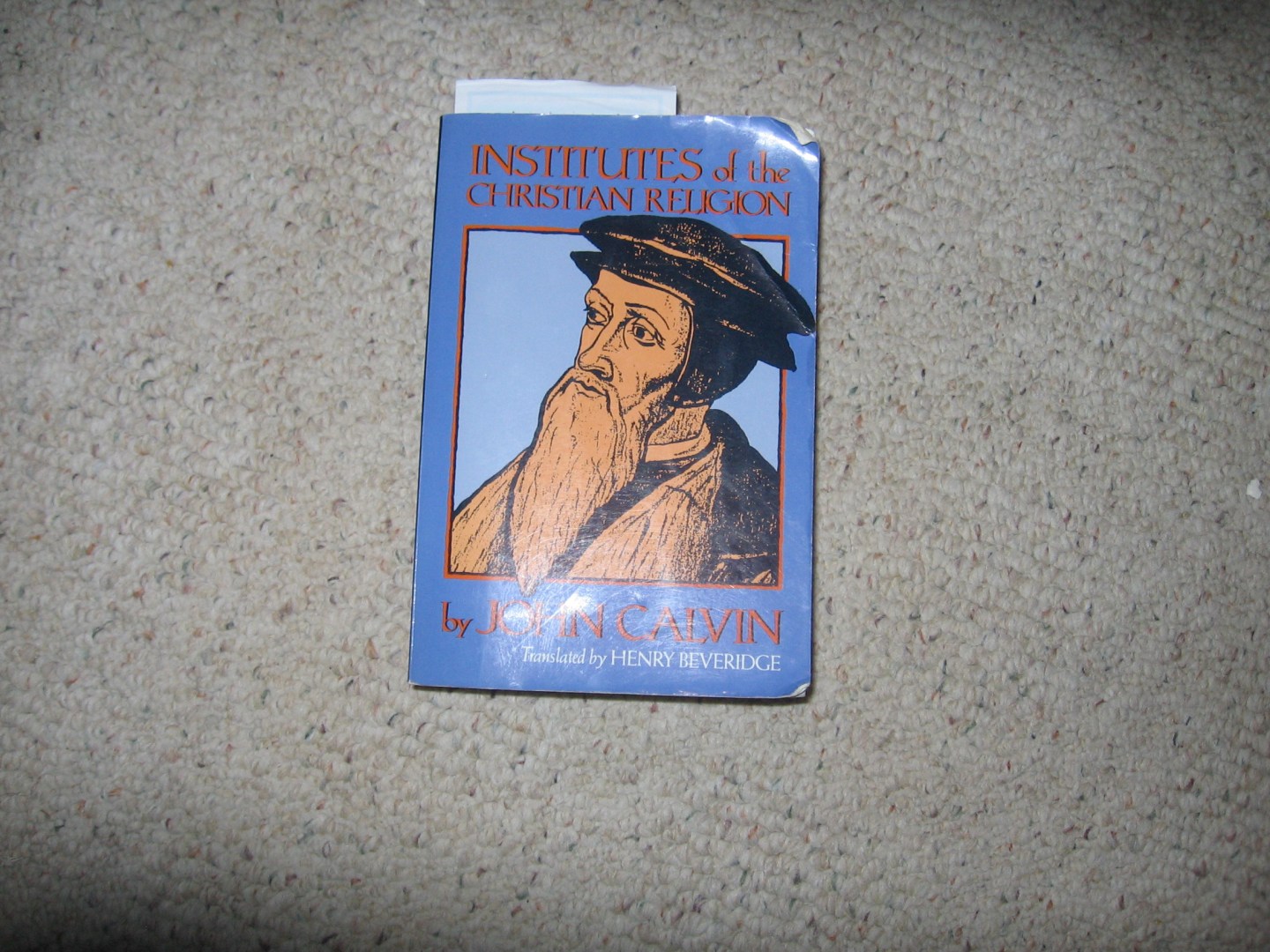
- John Calvin, Institutes of the Christian Religion, Aphorisms
John Calvin did not write these aphorisms. They are a summarization of what he wrote in Institutes of the Christian Religion. There are 100 aphorisms. I will at least go for a few of them while I look through my library for another book.
I wrote the first three together, since they build on a theme.
We have so much in church worship these days that has developed over a few hundred years, nearly two thousand years for the church as a whole.
Some of this is indeed ignorance of what God meant. He meant some things to be taken literally while other things are to be taken metaphorically. Like a pastor on a discussion panel that I enjoy watching, he says that Isaiah says that God spreads His feathers over us to protect us, but that does not mean that God is a chicken.
On that same discussion panel, they had a discussion on what is the best posture to have for prayer, and there are several mentioned in the Bible. But one church requires you to kneel, as if God does not listen unless you do. Another church might require you to stand.
Even when churches try to be biblical in their liturgy, they can still miss the mark.
But the second half about the slavish dread and hatred of the Deity reminds me of the question that J.R.R. Tolkien and Hugo Dyson posed to C.S. Lewis. “Why are you so angry with a God that you do not believe in?” Lewis could not answer that, and he soon admitted that he had become a deist. It still took him time to accept Jesus as the only answer.
We may be adamant about our beliefs, but are they founded on a fleeting feeling or a bedrock foundation? Is God within us, or not?
Wickedness manifests itself boldly at times. At other times, it sneaks in a side door when no one is watching. The frontal assaults can be easier to deal with. Our defenses go up immediately. But the sneaky things can slip in without notice.
I argued with the pastor about how some hymns had been changed. I was told to let it go and move on. But my argument was that the old words had a stronger meaning than the wishy-washy new words that could be interpreted in ten different ways.
What then of church tenets? Does the church doctrine then follow the wrong interpretation in a statement of what we believe?
Heresy does not have to be a single choice to vary from God’s words. It usually comes from little changes, one misunderstood word at a time.
If you like these Tuesday morning essays about philosophy and other “heavy topics,” but you think you missed a few, you can use this LINK. I have set up a page off the home page for links to these Tuesday morning posts. I will continue to modify the page as I add more.
Soli Deo Gloria. Only to God be the Glory.


One Pingback