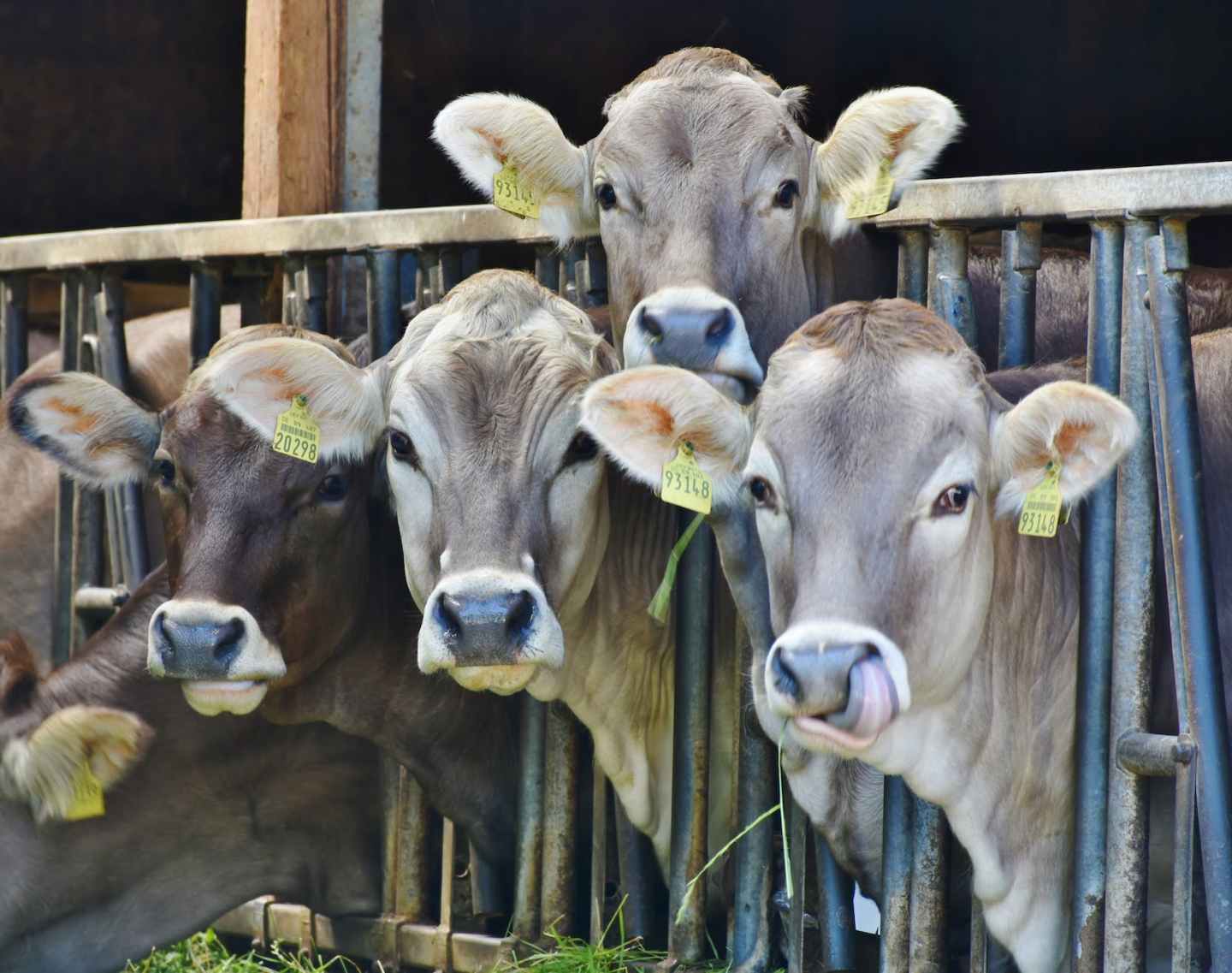
Hear this word, you cows of Bashan on Mount Samaria,
you women who oppress the poor and crush the needy
and say to your husbands, “Bring us some drinks!”
The Sovereign Lord has sworn by his holiness:
“The time will surely come
when you will be taken away with hooks,
the last of you with fishhooks.
You will each go straight out
through breaches in the wall,
and you will be cast out toward Harmon,”
declares the Lord.
“Go to Bethel and sin;
go to Gilgal and sin yet more.
Bring your sacrifices every morning,
your tithes every three years.
Burn leavened bread as a thank offering
and brag about your freewill offerings—
boast about them, you Israelites,
for this is what you love to do,”
declares the Sovereign Lord.
“I gave you empty stomachs in every city
and lack of bread in every town,
yet you have not returned to me,”
declares the Lord.
“I also withheld rain from you
when the harvest was still three months away.
I sent rain on one town,
but withheld it from another.
One field had rain;
another had none and dried up.
People staggered from town to town for water
but did not get enough to drink,
yet you have not returned to me,”
declares the Lord.
“Many times I struck your gardens and vineyards,
destroying them with blight and mildew.
Locusts devoured your fig and olive trees,
yet you have not returned to me,”
declares the Lord.
“I sent plagues among you
as I did to Egypt.
I killed your young men with the sword,
along with your captured horses.
I filled your nostrils with the stench of your camps,
yet you have not returned to me,”
declares the Lord.
“I overthrew some of you
as I overthrew Sodom and Gomorrah.
You were like a burning stick snatched from the fire,
yet you have not returned to me,”
declares the Lord.
“Therefore this is what I will do to you, Israel,
and because I will do this to you, Israel,
prepare to meet your God.”
He who forms the mountains,
who creates the wind,
and who reveals his thoughts to mankind,
who turns dawn to darkness,
and treads on the heights of the earth—
the Lord God Almighty is his name.
- Amos 4:1-13
Noted Biblical Scholars, Teachers, and Preachers Comments
Amos 4:1-3 ‘The Book of Amos’: “Two of the minor prophets, Amos and Hosea, spoke to the northern kingdom of Israel during the rise of the Neo-Assyrian Empire. Both took the Assyrian threat very seriously, but their messages were unheard. Comparative prosperity in Israel during the reign of Jeroboam II (793–753 B.C.) had fed complacency.
“Amos spoke harshly about this complacency. Although he himself was from Tekoa in the land of Judah (Amos 1:1), Amos was sent by God to prophesy to Israel (see 7:10–17), and he brought with him a deep intolerance for oppression. He raged against the lavish lives of the rich (4:1–3), the oppression of the poor (5:11–15), and the ostentatious religious ceremony of the oppressors (5:21–24).”
- Timothy B. Cargal, et al., The Chronological Study Bible
Amos 4:1-3 ‘cows of Bashan’: ”In this stinging indictment of Israel’s women, the designation ‘cows of Bashan’ refers to the insensitive wives of wealthy officials living in luxury. Although they may not have oppressed the poor overtly, these women pressured their husbands to provide them with luxuries to satisfy their self-indulgence at the expense of the poor and needy. They had forfeited their right to be respected (Isa 3:16–4:1). The Lord’s judgment on them takes the form of an oath (Am 4:2). Bashan was a fertile, well-watered region (now the Golan Heights; see Dt 32:14; Ps 22:12; Mic 7:14) where sheep and cattle grazed in lush pastures. Animals for cultic sacrifice were raised here. Just as the fattening cattle were oblivious to their sure but pending slaughter, the Israelite women were living in luxury unaware of the catastrophe about to crush them. The Lord would lead them away like slaves with fishhooks, a humiliating captivity.”
- Dorothy Kelley Patterson, General Editor, NIV Woman’s Study Bible (Karen H. Jobes, Minor Prophets contributor)
Amos 4:1 ‘cows of Bashan’: “A description of the women of Samaria who lived luxurious lives (cf. Is. 3:16–26; 32:9–13; Jer. 4:30). Bashan was a fertile region below Mt. Hermon E of the Jordan River known for its lush pastures. Under Jeroboam II, Israel was enjoying great prosperity.”
- John MacArthur, John MacArthur Commentary (quoted Scripture without bold/italics)
Amos 4:1 ‘indulgent women of Samaria’: “Amos had some choice words for the wealthy; indulgent women of Samaria: Listen to this message, you cows of Bashan. Bashan was an area east of the Sea of Galilee; it had flourishing pastures and plump livestock. Like spoiled cows, these women demanded luxury and pleasure. They oppressed the poor and needy and made demands on their husbands. What a contrast to the ‘wife of noble character’ in Proverbs 31; she feared the Lord, served her family; and ministered to the poor (see Prov 31:10-31).”
- Tony Evans, The Tony Evans Bible Commentary (quoted Scripture without bold/italics)
Amos 4:2-3 ‘through broken walls … into Harmon’: “Captives will be led out of the city through breaches in the walls, depicting massive overthrow. The location of Harmon is unknown.”
- John MacArthur, John MacArthur Commentary (quoted Scripture without bold/italics)
Amos 4:2-3 ‘social injustice’: “These women of Samaria, who snubbed God and committed social injustice against his people, would suffer humiliation, and be carried into exile in foreign lands. The Lord swore by his holiness that he would bring this about (4:2). There’s no better guarantee than that.”
- Tony Evans, The Tony Evans Bible Commentary (quoted Scripture without bold/italics)
Amos 4:2 ‘Accusation’: “The people who lived in luxury would be led away like animals, either into captivity or to death. Because they oppressed the poor, they had things money could buy. But they did not have the things money could not buy.”
- Jay McCluskey, A Long Walk with the Minor Prophets
Amos 4:4-5 ‘Bethel’s golden calf’: “Bethel, one of the sites where Jeroboam I had set up a golden calf, was Israel’s primary worship center in Amos’s time (Am 7:13). It had become a center for idolatry. Gilgal was the second most important place for worship. Amos’s invitation to ‘go’ and ‘burn’ was a form of satire. The religious practices of the people did not draw them closer to God, but rather led them further from him. Their worship resulted in multiplied transgression or rebellion against the Lord.”
- Dorothy Kelley Patterson, General Editor, NIV Woman’s Study Bible (Karen H. Jobes, Minor Prophets contributor)
Amos 4:4 ‘Bethel … Gilgal’: “Bethel, the place of Jacob’s dream (Gen. 28), and Gilgal, where Israel was circumcised before surrounding Jericho (Josh. 5:1–9), were sacred to Israel.”
- John MacArthur, John MacArthur Commentary (quoted Scripture without bold/italics)
Amos 4:5 ‘sacrifice with leaven’: “Though prohibited from most offerings, leaven was required as a part of the thanksgiving offering (Lev. 7:11–15).”
- John MacArthur, John MacArthur Commentary (quoted Scripture without bold/italics)
Amos 4:6 ‘cleanness of teeth’: “Amos employed this euphemism to depict the absence of food during famine and drought sent by God to warn Israel, which he described in vv. 6–9 (cf. Deut. 28:22, 23, 24, 47, 48; Lev. 26:18).”
- John MacArthur, John MacArthur Commentary (quoted Scripture without bold/italics)
Amos 4:7-8 ‘drought’: “Then God sent a drought. God is the one who controls the rainfall—some think the weatherman does it! God withheld the rain three months before it was time to harvest, which was disastrous. And note that God caused it to rain on one city and not on another. God did this to show them that the rainfall was not by chance but by His sovereign will. The drought was so serious that people from one city would go to another city where there was water, and they would carry a little water home in a jug or wineskin. This should have turned them to God. ‘Yet have ye not returned unto me, saith the LORD.’
”Those of us from Texas can appreciate this. It was a three-year drought in West Texas that caused my dad to leave there when I was a small boy. People in Dallas, Texas, can remember the drought that dried up the water supply for that city. They had to draw water from the Red River into which oil had been poured. I want to tell you, I have never tasted any other drinking water that was as bad as that! People who had friends or relatives in the little towns around Dallas would go there to fill up a jug of water to take it home for drinking. This wasn’t new; it was the same thing the people were doing in the days of Amos. It was a warning from God, but they paid no attention to it.”
- J. Vernon McGee, Thru the Bible, Vol III, Proverbs to Malachi
Amos 4:9 ‘blasted by wind’: “’Blasting and mildew.’ The crops were blasted by the scorching east wind from the desert, and the mildew was from excessive drought, not moisture. ‘The palmerworm devoured them’ refers to a locust plague which devoured what was left. ‘Yet have ye not returned unto me, saith the LORD.’”
- J. Vernon McGee, Thru the Bible, Vol III, Proverbs to Malachi
Amos 4:10 ‘immunity’: ” Shortly after the plagues of Egypt, God promised immunity from the plagues of Egypt if they attended to God’s ways.”
- Jay McCluskey, A Long Walk with the Minor Prophets
Amos 4:11 ‘disobedience’: ” Unfortunately, God’s people allowed each opportunity to recognize the Lord’s discipline to slip away. None of these occasions brought them to repentance.”
- Jay McCluskey, A Long Walk with the Minor Prophets
Amos 4:12 ‘Prayer’: ”The fact that we can pray is not something to be taken for granted. It is true that prayer is a natural need of the human heart, but that does not give us any right before God. … We pray to the God in whom we believe through Christ. Therefore our prayer can never be a conjuring up of God; we do not need to present ourselves before him. We can know that God knows what we need before we ask for it. That gives our prayer the greatest confidence and a happy certainty. It is neither the formula nor the number of words but faith that reaches God in his fatherly heart, which has long known us. The proper prayer is not a deed, not an exercise, not a pious attitude, but the petition of a child to the heart of the Father. Therefore, prayer is never demonstrative-not before God, not before our-selves, not before others. If God did not know what I need, then I would have to reflect on what I say to God, how I say it to him, and whether I say it to him. Thus faith excludes from what I pray any reflection and any demonstration. Simply put: prayer is hidden. It is, in every sense, the opposite of what is public. When we pray, we no longer know ourselves, but only God, to whom we call. Because prayer is not sent into the world, but is directed to God alone, it is the most undemonstrative action there is.”
- Dietrich Bonhoeffer, I Want to Live These Days with You, devotional compiled from several of his writings
Amos 4:12 ‘people step away from communion with God’: “Sometimes the Lord’s people get out of the way of communion and fellowship with him. It was so with Israel in the day of Amos, yet here the Lord asserts himself to still be their God, for he says, ‘Prepare to meet your God.’ As for those who are his people, he is still their God, and though they may have fallen into a cold condition of heart and are now walking in darkness and seeing no light, he calls them to meet him, for he desires to have their company. He has been chastening them again and again because they would not walk near to him, and he is prepared to chasten them yet more. But he will stay his hand if they will now come near to him. Remember that Eliphaz told Job to obey the injunction, ‘Come to terms with God and be at peace; in this way good will come to you’ (Jb 22:21).
“If one were to ask, ‘What shall we do in order to get ready to meet him?’ I answer: Cast out the idols from your hearts. Love no one else and nothing else as you Jove him; but give him your whole body, soul, and spirit. Humble yourself before him. Come also with a firm reliance on his unchanging mercy, believing that though you have often forsaken him, he has never forsaken you. Look again to the precious blood of Jesus, which is the only way of access to the Father, and come sprinkled with it even now. Why should someone not come to him at once? God has the most delightful ways of suddenly blessing his people. I know what it is to rise from the depths of despair, away from the place where I was distracted with a thousand cares, sorrows, and sins, and to soar into the serene ether of perfect reconciliation with God and conscious fellowship with him.”
- Charles H. Spurgeon, from sermon illustrations
Amos 4:13 ‘the omnipotent Creator’: “Amos presents Him as the omnipotent, omniscient, and omnipresent God. He is the omnipotent Creator. He has all power. It was He who formed the mountains and created the wind. He is omniscient, knowing your thoughts afar off. And He is omnipresent—He ‘treadeth upon the high places of the earth.’ No matter where you go, even to the moon, you won’t get away from Him, friend. Perhaps you have been able to keep up a pretty good front so that your friends and neighbors (and maybe even your mate) think you are a fine person. But in heaven, the psalmist says, ‘Thou hast set our iniquities before thee, our secret sins in the light of thy countenance’ (Ps. 90:8). God knows you. There is no use trying to keep up a front. You might as well go to Him and turn yourself in. The FBI or the police may not be after you, but God knows your transgressions. As Dr. Louis Sperry Chafer used to say to us in class, secret sin on earth is open scandal in heaven. God not only knows us through and through, but He also knew personally the people to whom Amos was speaking. With intensity of feeling Amos urged them, ‘Prepare to meet thy God, O Israel.’”
- J. Vernon McGee, Thru the Bible, Vol III, Proverbs to Malachi
My Thoughts
All Israel was guilty. All Israel mistreated the foreigners in their midst. All Israel, with some exceptions, worshipped false gods.
But Amos calls the women of Israel “the cows of Bashan.” They oppress the poor, crush the needy and have their husbands wait on them.
I was curious, so I searched the etymology of calling a woman by this particular insult. Artificial Intelligence came up with a 1696 dictionary definition of a lazy, sullen, thin-skinned woman as a cow. Since this insult was in the dictionary by the end of the 17th century, the estimate of its origin was 16th -17th century. A cow is definitely female, as the male bovine is a bull. The cow is lazy. It travels in herds. The cow’s main job is to eat and make milk and make calves. Their cousins, the oxen, do heavy lifting. They can stand under a tree and scoff at the oxen. But the AI etymology is at least 23 centuries off in this case.
I am not encouraging the use of this insult, just defining its origins.
Then God uses some reverse psychology on the Israelites. They love insulting God by worshipping false gods. So, God encourages them to keep doing it.
God has brought drought and famine to the land due to their rebellion, yet they never cried out in prayer to Him. God brought blight and mildew on the vineyards – a variety of problems that prevented the grape harvest or made it taste bad.
Some were taken away like the people of Sodom and Gomorrah, but still the Israelites did not turn back to God.
And when the punishment comes, they will not be spared regardless of their social status.
But now they will be answerable to the God who brings rain, good crops, bountiful harvests, and blessings. The Creator of all those in Israel took for granted.
God flips the scenario in the last verse. They can continue to worship false gods, but the true God is the only One who can fix the things that need mending. He is the One who created everything in the first place.
Some Serendipitous Reflections
Amos 4: 1. For Amos how we treat the needy is the area by which we are judged. Hence, what is the Christian church doing for the needy? What more should be done?
“2. To what extent do you get involved in trying to alleviate poverty and oppression? Why don’t you do more: (a) Selfishness? (b) Ignorance? (c) Politics? (d) Caught up in ‘church work’? Other:___?
“3. What would it mean for you to ‘prepare to meet your God’? Would that instill in you fear or joy?
“4. Speaking of ‘meeting’ God, how would you describe your relationship with him: (a) We met long ago and have been friends ever since? (b) We’ve met, and our friendship is growing daily? (c) We just met? (d) I am still waiting to be introduced? (e) Other____?”
- Lyman Coleman, et al, The NIV Serendipity Bible for Study Groups
Amos 4 has one set of questions.
Substitute whatever group for any reference to a small group or ask who could come to your aid.
If you like these Thursday morning Bible studies, but you think you missed a few, you can use this LINK. I have set up a page off the home page for links to these Thursday morning posts. I will continue to modify the page as I add more.
Soli Deo Gloria. Only to God be the Glory.


Leave a Reply