Scripture Passages
Jesus Changes Water Into Wine
On the third day a wedding took place at Cana in Galilee. Jesus’ mother was there, and Jesus and his disciples had also been invited to the wedding. When the wine was gone, Jesus’ mother said to him, “They have no more wine.”
“Woman, why do you involve me?” Jesus replied. “My hour has not yet come.”
His mother said to the servants, “Do whatever he tells you.”
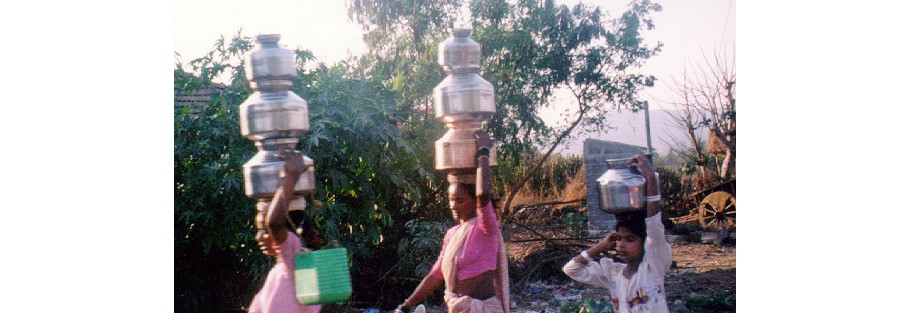
Nearby stood six stone water jars, the kind used by the Jews for ceremonial washing, each holding from twenty to thirty gallons.
Jesus said to the servants, “Fill the jars with water”; so they filled them to the brim.
Then he told them, “Now draw some out and take it to the master of the banquet.”
They did so, and the master of the banquet tasted the water that had been turned into wine. He did not realize where it had come from, though the servants who had drawn the water knew. Then he called the bridegroom aside and said, “Everyone brings out the choice wine first and then the cheaper wine after the guests have had too much to drink; but you have saved the best till now.”
What Jesus did here in Cana of Galilee was the first of the signs through which he revealed his glory; and his disciples believed in him.
After this he went down to Capernaum with his mother and brothers and his disciples. There they stayed for a few days.
- John 2:1-12
Jesus Clears the Temple Courts
When it was almost time for the Jewish Passover, Jesus went up to Jerusalem. In the temple courts he found people selling cattle, sheep and doves, and others sitting at tables exchanging money. So he made a whip out of cords, and drove all from the temple courts, both sheep and cattle; he scattered the coins of the money changers and overturned their tables. To those who sold doves he said, “Get these out of here! Stop turning my Father’s house into a market!” His disciples remembered that it is written: “Zeal for your house will consume me.”
The Jews then responded to him, “What sign can you show us to prove your authority to do all this?”
Jesus answered them, “Destroy this temple, and I will raise it again in three days.”
They replied, “It has taken forty-six years to build this temple, and you are going to raise it in three days?” But the temple he had spoken of was his body. After he was raised from the dead, his disciples recalled what he had said. Then they believed the scripture and the words that Jesus had spoken.
Now while he was in Jerusalem at the Passover Festival, many people saw the signs he was performing and believed in his name. But Jesus would not entrust himself to them, for he knew all people. He did not need any testimony about mankind, for he knew what was in each person.
- John 2:13-25
Chronological Study Bible Notes
The First of Seven Signs
“In Cana of Galilee Jesus performed the first of several signs. John’s account of Jesus’ public ministry (John 1:19–12:50) is often called ‘the Book of Signs,’ because John had a special interest in the role that signs played in revealing Jesus’ relationship with the Father (see John 20:30, 31). Traditionally, seven miracles have been isolated as being particular ‘signs’ for John: transformation of water into wine (2:1–11), healing of a nobleman’s son (4:46–54), cure of a paralytic (5:1–15), the feeding of the 5,000 (6:1–15), walking on the sea (6:16–21), healing a blind man (ch. 9), and raising Lazarus (ch. 11).
“Two of these signs are specifically numbered (2:11; 4:54), causing some scholars to think that John had access to a ‘signs source.’ Supposedly, this signs source was a collection of stories about wonders performed by Jesus. When writing his Gospel, John would have drawn from this source, which was known in his community. If such a source existed, we cannot determine its specific content. Interspersed among the seven miracles are statements that Jesus performed many other signs (see 2:23; 3:2; 6:2).”
- Timothy B. Cargal, et al., The Chronological Study Bible
Jesus’ First Visit to Jerusalem
“Matthew, Mark, and Luke mention only one visit of Jesus to Jerusalem during His ministry (see … John 1:35). Thus Jesus’ ‘cleansing of the temple’ raises a chronological question regarding when this incident in Jerusalem may have occurred. All four evangelists report Jesus’ prophetic demonstration, which provoked direct challenges to His authority from the religious leadership in Jerusalem (Matt. 21:23–27; Mark 11:27–33; Luke 20:1–8; John 2:18–22).
“Comparing John with the Synoptics leads us to ask whether the temple cleansing occurred once or twice, and whether it happened at the beginning or end of Jesus’ ministry. John reports the incident early in his Gospel account. The other evangelists, though, associate it with the events of Jesus’ Passion (see … Matt. 21:12). Some suggest that Jesus ‘cleansed’ the temple both at the outset and at the conclusion of His ministry. Others believe that John and the Synoptics report a single event at different points in their Gospels for theological or literary reasons. Supposedly John located the cleansing early to emphasize that Jesus encountered opposition from priests even at the beginning of His ministry.
“The Jewish leaders misunderstood Jesus’ saying regarding the temple (John 2:19). Jesus’ body was the temple that would be destroyed in His crucifixion, but raised up in His resurrection (2:21, 22). He was not speaking of the building that Herod had begun to reconstruct 46 years previously. The task of rebuilding the temple began in Herod’s 18th year (c. 20–19 B.C.) and continued beyond his lifetime. A passage of 46 years would date this Jerusalem visit of Jesus in about A.D. 27, at the spring Passover celebration.”
- Timothy B. Cargal, et al., The Chronological Study Bible
Other Commentary
The Wedding at Cana (John 2:1-2)
The wedding at Cana was attended by Jesus, his mother and his disciples. The town was located in Galilee, although its exact location is unknown. A wedding in Jesus’ day could last as long as a week. To run out of wine was an embarrassing and inhospitable offense for the wedding host. At the request of his mother Mary, Jesus performed the first miracle of his public ministry by turning water into wine…
- Dorothy Kelley Patterson, General Editor, NIV Woman’s Study Bible (Ann W. Bowman, Gospels and Acts contributor)
“Those who sold … the money changers” (John 2:14)
During the celebration of Passover, worshipers came from all over Israel and the Roman Empire to Jerusalem. Because many traveled large distances, it was inconvenient to bring their sacrificial animals with them. Opportunistic merchants, seeing a chance to provide a service and probably eyeing considerable profit during this time, set up areas in the outer courts of the temple in order for travelers to buy animals. The money changers were needed because the temple tax, paid annually by every conscientious Jewish male 20 years of age or older (Ex. 30:13, 14; Matt. 17:24–27), had to be in Jewish or Tyrian coinage (because of its high purity of silver). Those coming from foreign lands would need to exchange their money into the proper coinage for the tax. The money changers charged a high fee for the exchange. With such a large group of travelers and because of the seasonal nature of the celebration, both the animal dealers and money exchangers exploited the situation for monetary gain (‘den of thieves’; Matt. 21:13). Religion had become crass and materialistic.
- John MacArthur, John MacArthur Commentary (quoted Scripture without bold/italics)
My Thoughts
The Wedding at Cana (John 2:1-12)
The wedding ceremony became a big thing by the first century. Remnants of that type of ceremony have survived around the world.
I attended a wedding in India. There was no ceremony on the day that I attended. The bride and groom were introduced and there was a huge meal. They explained that the ceremony was the first day, but then since he was our salesman based in Kolkata and she was a schoolteacher at the Baptist mission school in Jamshedpur, they had to have five wedding receptions. With the people not moving around, the wedding could be done in a few days – the wedding, reception with the bride’s family and friends, reception with the groom’s family and friends. But their wedding had different receptions for each family, each set of workmates, and stretched over at least three cities.
Some European cultures separate the wedding from the honeymoon, making the honeymoon a trip to visit all the relatives.
But here, the wedding reception just kept going for days. And the wine had to continue to flow for days. It was a social disaster if the wine ran out before all the guests were finished.
And usually, by the second day, no one was sober enough to be able to taste whether the wine was good or bad.
This story starts with Jesus telling His mother that it is not time yet, but Mary ignores what Jesus says. This must be a close relative so that she would become a social pariah if the bride and groom run out of wine. It is not recorded whether Jesus made a nod of agreement. But the interesting story simply follows with no further protest.
First, I have never heard a sermon on John 2:5. Everyone wants to complicate Christianity. Mary simply says, “Do whatever He tells you.” That could be a five word sermon, but I think any pastor on earth would ruin it.
Would they pay a pastor if he read the verse and then said, “Mary said all that is necessary. Do whatever Jesus tells you.” And then the pastor simply sat down.
Next, the stone jars, stone, not plastic. They held 20-30 gallons of water. Jesus commanded that they be filled. Thirty gallons of water – forgetting the container for now – is 250 pounds (113.5kg). Every depiction of this miracle shows a jug being placed on the servant’s shoulder. Not a chance! The stone jar could easily have weighed 60-70 additional pounds. The National Institute for Occupational Safety and Health (NIOSH) guidelines require more than one person lift a package heavier than 50 pounds, or use a mechanical device like a fork truck. So, two people carry one jug to fill with water. Then, the entire waitstaff carries one jug back to the wedding… No, I think they drew from the jar to present the taste of wine to the master of ceremonies.
Next, the emcee of the wedding is drunk out of his mind by this time, but the water has not just turned into wine, but the best wine the emcee has ever tasted. Being that drunk, he would never noticed the good stuff. The way weddings worked, using German wine grades of quality, you served the ice wine first, the expensive stuff because few grapes are left by the first frost. Note: I have never bought any, but people say it is worth the horrific markup. Then the Auslese. The wine made from grapes picked after the main harvest, better than the rest. Then the Spatlase. The wine made from grapes near the end of the harvest, better than table wine. Then once everyone is too drunk to notice, the Quality Wine, what you might use at an ordinary dinner with family. My wife and I went for Spatlase when entertaining, Auslese only when it was a very special guest.
But Jesus made the best wine from water. And the people miraculously sobered enough to know what they were getting. If they were still drunk, they would have never noticed. And the emcee made a comment that they had made a mistake saving the best for last. Yet, it was such good wine, no one was bothered by this error.
Mary, the brothers of Jesus, and the disciples of Jesus then went to Capernaum for a few days. Jesus had disciples. It may have only been the six mentioned last week, but it does not say that these disciples did not go out fishing for those few days. The bulk of the ministry of Jesus had not begun, as Jesus told His mother at the wedding.
But a couple of parallels or near parallels:
Jesus starts His ministry by turning water into wine. His earthly ministry ends (the part before His death, for quibblers out there) with giving His disciples wine that represents His blood. Then Jesus was betrayed and He died on the cross, shedding His blood so that we could live and be free from the penalty of sin.
Water > Wine > Blood, death of the firstborn Son of God > freedom from the slavery of sin
The plagues of Egypt started with God turning the water into blood. The plagues ended with the death of the firstborn. The final plague setting the Israelites free from the bondage of slavery in Egypt.
Water > Blood, death of the firstborn: human or animal, in every home that was not protected by the blood of the lamb > freedom from physical slavery
Jesus Clears the Temple (John 2:13-25)
The Chronological Study Bible missed one alternative. I have mentioned the thought that Jesus cleared the temple each year during His ministry. Jesus knew what was coming. He knew He was going to make people angry when He tried to clean up the mess people made of the worship of God – forget false gods, just worship at the temple.
The first Passover sets the stage. Jesus is no ordinary charlatan pretending to be the Messiah. Jesus will have to be watched, tested, and then dealt with due to the money that the den of robbers are making. I cannot think of a scenario when the religious leaders are not getting kickbacks from the criminal activities in the temple courtyard during Passover. Thus, the first year, the clearing of the temple got the attention of the people who would kill Jesus.
On that last Passover, the clearing of the temple comes immediately after raising Lazarus from the dead. Watching Jesus closely was no longer an option. Testing Him? Every time, Jesus flipped the test back at them where they had no answer. The religious leaders were the perfect group of people to keep the Romans happy and the puppet king happy. And the religious leaders used that political influence to maintain power of their own and the money that went with that power. Jesus had to be eliminated.
Since things are not mentioned chronologically all the time, the scholars come up with excuses. I know that when I think of things that happened in my youth, I might shuffle the dates a little – just old people disease. But let us consider that Jesus did these things more than once. John ends his gospel by saying that Jesus did so much that there wasn’t enough paper and ink to write it all down. So, why are we worried? Do the gospels say this is an accurate chronological record? No. It is a record from eyewitnesses, who might see a different number of blind men being healed or they might get three healings out of order. Or it might be that a different witness saw a different healing that was remarkably similar.
This subject of chronology might creep into the conversation again.
Soli Deo Gloria. Only to God be the Glory.


Leave a Reply