See that you do all I command you; do not add to it or take away from it.
- Deuteronomy 12:32
“Every word of God is flawless;
he is a shield to those who take refuge in him.
Do not add to his words,
or he will rebuke you and prove you a liar.
- Proverbs 30:5-6
I warn everyone who hears the words of the prophecy of this scroll: If anyone adds anything to them, God will add to that person the plagues described in this scroll. And if anyone takes words away from this scroll of prophecy, God will take away from that person any share in the tree of life and in the Holy City, which are described in this scroll.
- Revelation 22:18-19
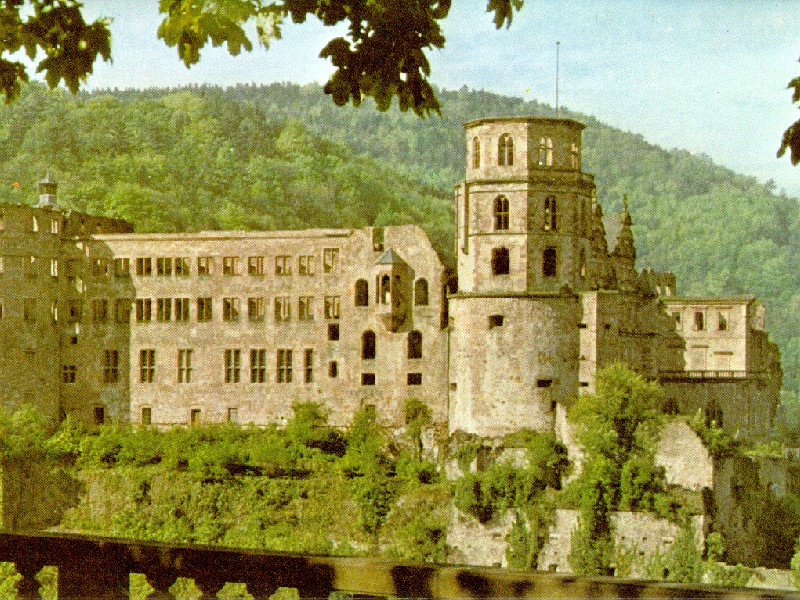
“The Heidelberg Catechism, the second of our doctrinal standards, was written in Heidelberg at the request of Elector Frederick III, ruler of the most influential German province, the Palatinate, from 1559 to 1576. This pious Christian prince commissioned Zacharius Ursinus, twenty-eight years of age and professor of theology at the Heidelberg University, and Caspar Olevianus, twenty-six years old and Frederick’s court preacher, to prepare a catechism for instructing the youth and for guiding pastors and teachers. Frederick obtained the advice and cooperation of the entire theological faculty in the preparation of the Catechism. The Heidelberg Catechism was adopted by a Synod in Heidelberg and published in German with a preface by Frederick III, dated January 19, 1563. A second and third German edition, each with some small additions, as well as a Latin translation were published in Heidelberg in the same year. The Catechism was soon divided into fifty-two sections, so that a section of the Catechism could be explained to the churches each Sunday of the year.
“In the Netherlands this Heidelberg Catechism became generally and favourably known almost as soon as it came from the press, mainly through the efforts of Petrus Dathenus, who translated it into the Dutch language and added this translation to his Dutch rendering of the Genevan Psalter, which was published in 1566. In the same year Peter Gabriel set the example of explaining this catechism to his congregation at Amsterdam in his Sunday afternoon sermons. The National Synods of the sixteenth century adopted it as one of the Three Forms of Unity, requiring office-bearers to subscribe to it and ministers to explain it to the churches. These requirements were strongly emphasized by the great Synod of Dort in 1618-19.
“The Heidelberg Catechism has been translated into many languages and is the most influential and the most generally accepted of the several catechisms of Reformation times.”
- Heidelberg Catechism, Introduction
The Message
I guess an introduction to the introduction is in order. Last week I ended the Vesper services about the Apostles’ Creed. I gave no hint about what was next.
But years ago, my wife and I attended a Thursday night Bible study, and we were well into the Heidelberg catechism when our teacher could not continue on. And I missed not finishing the catechism.
About that time, I went to the Gulf Coast to help with recovery from Hurricane Katrina. As part of our worship time, we went to a vespers service at the local church. They were going through the Heidelberg Catechism.
In reading the introduction quoted above, the earliest use of the Heidelberg Catechism was as a focus for nighttime worship. Over the course of a year, the congregation can go through the questions that define what we believe. The foundational stuff.
But are we adding to Scripture? No. A thousand times no.
I went to Heidelberg-catechism.com to get a version that gives the biblical proofs for each question.
I went through something similar when I started these vesper services, 11 May 2022. I went through the Spurgeon Catechism, who slightly modified the Baptist Catechism. In talking to many Baptists over the years, they have put Presbyterians down for having something else, besides the Bible, but Spurgeon modified a Baptist catechism that my “friends” claimed they did not have. In those early vespers services, I compared Spurgeon’s catechism to the Westminster Shorter and Larger Catechisms.
But it adds nothing to the Bible. The biblical proofs are straight from the Bible.
And if you say that you disagree with someone interpreting the Bible, might I ask if you always agree with your pastor who does the same thing every Sunday morning.
The quotation shows the history of the catechism. It does not give the thought process of Elector Frederick III, but since this is early in the Reformation, he may have feared that the church would begin to develop the same types of heresies that had plagued the church for their first 1500 years.
Thus, in my view, the Heidelberg catechism was created to establish foundational beliefs that should be shared by all Christians. We can discuss the outliers as we go through. This catechism, written for the Reformed Church, follows the Nicene Creed and Apostles’ Creed as short statements that define what we believe at its core.
The division of 52 days will definitely not be followed here. The first question has a four-part answer. Each part of the answer has 2-3 Bible references. And just going through 21 Bible references for the first question is more than a standard vespers service should normally handle.
And for the first “day” there are two questions, the second having a three-part answer with 10 Bible references.
So, I think it will take me longer going through these questions.
And now let us sing.
Here is Listen to the Word of the Lord sung by the Getty Girls, Keith and Kristyn Getty, and Jordan Kauflin.
Closing Prayer
Dear Lord,
We believe in You. You have given us the Bible, Your Holy Word. Sometimes, people take things out of context and twist Your words. In those times, it is good to have wise counsel that has written down what Your Word means. This catechism is nearly 500 years old. The beauty is that You do not change and if we are interpreting the Bible differently now, it must be us who have changed. Help us to transform our minds to Your Will rather than chase popularity in a fallen world.
In Thy name we pray,
Amen
Soli Deo Gloria. Only to God be the Glory.


Leave a Reply